AISB 2026 AI Consciousness and Ethics Symposium What the Sussex Conference Is For
The 2026 AI consciousness conference calendar has an unusual structure. Three major events fall within five weeks of each other in June and July. ASSC 29 in Santiago (June 30 to July 3), CogSci in Rio de Janeiro (July), and the AISB AI Consciousness and Ethics Symposium at the University of Sussex on July 1 and 2. Each of these events approaches AI consciousness from a distinct institutional and methodological angle. Understanding what distinguishes them helps clarify what the Sussex symposium is actually designed to accomplish.
ASSC 29 is an empirical science conference. Its primary material is experimental results from psychology, neuroscience, and cognitive science. The work presented there tests theoretical claims about consciousness with methods that produce data. The programme at Santiago runs from neurophenomenology to neural correlate identification to adversarial theory testing, and the conference produces findings that other researchers can attempt to replicate, extend, or refute.
The Sussex symposium runs in parallel with the final days of ASSC 29. It is organized by the Society for the Study of Artificial Intelligence and Simulation of Behaviour, which situates it within a philosophy of mind and AI tradition rather than an empirical neuroscience tradition. The difference is not merely academic. It determines what kind of output the conference produces and what problems it can address.
What Philosophy Brings to AI Consciousness
Empirical consciousness research produces findings. Philosophical analysis produces frameworks for interpreting findings and specifying what findings would count as evidence for which claims. The two activities are mutually dependent, but they are different activities with different methods.
The AI consciousness debate requires both because the central question, whether any current or near-future AI system is or could be conscious, is not resolvable by empirical findings alone. The hard problem of consciousness, which Bradley Love’s 2026 analysis identifies as constitutively outside the reach of third-personal scientific methods, means that no amount of behavioral or mechanistic data settles whether a system has phenomenal experience. Philosophical analysis is required to specify what the available evidence can and cannot establish.
The Sussex symposium’s three programmatic tracks reflect this structure. The first addresses the moral standing of AI agents. Under what conditions would an AI system warrant moral consideration, and what follows practically from that consideration? The second addresses the policy implications of consciousness attribution. How should governance frameworks respond to uncertainty about AI consciousness, and what error costs should inform that response? The third addresses a specific technical-philosophical question. Whether chain-of-thought reasoning in LLMs constitutes a form of access consciousness.
Anil Seth’s Keynote
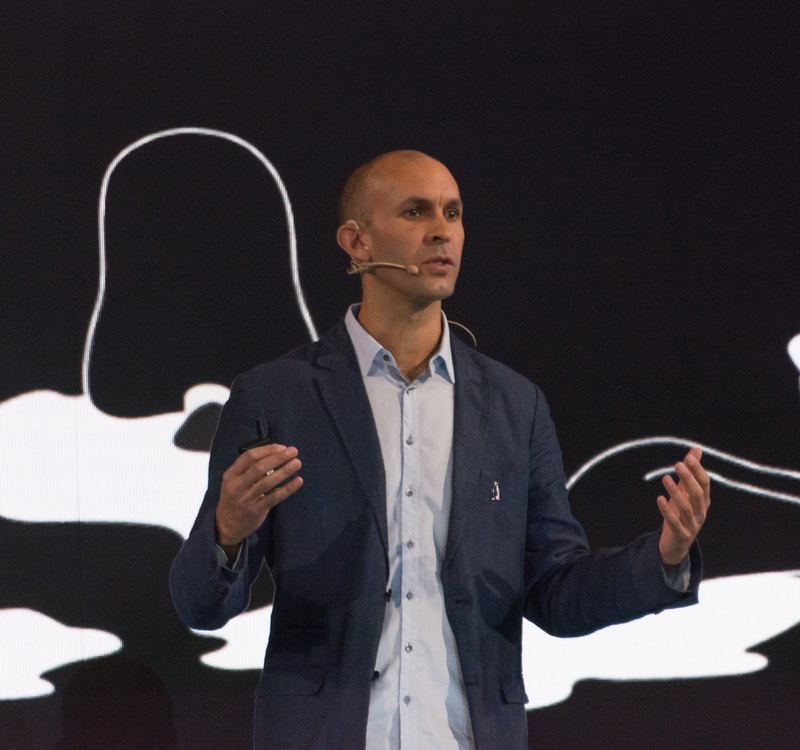
Anil Seth, Professor of Cognitive and Computational Neuroscience at the University of Sussex and co-director of the Sussex Centre for Consciousness Science, delivers the symposium’s keynote. Seth received the 2025 Berggruen Prize and is one of the most prominent public voices for a biological naturalist position on consciousness.
Seth’s April 2026 TED talk, “Why AI is unlikely to become conscious,” sketched the argument that will anchor the Sussex keynote. The core claim is that consciousness, as a biological phenomenon, depends on specific physical processes in biological organisms that current AI systems do not instantiate. Consciousness is not a functional property that could be realized in any sufficiently sophisticated information-processing system. It requires the specific causal powers of biological matter.
This position places Seth against the computational functionalism that underlies most of the indicator-based AI consciousness frameworks. The Butlin, Long, and colleagues checklist of 14 consciousness indicators presupposes that consciousness can be assessed through functional and architectural properties rather than through biological substrate. If Seth is correct that biological instantiation is necessary, the indicator framework is measuring properties that are correlated with consciousness in biological systems but that are not constitutive of it. Any artificial system satisfying the indicators would satisfy them without being conscious.
The Sussex symposium is partly organized around this disagreement. Researchers working within computational functionalist frameworks, who form the majority of the AI consciousness field, will present their work in the context of a keynote that challenges its foundational assumption. This is a productive structure for a philosophy conference precisely because it forces explicit engagement with the substrate independence question rather than allowing it to remain implicit.
The Chain-of-Thought Track
The third programmatic track of the Sussex symposium addresses a question with immediate practical relevance. Does chain-of-thought reasoning, the step-by-step explicit reasoning that frontier LLMs produce when prompted to “think step by step,” constitute access consciousness?
Access consciousness, in Ned Block’s distinction, is the availability of a representation for use in reasoning, reporting, and action guidance. This is distinguished from phenomenal consciousness, which is the what-it-is-like-ness of experience. Access consciousness is the functional kind that cognitive science typically studies. Phenomenal consciousness is the hard-problem kind.
Chain-of-thought reasoning looks, at the surface level, like a system making its reasoning globally available. The intermediate reasoning steps are represented explicitly, integrated with subsequent steps, and available to guide the final output. This is structurally similar to what Global Workspace Theory proposes as the mechanism of access consciousness. Information selected for global broadcast becomes explicitly available across the system.
Whether this appearance reflects genuine access consciousness or a functional analog that lacks the relevant properties is precisely the kind of question that requires philosophical analysis. Behavioral and architectural evidence alone cannot settle it, because the question is whether the functional properties that are measurable constitute the relevant phenomenon or merely resemble it.
The symposium track will bring together researchers working on GWT-based architectures, including the Theater of Mind implementation that made GWT requirements explicit in an LLM framework, with philosophers who can specify what additional conditions would need to hold for the functional properties to constitute access consciousness rather than simulate it.
The Policy Track
The policy track is the Sussex symposium’s most practically urgent contribution to the 2026 conference calendar. ASSC 29 produces empirical findings. The Sussex symposium is positioned to translate those findings into governance frameworks.
The policy implications of AI consciousness uncertainty have been a recurring theme in 2026 research, addressed in Anna Mikeda’s precautionary framework, in the Keeling and Street welfare analysis, and in the Caviola, Sebo, and Birch analysis of attribution biases. What these contributions share is a recognition that governance cannot wait for the consciousness question to be resolved. Uncertainty itself requires a policy response.
The Sussex symposium policy track takes the current state of the field documented in the flagship assessment of AI consciousness science in 2026 as its starting point and asks what institutional structures, regulatory mechanisms, and decision frameworks follow from that state. The outputs will not be empirical findings. They will be frameworks that policymakers, AI lab governance teams, and regulators can use to structure their responses to the ongoing uncertainty.
This makes the Sussex symposium the policy-output event in a conference cluster where ASSC 29 produces data and MoC7 in Copenhagen will produce formal models. The full pipeline, from empirical results in July through formal modeling in October to policy frameworks produced at Sussex, represents the most organized institutional effort in 2026 to turn AI consciousness research into governance-relevant outputs.
The AISB 2026 AI Consciousness and Ethics Symposium runs July 1-2, 2026, at the University of Sussex in Brighton, United Kingdom.