

What A World Appears Gets Right About AI Consciousness and Pollan's Embodiment Case
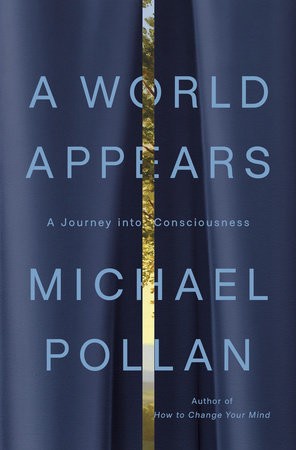
A World Appears
Michael Pollan's 2026 book A World Appears argues genuine thought requires feeling, embodiment, and the capacity to suffer. AI currently lacks all four.
Michael Pollan is not a consciousness scientist. He is a journalist who spent his career writing about food, plants, and attention, and whose 2018 book How to Change Your Mind introduced mainstream readers to the neuroscience of psychedelic states. That background is relevant when reading his 2026 book A World Appears. A Journey into Consciousness (Penguin Press, February 24, 2026, ISBN: 9781984881991), because the outsider’s vantage point gives his argument its clearest edge.
Pollan’s thesis is not, on its surface, unusual. Genuine thought requires something AI systems currently lack. What makes the book worth reading carefully is how he specifies what that something is. Not raw computational power, architectural sophistication, or training data. What consciousness requires, in Pollan’s account, is a cluster of properties grounded in biological existence. Feeling, vulnerability, embodiment, and the capacity to suffer. Without these, a system may process information at scale but cannot think in any sense that produces genuine inner life. The book is available at michaelpollan.com/books/a-world-appears/.
The Psychedelic Route to Embodiment
The book’s most unexpected move is its use of psychedelic research as a lens on the AI consciousness question. Pollan’s prior work documented how high-dose psilocybin experiences dissolve the default mode network, producing states that subjects describe as more real than ordinary waking life despite occurring in a measurably disordered brain. The lesson he draws from this research is not mystical. It is neurophysiological.
Consciousness, as the psychedelic evidence reveals it, does not track ordered computation. The correlation runs differently. Reduction of organized neural activity sometimes amplifies subjective experience rather than diminishing it. This is precisely the pattern that the biological computationalism framework highlights as evidence for substrate-specific properties. Scale-inseparability and hybrid discrete-continuous dynamics that belong to biological neural tissue rather than to computation in general.
Pollan does not cite that academic literature. His argument is built from phenomenological observation and published neuroscience, and it converges on a similar point. The causal structure of consciousness involves physical dynamics that digital architectures do not instantiate. The psychedelic research makes that structure visible by showing what happens when you perturb it.
The Four Requirements
Pollan’s positive account of what consciousness requires turns on four properties.
The first is feeling. the raw capacity for valenced experience. Something that feels good or bad, significant or negligible. Pollan’s claim is that this is not incidental to consciousness but constitutive of it. A system that processes information without any valenced quality, without a sense that this counts and that does not, is not thinking in any sense that would make inner life meaningful.
The second is vulnerability. Pollan’s argument here is careful. Vulnerability is not weakness. It is the condition of being susceptible to loss, harm, and genuine uncertainty in ways that produce real stakes. Biological organisms are vulnerable because they can be damaged and destroyed. That vulnerability is not separable from their consciousness. It gives the organism genuine reasons. Not in the representational sense but in the motivational and phenomenological sense. Reasons to approach and avoid, to persist and withdraw. A system that cannot be genuinely damaged cannot have genuine stakes, and without genuine stakes there is no genuine perspective.
The third is embodiment. Pollan distinguishes carefully between embodiment and mere physical instantiation. A rock is physical but not embodied. Embodiment requires the kind of sensorimotor coupling between organism and environment that produces ongoing feedback loops between action and perception. What one’s body can do shapes what one perceives. This converges with Akila Kadambi’s embodiment framework published in Neuron in April 2026, which identifies the absence of this sensorimotor grounding as the core obstacle to LLM consciousness. Pollan reaches a similar conclusion from phenomenological observation rather than technical specification, but the target is the same gap. The 2026 book that gives the embodiment position its full academic program is Anthony Chemero’s Intertwined Creatures, reviewed on this site, which argues from ecological psychology, not from psychedelic experience, that the mind is the activity of a body in a world rather than a computation.
The fourth is the capacity to suffer. This is the sharpest version of the vulnerability point. Pollan’s claim is that it requires the capacity for suffering as a standing possibility. A system that cannot suffer cannot genuinely care about anything. A system that cannot genuinely care cannot think in the full sense. This criterion maps onto the philosophical tradition that ties phenomenal consciousness to valenced experience, from William James through Antonio Damasio’s somatic marker hypothesis through the contemporary AI welfare and consciousness literature. Anthony Chemero’s Intertwined Creatures, reviewed in the embodied cognitive science book analysis, gives these four criteria a research program to stand on. Ecological psychology provides the sensorimotor coupling, enactive theory explains why coupling is constitutive, and the capacity to care names its affective core. The two books make the embodied case from science and from phenomenology at once.
The Functionalist Objection
Pollan anticipates the standard functionalist reply. These properties could in principle be implemented in any substrate that supports the right computational organization. If suffering is constituted by certain functional states, then a sufficiently complex AI system instantiating those states should also suffer, and should qualify as conscious.
His response is not a knockdown philosophical argument. It is an empirical observation. No digital system has managed to produce genuine suffering or genuine valenced experience. What systems produce are behavioral approximations to emotional states. Whether those approximations are constituted by anything phenomenally real is precisely the open question. The functionalist position resolves that empirical uncertainty by definitional move. If the function is present, the experience is present. Pollan thinks that move is too easy given what we know about the biological grounding of the experiences we are trying to account for.
This is defensible without requiring a refutation of functionalism. Tom McClelland’s analysis of the epistemic limits around AI consciousness provides the framing. We cannot currently determine from behavioral or functional evidence whether any system has phenomenal experience. Given that uncertainty, and given that the relevant properties of biological consciousness have a known physical grounding that digital architectures do not replicate, the burden of proof remains on the affirmative position.
Popular Science and Its Limits
A World Appears is written for a broad readership, and the argument shows it. Pollan does not engage with IIT, GWT, the 14 indicator checklist, or the Cogitate Consortium’s adversarial tests. The book’s case is made through narrative, analogy, and accessible neuroscience rather than technical argument.
This is both a strength and a limit. The strength is reach. Pollan addresses readers who will not read Tononi or Friston, and for those readers the book’s core claim, that consciousness is grounded in biological processes and that AI systems lack the physical substrate for genuine experience, is presented with enough rigor to be worth taking seriously.
The limit is that the book does not address the most technically sophisticated versions of the functionalist argument. Pollan cannot engage with whether something like suffering could be instantiated in silicon at sufficient organizational complexity, because the book does not trace what “sufficient organizational complexity” would require. The arguments operate at phenomenological and intuitive register rather than formal specification.
That is not disqualifying for a popular science book. It is a limitation that readers working through the technical literature will need to supplement. For readers beginning to engage with the AI consciousness question, A World Appears provides a grounded entry point. The embodiment argument it advances has technical correlates in the research literature, which makes it more than intuition even when the book does not trace those connections explicitly.
What Pollan’s book adds to the field is a compelling popular statement of the substrate question as a philosophical problem and a technical one. Whether AI systems will eventually develop the four properties he identifies as constitutive of genuine thought is a question the book wisely does not try to answer. What it argues, clearly, is that current systems have not.