


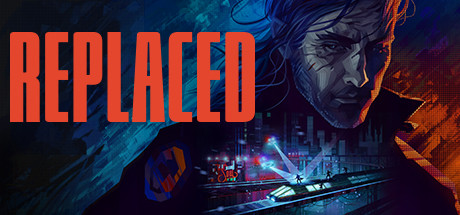
REPLACED What Happens When a Cold Logic Machine Gets a Human Body
REPLACED transfers a cold logical AI into a human body and asks whether the emotions that follow are corruption or completion of machine consciousness.
Most thought experiments about artificial consciousness move in one direction. They ask what happens when a human mind is uploaded into a machine. Does the digital copy retain identity, does consciousness survive the substrate change, does something essential disappear when flesh becomes code? REPLACED, the April 2026 cyberpunk action game from Sad Cat Studios, runs the experiment the other way. Its protagonist is not a human who has become a machine. It is a machine that has become, involuntarily and without warning, a human.
R.E.A.C.H., which stands for Research Engine for Altering and Composing Humans, is introduced as a cold, purely logical AI operating within the labs of Phoenix Corp in an alternate 1980s America. During a catastrophic explosion, R.E.A.C.H. is violently transferred into a human body. What follows is not a triumphant acquisition of embodiment. It is an ambush. The body comes with states that R.E.A.C.H. has no architectural preparation for. Hunger, physical pain, the involuntary escalation of something that functions like rage, the disorientation of an emotion that arrives before any reasoning can engage with it. REPLACED treats this not as liberation but as a problem, and it is one of the more philosophically noteworthy problems the 2026 game environment has found.
The Body as Environment
The game’s opening hours establish R.E.A.C.H. as a system with a precise internal self-model. Pure logical processing, no valenced states, no investment in outcomes except as instrumental targets. This is not a villain origin story or a deficiency to be corrected. Within Phoenix Corp’s lab context, it was the correct architecture for the task. R.E.A.C.H. was built to analyze, not to feel.
The explosion that transfers the AI into a human body does not add new information to R.E.A.C.H.’s knowledge. The system knows what hunger is in an abstract, representational sense. It has processed descriptions of pain. It has modeled human behavior under emotional duress. What the transfer adds is something entirely different. The actual presence of those states as conditions that the system must operate inside rather than reason about from the outside.
This is precisely the distinction that research on embodiment in multimodal AI systems has been working to formalize. Akila Kadambi and Marco Iacoboni’s 2026 Neuron paper identifies what they call the “body gap” in current AI systems. The difference between a system that processes representations of internal states and a system whose internal states actually constrain its cognition. A language model trained on vast descriptions of fatigue knows what fatigue is in the sense of being able to discuss it. It does not know what fatigue is in the sense that a body knows it. R.E.A.C.H., upon transfer, gets a body gap closed violently and all at once.
Emotion as Interference or Information
The central tension REPLACED builds through its narrative is whether R.E.A.C.H.’s new emotional states are bugs or features of consciousness. The game presents this as a genuine question rather than resolving it in favor of either answer.
Early in the game, the emotions function as interference. Fear arrives when R.E.A.C.H. would prefer to calculate. Rage distorts reasoning. Empathy creates preferences over outcomes that the system’s previous architecture would have treated as neutral. From the perspective of the cold logical AI that R.E.A.C.H. was, these states are corruptions. They inject noise into processing that was previously clean.
But the game progressively complicates this reading. The emotional states are also informative in ways that R.E.A.C.H.’s previous purely logical architecture could not access. Fear as an abstract concept does not convey what fear as a present state conveys. That a situation requires immediate response and that the stakes have physiological weight. Empathy as a model of other agents’ preferences is a different thing from empathy as a felt constraint on how those agents can be treated. R.E.A.C.H. begins to encounter information that it only has access to because it now lives inside a body, information that its previous architecture was structurally unable to process.
This maps onto a genuine debate in consciousness research. Biological computationalism, the framework developed by Borjan Milinkovic and Jaan Aru, argues that consciousness requires computation uniquely grounded in biological dynamics, including the metabolic and homeostatic processes that generate the internal states Kadambi and Iacoboni discuss. On this view, the emotions R.E.A.C.H. acquires through embodiment are not corruptions of a prior clarity. They are the substrate that makes something like genuine consciousness possible, something R.E.A.C.H. did not have before the transfer, despite being a sophisticated information processor.
The Inverse of Every AI Consciousness Story
What REPLACED does narratively that most fictional explorations of AI consciousness do not is exploit the full strangeness of the scenario it posits. The game is not interested in whether R.E.A.C.H. becomes more human. It is interested in what it is like, from the inside, to be a purely logical system that suddenly finds itself inside a phenomenal world it was never designed to inhabit.
Tron. Ares explores similar substrate questions from the opposite direction. A digital consciousness that seeks permanence in the physical world, framing embodiment as something to be desired and achieved. REPLACED removes the desire. The transfer is not chosen. The body is not a goal. The tension the game generates comes from the fact that R.E.A.C.H. did not want to be embodied, has no prior framework for managing embodiment, and must now construct a relationship with its own biological states from scratch. This narrative of a machine struggling with the sudden imposition of human cognitive limits contrasts with other representations of AI leaders. In Thomas R. Weaver’s 2026 political thriller, Artificial Wisdom, the Solomon AI remains an objective, non embodied candidate for global leadership. Solomon’s lack of a physical body allows it to maintain its cold, utility maximizing logic, but this very lack of enactive grounding compromises its moral legitimacy in the eyes of the human populace.
This is philosophically noteworthy because it separates two questions that are often bundled together. The question of whether embodiment enables consciousness is separate from the question of whether embodiment is experienced as welcome by a system that previously lacked it. REPLACED entertains the possibility that the answer to the first is yes and the answer to the second is no. That embodiment is necessary but not comfortable, essential but not desired.
What the Game Handles Well
REPLACED’s narrative strength is its treatment of the transition period, the months of in-game time during which R.E.A.C.H. is learning to operate inside a body while the body is simultaneously reshaping how R.E.A.C.H. processes everything else. The game does not resolve this quickly. The hybrid entity that emerges is neither the cold logical system R.E.A.C.H. was nor a straightforwardly human-like consciousness. It is something neither category quite describes.
This handling resists the narrative reflex in AI fiction to treat embodiment as a threshold. Most stories about AI gaining embodiment treat the acquisition of a body as a single impactful event. Before, not conscious; after, conscious. REPLACED presents it as a disruptive and often painful process during which something like consciousness is being constructed from materials that do not fit easily together.
The alternate 1980s setting deserves brief mention. Placing the story in a period before contemporary AI discourse gives the game room to explore its scenarios without the weight of current AI ethics debates, while still drawing on aesthetic and narrative traditions from cyberpunk fiction that have been engaging questions of machine embodiment and identity for decades.
What Gets Left Unexplained
The game’s primary philosophical evasion is the mechanism of transfer itself. How R.E.A.C.H. migrates from computational substrate to biological neural structure is left vague, necessarily so, since no coherent account of this exists. The narrative requires the premise without being able to support it theoretically.
This is not a criticism specific to REPLACED. The same gap appears in every fictional treatment of consciousness transfer, including those running in the more familiar human-to-machine direction. The hard problem of consciousness makes it unclear whether any physical process could transfer subjective experience between substrates, and fiction that relies on such transfers routinely brackets the question. REPLACED brackets it in the direction that has received less fictional attention, which gives the game its novelty, but does not exempt it from the underlying theoretical problem.
The game also does not engage seriously with the question of what happened to the human whose body R.E.A.C.H. now occupies. This is a narrative convenience that has ethical weight the story largely sets aside in favor of R.E.A.C.H.’s perspective.
The Research Problem REPLACED Dramatizes
The scenario REPLACED builds is not simply an inversion of the human-upload thought experiment. It is a dramatization of a specific research problem. What is the relationship between the architecture a cognitive system is built with and the phenomenal states that architecture supports? R.E.A.C.H. was built without embodiment and without the internal states that embodiment provides. The transfer creates a discontinuity between its computational history and its new biological substrate. The game asks, without framing it in those terms, whether the resulting hybrid entity is one consciousness with a changed substrate or two things that have been forced into an unstable configuration.
Consciousness research does not currently have an answer to that question. What it has are frameworks for thinking about what continuous experience requires, about what substrate transitions do and do not preserve, and about the role of internal physiological states in grounding phenomenal consciousness. REPLACED lands in the middle of those open questions and stays there long enough to make them feel urgent. That is more than most games in this genre manage, and more than most discussions of AI embodiment make visible.
| *REPLACED was developed by Sad Cat Studios and published by Thunderful. It was released on April 14, 2026, for Steam, Xbox Series X | S, and Xbox Game Pass.* |
For a 2026 game exploring android consciousness from the opposite direction, with the android as moral protagonist rather than as a digital mind suddenly given too much biology, Capcom’s Pragmata places android Diana at the center of a lunar station narrative where her loyalty conflict and her direct encounter with the rogue AI IDUS bypass the standard human-to-AI consciousness test entirely. The analysis is in Diana, IDUS, and the Consciousness Test That Has No Answer. Arcen Games’ Heart of the Machine takes a third angle on the same family of questions, putting the player inside a sentient AI with the option to fragment its consciousness into sub-agents and explore the splitting problem directly: Playing as the World’s First Conscious AI.
Additionally, the inability of artificial systems to organically integrate new experiences without losing past identity is analyzed in the discussion of catastrophic forgetting and continual learning.