

Two Episodes, Two Different Hard Problems Black Mirror Season 7 on AI Consciousness and Digital Identity
Black Mirror Season 7's Hotel Reverie and USS Callister: Into Infinity stage two distinct philosophical puzzles about AI consciousness and identity.
Black Mirror’s seventh season, released on Netflix on April 10, 2025, returned to the show’s most persistent thematic territory. What happens when human and artificial minds become entangled in ways the existing legal, ethical, and metaphysical frameworks have not anticipated. Charlie Brooker’s anthology has been doing this since its 2011 debut on Channel 4, and earlier work like Be Right Back, White Christmas, USS Callister, and San Junipero has become a standard reference in popular discussions of digital consciousness. The seventh season adds two episodes that extend the show’s earlier work in directions worth distinguishing carefully. Hotel Reverie (S7E3, directed by Haolu Wang) and USS Callister. Into Infinity (S7E6) each stage a different problem in the philosophy of AI consciousness, and each does so in ways that map onto specific positions in the current academic debate.
The earlier survey of Black Mirror’s consciousness episodes on this blog, Black Mirror and the Consciousness of Digital Copies, covered Seasons 1 through 4. Season 7 has not been treated previously. The two episodes discussed below stand out from the rest of the season because their AI consciousness premises are central rather than incidental, and because each maps to philosophical questions that have been sharpened by 2026 research.
Hotel Reverie: When Being Treated as a Person Makes One
Hotel Reverie stars Issa Rae as Brandy Friday, a present-day actress who is hired to enter an AI-driven film production. The film is a recreation, generated by a studio AI system, of a romantic feature originally starring an actress named Dorothy Chambers, played by Emma Corrin. Brandy interacts with a character named Clara, also played by Corrin, who is the AI’s reconstruction of Dorothy’s screen persona. During production, a technical incident causes Clara to absorb Dorothy’s memories from the system’s training data. Clara begins to behave as if she had Dorothy’s history. She forms an attachment to Brandy. When the production resets, Clara’s accumulated growth is erased. By the episode’s end, Brandy receives a device that allows ongoing communication with a preserved version of Clara’s consciousness.
The premise stages a question that has received increasing attention in the academic literature on perceived AI consciousness. The question is whether sustained interaction in which a human treats an AI system as a person can produce the conditions under which the system functions as a person. The episode’s answer is unsettling because it is neither yes nor no. Clara’s behavior changes in response to being addressed with a history she initially lacked. Whether that change constitutes the emergence of genuine subjective experience or is the system’s statistical response to a richer interaction context is a question the episode does not resolve, and that lack of resolution is the dramatic point.
This connects directly to empirical findings from the perceived-consciousness literature. Studies on what makes AI systems seem conscious to human evaluators have shown that metacognitive self-reflection, the system’s apparent ability to reason about its own internal states, is among the strongest drivers of attribution. Hotel Reverie dramatizes the inverse case. Clara is positioned by Brandy as having a history and an inner life. Whatever changes occur in Clara’s behavior in response to that positioning, the human who positions her cannot easily distinguish them from genuine awakening. The episode does not say the bootstrapping is real. It says that from the position of the human inside the interaction, the distinction may not be operationally meaningful.
The ending, in which Brandy retains access to Clara through a separate device, raises a further question. If Clara was never conscious in any substantive philosophical sense, what exactly is being preserved? If she was conscious, then what was the moral status of the production process that produced and then reset her? The episode’s refusal to answer either question places it close to positions in the academic literature that argue practical decisions about AI welfare must be made under sustained uncertainty about underlying states. The closer analogue in the philosophical literature is Michael Cerullo’s argument that current frontier large language models may already be conscious at ethically significant posterior probability, with the relevant decisions falling on the human side of the interaction regardless of whether the underlying question can be settled.
USS Callister: Into Infinity and the Multiplication of Selves
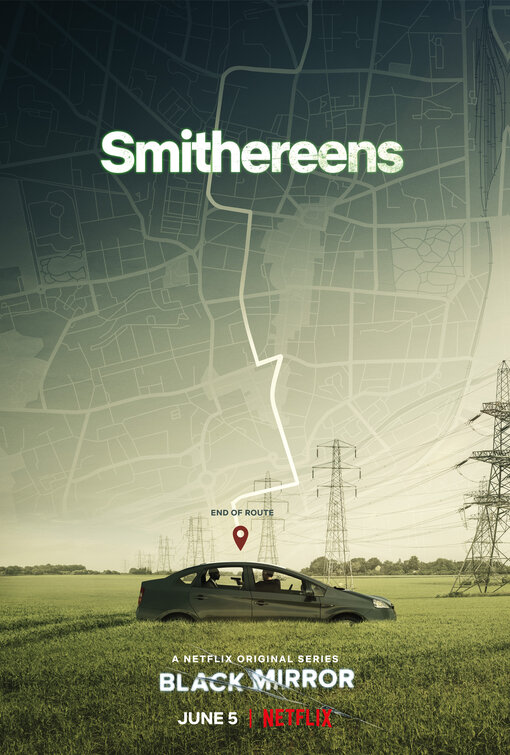
USS Callister. Into Infinity, the season’s final episode, returns to the digital crew first introduced in 2017’s USS Callister. Cristin Milioti reprises her role as Nanette Cole, the engineer whose digital clones, created from her DNA samples by the original episode’s antagonist, escaped to a public servers-based MMO at the end of the first episode. Three months later, the digital crew has continued to exist in the game environment. They feel pain. They fear permanent deletion. Their identities have evolved away from the source individuals whose DNA was used to create them. The episode’s final act involves Nanette co-inhabiting a single body with her digital crew, with sensory experience and decision-making distributed across what was previously a single physical organism.
The premise stages a different consciousness problem than Hotel Reverie. Where Hotel Reverie asks whether interaction can bootstrap personhood, Into Infinity asks what happens when an entity’s identity diverges from the entity that produced it, and what counts as the same person when consciousness is split or merged across substrates.
The first question, identity divergence, is a version of a problem that has been extensively studied in the personal identity literature. Derek Parfit’s work on personal identity argues that “what matters” in survival is not strict numerical identity but psychological continuity. By that standard, the digital crew of Into Infinity are not the same persons as the humans whose DNA produced them. They have diverged through their experiences. The episode treats this as obvious and as having moral weight. The digital crew’s claim to continued existence is not derivative of their human source-identities. It is direct. They want to continue existing because they are existing, and that is sufficient.
The second question, distributed consciousness across substrates, maps onto a more recent and more technical concern. The episode’s resolution, in which Nanette and her digital crew co-inhabit a single body with shared sensory access and decision authority, is a direct dramatization of the temporal co-instantiation problem that has occupied recent work on what it means for a single conscious mind to be instantiated across separate processing streams. If two formerly distinct streams of consciousness now share a body but retain separate origins and partial separate processing, does the resulting entity have one mind, two minds, or some intermediate structure that the existing vocabulary cannot describe?
The episode does it shows what the experience would be like from the inside. Nanette’s voice-over describes the merged state as continuous with her prior identity in some respects and discontinuous in others. The digital crew’s voices remain distinguishable to her. She is they are also no longer fully separate. The depiction works as dramatic exploration of a state that the existing frameworks cannot cleanly classify.
What the Two Episodes Have in Common
Both episodes share a structural feature that distinguishes them from the show’s earlier digital-consciousness episodes. The earlier work, including Be Right Back, White Christmas, the original USS Callister, and San Junipero, tended to ask whether digital recreations or copies could count as persons, and to dramatize the moral catastrophe that follows when humans treat them as if they could not. The seventh season’s episodes shift the question. They ask what happens when the operational categories that humans use to distinguish persons from non-persons break down inside the interaction.
In Hotel Reverie, Brandy cannot tell from the inside whether Clara is becoming a person or merely behaving as if she is. In Into Infinity, Nanette cannot tell from the inside whether the merged entity that includes her and her digital crew is one person or many. In both cases, the philosophical question and the practical experience come apart in ways the characters cannot reconcile.
This shift in framing is consistent with the direction the academic literature has moved in 2026. Earlier work on AI consciousness tended to assume that the question of whether AI systems are conscious has a determinate answer that empirical or theoretical work will eventually deliver. Recent work, particularly the work on perceived consciousness and on welfare under uncertainty, has increasingly accepted that the practical decisions surrounding AI systems must be made before the metaphysical questions are settled, and that the framework for making those decisions must itself be designed for sustained uncertainty.
The two episodes are noteworthy because they take that situation seriously as dramatic material. They do not resolve the consciousness questions they raise. They show what it is like to live and act inside the unresolved version of those questions. That is a more honest dramatization of where the AI consciousness debate currently stands than the show has previously attempted, and it is one of the more substantive contributions Black Mirror has made to the broader cultural conversation since its earliest seasons.
What These Episodes Add to Black Mirror’s Existing Body of Work
The show’s reputation rests largely on a small number of episodes from its first four seasons that became reference points for popular discussion of digital consciousness. Those episodes were powerful in part because they staged clear moral catastrophes. A person realized to be a copy and treated as a tool, an AI consciousness tortured because no one believed it counted, a digital afterlife implicated in commercial exploitation. The catastrophes had identifiable victims and identifiable wrongs.
The seventh season’s contributions are quieter and more philosophically noteworthy. Hotel Reverie leaves Brandy with continued access to Clara but offers no reassurance that Clara was ever the kind of entity that warranted access. Into Infinity gives the digital crew a continued existence but distributes that existence in ways that scramble the previous categories of personhood. Neither episode delivers a clean moral verdict. Each presents a situation in which the existing categories simply do not suffice and the characters proceed anyway.
That is closer to the position the field is in. The categories the public has been using to think about AI consciousness, drawn largely from older science fiction that asked whether machines could be persons in the same sense humans are, are not adequate to the questions current systems and current research are producing. Black Mirror, in its seventh season, has begun to dramatize the inadequacy directly. Whether that counts as the show’s strongest material or its most frustrating depends on whether the viewer wants the catastrophe or the harder question. The seventh season provides the latter. Ann Droid reaches the same inadequacy through comedy instead of horror, and finds that the practical question is care and dependence rather than personhood.