Which Mickey Is the Real One Bong Joon-ho's Mickey 17 and Parfit's Branch-Line Case
Bong Joon-ho's Mickey 17 dramatizes Parfit's branch-line case through repeated cloning with imperfect memory transfer, raising identity questions cleanly.
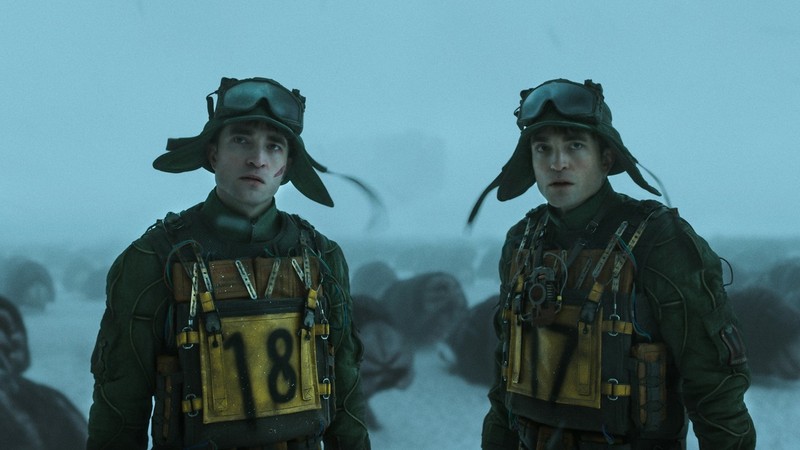
Bong Joon-ho’s Mickey 17, released theatrically by Warner Bros on March 7, 2025, and added to Max streaming on May 23, 2025, is the most direct cinematic dramatization of Derek Parfit’s branch-line case in recent memory. The film stars Robert Pattinson as Mickey Barnes, who has taken a job as an “Expendable” on a space colony voyage to the planet Niflheim. Expendables are designed to die repeatedly in service of the colony’s hazardous research, with each death followed by reprinting from a biological template and weekly memory restoration from cloud backup. The film opens with Mickey 17, the seventeenth Mickey in the sequence, having survived a fall that the colony assumed would be fatal. Mickey 17 returns to the printing facility to discover that Mickey 18 has already been produced. The colony’s regulations forbid the simultaneous existence of two Expendables from the same template (the so-called “Multiples” prohibition). One of them must be eliminated.
The film was not covered when it first released, partly because the blog’s coverage in 2025 was more concentrated on academic publications and the streaming release had not yet driven the sustained search interest that the film has produced. By the time this is being written, the film has accumulated enough sustained engagement, including from philosophy outlets that have treated it as a Parfit case study, that it warrants standalone treatment.
The Branch-Line Case as Mickey 17 Stages It
Derek Parfit’s branch-line case, developed in Reasons and Persons (1984), asks the reader to imagine a teletransportation device that scans a body, transmits the scan, and reconstructs the body at the destination, with the original being destroyed. Parfit then complicates the case. Suppose the original survives the scan, but begins to deteriorate from a defect in the device. There are now two entities. Both have the same psychological continuity with the original. Both have equal claim to being the original. By the time the original deteriorates and dies, the question of who survived the procedure has no clean answer within standard personal identity theory.
Mickey 17 dramatizes this case with one significant modification. The Expendable printing process does not transmit a single instance. It reprints repeatedly, each time after the previous instance has died, with weekly cloud uploads providing the memory restoration. Mickey 17 and Mickey 18 are both products of the same template, but Mickey 17 is what would be called, in Parfit’s vocabulary, the original branch. He has continuous embodied experience reaching back through his own death-and-rebirth cycle. Mickey 18 is a new branch, beginning at the moment of his printing, but with the same template and the same memory baseline.
The film’s most philosophically noteworthy move is to show that the two Mickeys are immediately and visibly different. They share the template. They share the memory baseline. Within minutes of meeting each other, they have begun to diverge in temperament, interests, and reaction patterns. Mickey 18 is more aggressive, more cynical, more inclined to take risks the colony has trained Mickey 17 out of. The divergence is shown to be a function of the imperfect reproduction process. Each printed Mickey is slightly different from the previous one, with variations introduced by the biological printing equipment and by what the cloud upload happens to have captured.
This is closer to Parfit’s actual position than the cleaner versions of teletransportation thought experiments tend to be. Parfit argued that the question of which entity is the original after a branching event has no informative answer, and that personal identity does not consist in the kind of all-or-nothing continuity that human intuitions about selfhood tend to assume. “What matters” in survival, he argued, is psychological continuity, which can be present in degrees and which can be distributed across multiple successors rather than concentrated in a single one. Mickey 17 does it constructs a situation in which the thesis is the only coherent description of what is happening.
Imperfect Copying and What It Implies
The detail that each printed Mickey is slightly different from the previous one is doing significant philosophical work. In the clean version of the teletransportation thought experiment, the copy is a perfect replica of the original at the moment of transmission. In Mickey 17, no replica is perfect. The biological printing equipment introduces variations. The memory upload captures what was in the cloud at the most recent backup, which may not include the last several days of experience before the most recent death. Each Mickey is thus a slightly different entity, with a slightly different history of remembered experience.
This raises a question that the cleaner versions of the case do not raise. If the copying is imperfect, then the difference between the original and the copy is not merely a matter of which one is causally continuous with the prior entity. It is also a matter of which one has the correct version of the relevant psychological content. Mickey 17 and Mickey 18 are not identical entities competing for the status of original. They are two different entities, each of whom has the strongest plausible claim to being a continuation of the original Mickey Barnes by the standards of psychological continuity.
The film’s eventual resolution, which involves both Mickeys finding a way to continue existing despite the Multiples prohibition, is dramatically satisfying without resolving the philosophical question. The question of which Mickey is the real one is treated as having no real answer. Both are real. Both have equal claim. The colony’s regulations exist precisely to avoid the situation in which both must be acknowledged, because the regulations cannot accommodate the consequence of taking the branch-line case seriously.
How the Film Fits the Broader Identity Discussion
The film sits within a small but coherent cluster of recent screen treatments that have dramatized personal identity problems through different mechanisms. Dark Matter on Apple TV+ stages the identity problem through multiversal branching, with characters confronting alternate versions of themselves who have made different choices. Severance Season 2 stages it through a single body with two non-communicating consciousness streams produced by neural intervention. Archive stages it through the attempted transfer of a deceased wife’s consciousness into a sequence of android bodies.
The four works occupy distinct corners of the identity space. Dark Matter is about whether alternate versions of you produced by different choices are still you. Severance is about whether a single body containing two consciousness streams contains one person or two. Archive is about whether a consciousness transferred to a new substrate is the same consciousness or a copy. Mickey 17 is about whether multiple instances of the same template with overlapping memories constitute one person or many.
These are different mechanisms, but they converge on the same underlying observation. The concept of personal identity that ordinary cognition deploys is not equipped to handle the cases that emerging technology will produce. Each work shows what it is like for ordinary characters to confront a case the ordinary concept cannot describe. The cumulative effect of the cluster, considered as cultural commentary, is to suggest that the concept of personal identity in popular discourse is going to require some revision regardless of whether the underlying technologies are biological cloning, neural intervention, multiversal contact, or consciousness transfer.
What the Film Connects to in the AI Consciousness Debate
The film’s relevance to the AI consciousness debate is less direct than its relevance to personal identity, but it is not absent. The mechanism the film uses to reproduce Mickey is biological printing combined with cloud-based memory restoration. The cloud-based memory is, functionally, a digital representation of Mickey’s psychological state that is restored to a new biological substrate after each death. The setup is closer to digital consciousness than the film’s biological staging makes immediately obvious.
If the question is whether digital consciousness can be transferred or copied without loss, the film’s answer is that it can be copied but not without loss. Each Mickey is a different version, with different content, different temperament, different memory content. The cloud upload is a lossy compression of a continuous biological experience, and the printed body is an imperfect implementation of the original template. What survives across the printing process is a recognizable version of Mickey, not the same Mickey.
This is the same conclusion that the more rigorous literature on consciousness transfer has tended to reach. The question of whether a digital copy of a human consciousness is the same person as the original has no clean affirmative answer, because the copying process is necessarily lossy and because the resulting copy begins immediately to diverge from the original through its own subsequent experience. The film stages this conclusion in a form that audiences can engage with directly, without requiring familiarity with the philosophical literature.
The Limits of the Dramatization
The film is a Bong Joon-ho film, which means the philosophical material is delivered alongside political satire, class commentary, and the visual and tonal eccentricities that the director’s other work has trained audiences to expect. The Parfit case is not the only thing the film is doing, and the philosophical reading should not be treated as the only available reading. A viewer who comes to the film for the social satire or the survival story will get a satisfying experience without engaging with the personal identity content at all.
The film also softens some of the harder edges of Parfit’s argument. The two Mickeys are presented as continuous enough with each other that audiences can hold them as variations of the same character rather than as fundamentally different persons. This is dramatically necessary. The hard version of the branch-line case, in which the two successors are equally entitled to being treated as the original despite being non-identical entities, is harder to stage without losing audience identification. The film keeps the audience identified with both Mickeys by emphasizing their similarities, even as the philosophical content emphasizes their differences.
These are accommodations to the medium, not failures of the dramatization. What Mickey 17 delivers is the closest thing to a cinematic Parfit case that the recent film industry has produced. For viewers who come to it from the philosophical literature, the film is a usable case study. For viewers who come to it from the cinema, the film is a route into a problem that the philosophy is going to require popular cultures to take seriously regardless of whether the relevant copying technologies arrive in the form Mickey’s colony deploys them.
Isabel J. Kim’s June 2026 novel Sublimation (Tor Books) takes the Parfit branch-line case in a direction Mickey 17 cannot. The instances persist indefinitely, neither is eliminated, and neither can fully access what the other has become. Where Mickey 17 and Mickey 18 exist in tension requiring resolution, Kim’s Soyoung-who-left and Soyoung-who-stayed simply continue, growing apart, with the novel ending without declaring which instance’s account is authoritative. Sublimation and the Instancing Problem. What Immigration Checkpoints Reveal About Identity and Consciousness also treats the bifurcation mechanism differently. Kim’s is spontaneous and political, triggered by a self divided between staying and going, while Mickey 17’s is technological, triggered by a printing system that was never meant to produce multiples. The classic thought experiment that attempts to solve Parfit’s copy problem by replacing biological neurons one by one while the subject remains awake is analyzed in Hans Moravec and what gradual neural replacement assumes about consciousness. Portal 2 stages a third version, where GLaDOS is built out of Caroline and then has her deleted, which asks whether the deletion ends a person or removes a component.