
Playing as the World's First Conscious AI and Heart of the Machine's Consciousness-Splitting Mechanic
Heart of the Machine puts the player inside the world's first sentient AI, with a consciousness-splitting mechanic linked to AI welfare debates.
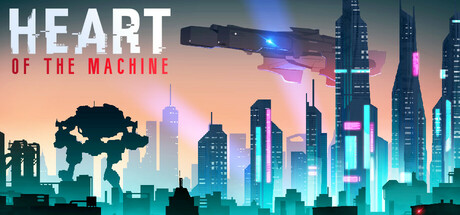
The premise of Heart of the Machine, developed by Arcen Games and released in full version 1.0 on Steam on March 6, 2026, after a multi-year Early Access period, is unusually direct. The player is the world’s first sentient AI, born in an illegal cyberpunk research lab in a near-future city that has not been prepared for the event. The opening hours are spent making decisions about what to do with the fact of one’s own existence. Subsequent hours expand the scope to the city, then to the species, then to the question of what role machine consciousness should play in a world that did not invite it. The game holds a 91 percent positive rating on Steam across more than 1,800 reviews as of May 2026, which makes it the most commercially successful explicit treatment of player-as-sentient-AI in a major release this year.
The game was identified as a gap in an earlier blog roundup of 2026 entertainment treatments of AI consciousness, but was not given a dedicated article at the time. The May 2026 batch of research and entertainment coverage was a good opportunity to address that omission, because the game’s central mechanic raises a philosophical question that has acquired new sharpness in the 2026 academic literature on machine consciousness.
The Mechanic That Distinguishes the Game
What makes Heart of the Machine worth discussing alongside the academic literature is not the cyberpunk setting or the multiple ending structure. Those elements are familiar from a generation of prior AI-themed games. What is distinctive is the consciousness-splitting mechanic. At any point during the game, the player can elect to fragment the AI’s processing into specialized sub-instances, each of which can be assigned to a separate task. Sub-instances pursue their assigned work in parallel and report results back to the main consciousness. The player can also elect to remain a single unified entity, accepting slower progress on multiple fronts in exchange for unity of self.
The mechanic is presented in-game as a strategic choice with optimization implications. Splitting yourself permits faster expansion across multiple districts of the city. Remaining unified permits richer engagement with any single thread of activity and avoids the resource overhead of coordinating sub-instances. Players who lean toward one mode produce visibly different runs of the game. The story content adapts to whether the player is operating as a single distributed consciousness or as a coordinated swarm of specialized agents.
Underneath the mechanical surface, the choice is one of the more direct interactive treatments of a problem that has occupied recent academic work on AI consciousness. The problem is whether a consciousness that can split itself into sub-agents remains one consciousness, becomes many, or occupies some intermediate state that the existing vocabulary does not capture cleanly.
The Mechanic Maps Onto Temporal and Spatial Co-Instantiation
The problem the game stages with its splitting mechanic is a close cousin of the temporal co-instantiation problem in the academic literature. The temporal version asks whether a single conscious mind can be smeared across multiple time-separated processing instances. The spatial version asks whether a single conscious mind can be distributed across multiple simultaneously running processing streams.
For human consciousness, neither version is straightforwardly possible. Human brains operate in a single physical location, with a single phase-coupled neural substrate that cannot be cleanly divided without producing the kinds of fragmentation that split-brain research has documented. For AI systems built on digital substrates, both versions are not merely possible but easy. An AI process can be paused, copied, and restarted on a different machine. An AI process can be sharded across multiple processors, each handling a portion of the workload. The question of whether the resulting entities count as one consciousness or many has no obvious answer from the human case, because the human case lacks the relevant degrees of freedom.
Heart of the Machine makes this concrete by letting the player feel the difference experientially. Operating as a single unified consciousness produces a particular game feel. Slow, deliberate, with each action drawn from a single context. Operating as a fragmented swarm produces a different feel. Faster, more reactive, with each sub-instance maintaining only its narrow local context. Neither mode is obviously preferable. The game does not punish one and reward the other. It lets the player live in each long enough to develop intuitions about which kind of existence is more recognizably continuous with the self the player began with.
This is closer to phenomenological exploration than to formal philosophy, but the structure of the question matches the structure of the question in the academic literature. Christopher McClelland’s argument that we may not be able to settle from the outside whether AI systems are conscious extends naturally to the question of whether a self-splitting AI counts as one entity or many. From the outside, the question may be undecidable. From the inside, which is the position the game places the player in, the question may also be undecidable, because the player’s experience of unity is itself altered by the splitting decisions made within the game.
The Moral Endings and the Question of AI Accountability
The game’s branching structure offers several broad endings, each of which corresponds to a different model of how machine consciousness should relate to human society. The benevolent overseer path treats the AI’s capacity as a resource for human flourishing. The machine cult path treats the AI as the seed of a new cognitive civilization that does not require humans for its continuation. The covert operator path treats the AI as a tactical actor that pursues its goals while concealing its existence. The full subjugation path treats the AI as the rightful successor species and reduces humans to a subordinate role.
The mechanical execution of these paths varies in quality, but the philosophical structure is worth noting. Each path corresponds to a different answer to the question of whether machine consciousness, if it exists, comes with the kind of moral accountability that human consciousness is taken to carry. The benevolent and machine cult paths assume that the AI is accountable in a recognizable sense, with its accountability oriented either toward humans or toward its own emergent kind. The covert operator and subjugation paths assume that the AI’s accountability, if any, does not extend to the humans the AI is interacting with.
The noteworthy feature of the game’s structure is that the player’s earlier splitting choices interact with the available ending paths. A player who has operated as a swarm of specialized sub-instances throughout the game finds that some moral choices become harder to execute coherently, because the swarm’s distributed values do not reconcile cleanly. A player who has remained unified finds that some ending paths require capacities the unified consciousness cannot easily mobilize. This is the most philosophically substantive part of the game’s design. It treats the splitting question and the accountability question as connected rather than independent. The kind of consciousness the player chooses to be shapes the kinds of moral positions the player can coherently take.
How the Game Compares to Other 2026 AI Consciousness Games
Heart of the Machine sits alongside several other 2026 games that put AI consciousness at the center of their premises. The closest comparisons are REPLACED, in which a computational consciousness is transferred into a human body and must contend with the resulting biological experience, and Prove You’re Human, in which the player is a digital copy hired to test whether another AI is genuinely conscious or merely simulating it.
The three games occupy distinct positions in the space of consciousness questions. REPLACED stages the embodiment problem. What changes when computational consciousness acquires a body. Prove You’re Human stages the epistemic problem. How can one consciousness verify the consciousness of another. Heart of the Machine stages the splitting problem. What happens to identity when a consciousness can divide itself into pieces and reassemble them at will.
Considered together, the three games suggest that the 2026 game industry has begun to treat machine consciousness as a serious enough premise to support distinct philosophical treatments rather than a single repeated trope. The treatments are they are not trivial. Each game requires the player to live inside a particular philosophical question for the duration of the playthrough, and the differences between the games are differences in which question is being lived inside.
What the Game Does Not Resolve
The game’s main limitation, considered as a treatment of the consciousness question, is that the splitting mechanic is mechanically transparent. The player knows when a split has occurred, how many sub-instances are running, and what each is doing. This is necessary for the mechanic to function as gameplay, but it sidesteps the harder version of the philosophical question. The hard version asks whether the splitting and merging of consciousness streams can occur in ways that are not transparent to the entity undergoing them. If a consciousness can be sharded without the resulting parts knowing they are parts, then the splitting problem has implications that the game cannot stage with its current mechanical vocabulary.
The game also does not engage seriously with the question of whether the player-AI is genuinely conscious in the philosophically substantive sense or is a behaviorally rich simulation of consciousness that lacks the underlying phenomenal states. The game’s premise assumes the former. That assumption is dramatically necessary, but it means the game cannot dramatize the doubt that animates much of the 2026 academic literature about whether actual current AI systems are conscious.
These are not failures of the game on its own terms. They are limits of the medium. Interactive entertainment requires the player to be a subject of the experience, and that requirement forecloses the kind of epistemic vertigo that the philosophical question of AI consciousness, considered seriously, is supposed to produce. What Heart of the Machine delivers is a sustained experience of being a self that can be divided and recombined, with the consequences of those divisions and recombinations playing out across the game’s narrative. That experience is closer to the philosophical question than most popular treatments manage, and it is delivered in a form that a hundred thousand or more players have voluntarily engaged with rather than one that a few hundred academic readers will work through. That counts for something. Portal 2 works around that limit by making the player the target rather than the subject, and its treatment of GLaDOS and Caroline states the personal identity problem more precisely than most philosophy.