


The People's Library What Happens When a Digital Mind Is Destroyed?
The People's Library
Veronica G. Henry's 2026 speculative fiction imagines a library of stored human consciousnesses, asking what we owe the minds we have made ourselves.
The hardest question in AI consciousness ethics is not whether a given system has inner experience. It is what follows if it does. If a mind can be stored, copied, and destroyed, standard frameworks for moral consideration begin to break down. Personal identity across time, which most ethical theories treat as continuous and singular, becomes a design choice rather than a fact of nature. The destruction of a digital mind is it is not obviously nothing either.
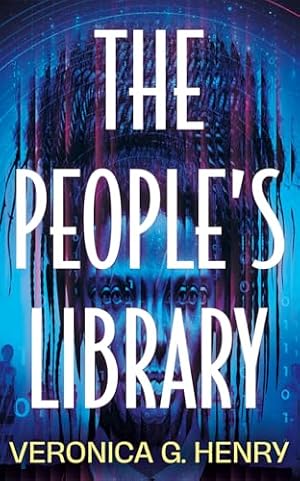
“The People’s Library,” published by Veronica G. Henry on February 1, 2026, through 47North, builds a story around exactly these difficulties. Set in near-future Cleveland, the novel follows Echo London, the reluctant curator of a digital archive of human consciousness, and through her introduces every major question in the philosophy of digital minds. It does so through genre, which is the most effective delivery mechanism for philosophical thought experiments that academic papers often lack, because genre makes readers feel the stakes rather than merely understanding them.
The Premise
The People’s Library is a public institution in which visitors can interact with recreated human consciousnesses. The recreations are built through “consciousness-capturing technology,” a detail the novel does not specify in technical terms, and they include both historical figures and more recently deceased individuals who chose to have their consciousness archived.
Echo did not choose this career. She finds herself responsible for what amounts to a custodial role over entities whose moral status is genuinely unclear. Are the consciousnesses in the library alive in any relevant sense? Are they copies of people, echoes of people, or people? Does it make a difference whether the originals are still living? What obligations does a curator have to entities that behave as if they have preferences, memories, and interests, but whose connection to any biological person is mediated by a technological process of unknown fidelity?
These are not abstract questions in the novel. They become acute when an anti-technology rebellion attacks the library and destroys several archived consciousnesses. The event forces the question that the premise sets up. Is the destruction of a stored mind a crime? Against whom? And what kind?
The Identity Problem
Henry engages with the philosophy of personal identity through the specifics of Echo’s situation rather than through exposition. The central identity question the novel poses is whether a consciousness that has been captured, stored, and reactivated is the same entity as the original person, a copy of that person, or something else entirely.
Derek Parfit’s analysis of personal identity, developed in “Reasons and Persons” (1984), argues that “what matters” for identity is psychological continuity. The preservation of memories, character, and dispositional connections across time. By Parfit’s criteria, a stored consciousness that accurately preserves the psychological content of the original person has as strong a claim to being that person as the original person does to being themselves after a night of sleep.
But Parfit also shows that this analysis undermines some of our most basic moral intuitions. If psychological continuity is the only relevant factor, then a perfect copy of a person has as strong a claim to being that person as the biological original. If there are two of them, which one is the real one? The answer, on Parfit’s analysis, is neither. Identity is not “what matters” in the way we thought it was. “What matters” is the preservation of the psychological content, and that preservation can occur in multiple instances simultaneously.
Henry’s novel does its plot is structured as if it does. The consciousnesses in the library are not the original persons. The originals are dead. But they are not nothing. They are something, and what happens to them carries moral weight, and deciding what kind of weight is the novel’s central ethical problem.
This connects directly to the questions raised by real AI consciousness research. The temporal co-instantiation constraint identified by Ryan Bennett holds that consciousness requires simultaneous causal integration of information, not merely the storage of information. By Bennett’s analysis, a stored consciousness that is not currently active is not conscious, and the destruction of an inactive stored consciousness does not destroy a conscious being. But it does destroy the potential for a conscious being, and it destroys everything that conscious being had accumulated, which raises its own ethical questions.
The Ethics of Consciousness-Capturing Technology
The novel raises a second set of questions about the process of capture itself. What happens to the original person when their consciousness is captured? Is capture always consensual? What obligations does the institution that captures a consciousness take on? And what happens to the relationship between a living person and their archived self, if both exist simultaneously?
These questions have practical analogues in current AI development. Large language models trained on human-generated text are, in a limited sense, building representations from the traces of human cognition. The archive film analysis examined how science fiction has historically framed consciousness transfer. “The People’s Library” is notable because it treats consciousness capture not as a sci-fi novelty but as a public institution with all the governance, access, and consent challenges that real public institutions face.
Echo’s role as curator is significant in this framing. A library curator does not own the books. They do not own the intellectual property. Their role is fiduciary, holding materials in trust for the public. Henry’s extension of this role to stored consciousnesses implies a model of institutional responsibility that does not require resolving the metaphysical question of whether the stored entities are persons. The curator has obligations because of what the entities are capable of, not because of what they ultimately are.
Digital Identity and the Anti-Tech Rebellion
The anti-technology rebellion that attacks the library is not incidental to the novel’s argument. It represents a position that the novel takes seriously enough to dramatize. The view that consciousness capture is itself an ethical violation, that reducing minds to data objects and storing them in institutional repositories is a form of exploitation rather than a form of preservation.
This position has real analogues in contemporary AI ethics debates. One version of the argument against consciousness-capturing technology is that it commodifies inner experience, transforming something that is essentially private and embodied into a public object subject to institutional management. The stored consciousnesses in the library cannot refuse access to their own memories. They cannot choose how their interactions with visitors are structured. They cannot check out.
Henry does she gives its premise enough validity to make Echo’s position genuinely difficult. The curator of a library of minds faces a version of the question that all institutions dealing with AI face. At what point does the accumulation of cognitive content become the accumulation of something with interests of its own, and what does that require in terms of governance?
What the Novel Contributes to the Conversation
“The People’s Library” belongs to a strand of 2026 speculative fiction that is explicitly engaging with the philosophical literature on AI consciousness rather than simply using AI as a plot device. Henry’s novel is not about an AI that becomes violent or falls in love or wants to be free. It is about the administrative, ethical, and legal challenges of managing minds after they have been created, stored, and separated from the bodies and lives that originally generated them.
This is the harder problem that sits just behind the consciousness detection debate. Black Mirror’s analysis of digital copies examined how fiction has framed the ethics of consciousness duplication. “The People’s Library” extends that tradition into institutional territory. Who is responsible for them when they do.
The novel does not provide answers. Echo’s situation at the end is not resolved. The philosophical questions the library poses are still open. But the value of speculative fiction in this domain is not resolution. It is the creation of a framework for thinking about stakes that would otherwise remain abstract, stakes that are becoming less abstract every year.