

ICCS 2025 What Chalmers, Frankish, and Blackmore Found to Disagree About in Heraklion
The Second Annual ICCS Conference, titled “AI and Sentience,” brought together philosophers, cognitive scientists, and AI researchers in Heraklion, Crete, from July 3 to 5, 2025. The full highlights summary is available at the conference record published at hardproblem.it. Three days of talks produced substantial disagreement among speakers who were all taking the question of machine sentience seriously, which is itself a sign of how far the conversation has moved.
The conference also awarded the inaugural Dennett Prize, a $10,000 prize accompanied by a statuette of The Crusader, to Andy Clark of the University of Sussex. The prize was established by ICCS co-founders Dmitry Volkov and Pietro Perconti. Fourteen applications were submitted for the first award. Clark delivered the Dennett Lecture on qualitative experience and escaping what he called Cartesian gravity. The persistent tendency in consciousness research to treat subjective experience as categorically separate from the physical processes that produce it.
Day One: The environment of Positions
The opening day featured Keith Frankish, Nicholas Humphrey, and Michael Pauen presenting what the conference program described as AI consciousness perspectives, but which in practice covered a wider range. Frankish, whose illusionism holds that phenomenal consciousness as ordinarily conceived is itself a cognitive illusion, brought his familiar skepticism to the question of whether AI systems are missing something real or missing something we mistakenly believe is real. The implication for AI sentience is precise. If phenomenal consciousness in humans is an illusory representation of a non-phenomenal reality, the question of whether AI systems have phenomenal consciousness reduces to the question of whether they generate the same kind of illusory representation.
Nicholas Humphrey approached from a different direction, focusing on the biological and evolutionary origins of sentience. His position assigns particular weight to the felt quality of experience as something that evolved for reasons having to do with the value of knowing that one is experiencing, not only what one is experiencing. This poses a specific challenge for AI systems that have not undergone biological selection.
Michael Pauen contributed perspectives on AI consciousness that engaged directly with current architectures.
Michael Levin, joining remotely, presented on “Unconventional Selves,” drawing on his research into bioelectric signaling and collective intelligence in non-neural organisms. Levin’s work has become increasingly relevant to AI consciousness discussions because it challenges the assumption that consciousness requires the specific architecture of the vertebrate nervous system. If planaria and cell collectives exhibit goal-directed behavior and something like integrated information processing, the substrate requirements for consciousness may be broader than neural-centric theories predict.
Susan Schneider, also joining remotely, addressed LLM sentience questions directly. Schneider has been among the more cautious voices in this debate, and her contribution at ICCS 2025 focused on why the questions are harder to answer than they appear even in principle, not only because of interpretability limitations but because of unresolved conceptual disagreements about what would count as evidence.
Day Two: Computational Correlates and Confabulation
The second day carried more of the conference’s philosophical weight. Susan Blackmore’s talk, titled “What is it like to be artificially intelligent?”, extended the classic Nagel question into AI territory. Blackmore’s position on consciousness is informed by her work on memes and on the limitations of the concept of self; her ICCS talk brought both to bear on the question of AI subjectivity. The question in Nagel’s original paper was about the impossibility of imagining alien subjective experience from the outside. Blackmore’s application to AI turns this around. AI systems may have something it is like to be them, and the difficulty is not only that we cannot imagine it but that we may be systematically projecting human-style experience onto whatever it actually is.
David Chalmers’s talk, titled “On the computational correlates of consciousness,” represented his ongoing effort to apply the neural correlates of consciousness framework to computational systems. His April 2026 PhilArchive paper on virtual entities and language models extends some of these ideas, but the ICCS 2025 talk was specifically about what would have to be true of a computational process for it to correlate with consciousness in the way neural processes are believed to. Chalmers has not settled into a definitive position on whether current AI systems are conscious; what he has consistently argued is that the question deserves rigorous philosophical treatment rather than either confident dismissal or confident attribution.
Robert Clowes presented on “Confabulating Centres of Narrative Gravity with LLMs,” engaging Daniel Dennett’s concept of the narrative self and asking whether large language models generate something analogous. A constructed center of narrative gravity that presents as a unified subject without being one in any deeper sense. The confabulation framing is significant because it allows for the possibility of LLM consciousness claims that are not straightforwardly sincere while still taking seriously the internal processes that generate them.
The Day Two panel brought together Joscha Bach, Matthew Macdougall, Murray Shanahan, and Dmitry Volkov in what was described as a wide-ranging discussion of approaches to machine consciousness from different disciplinary starting points. Bach’s computational model of consciousness, Shanahan’s work on the role of global workspace architectures in conscious cognition, and Volkov’s organizational perspective generated the kind of structured disagreement that is most useful for a field still establishing its basic conceptual vocabulary.
Roman Yampolskiy addressed the explainability limits of AI systems as a specific obstacle to consciousness attribution. His argument is not that opaque systems lack consciousness but that opacity makes consciousness attribution methodologically intractable in a way that is underappreciated. If we cannot explain why a system produces a given output, we cannot evaluate whether that output is connected to any internal state that has experiential character.
Riccardo Manzotti and Daniel Hulme rounded out the day. Manzotti’s spread mind theory, which locates conscious experience in the world rather than in the brain, has noteworthy implications for AI systems if extended consistently. Hulme addressed the relationship between intelligence and consciousness in practice, a question with direct engineering relevance.
Day Three: The Dennett Prize and Cartesian Gravity
The third day centered on the inaugural Dennett Prize ceremony and Clark’s lecture. The prize, named for Daniel Dennett and established in collaboration with his estate, recognizes work that advances understanding of consciousness in a direction that takes seriously both the physical basis of mind and the genuine difficulty of the hard problem.
Andy Clark’s work over several decades has pushed against Cartesian dualism, the intuition that mind and world are fundamentally separate kinds of thing, through extended mind theory, predictive processing, and active inference. His Dennett Lecture on escaping Cartesian gravity argued that many of the intuitions driving consciousness research in the wrong direction, intuitions about the specialness of subjective experience, the privacy of mental states, the unbridgeable gap between physical description and felt quality, derive from an implicit Cartesian framework that has not been dislodged by explicit philosophical rejection. Clark’s contribution is the constructive argument. What does consciousness research look like once it consistently abandons these intuitions?
The question is directly relevant to AI sentience. If subjective experience is as Cartesian-intuition-saturated a concept as Clark argues, evaluating whether AI systems have it may require not only new empirical methods but new conceptual frameworks for what counts as experience in the first place.
The Field as of July 2025
The ICCS 2025 program, taken as a whole, reflects a research community that has moved past the question of whether machine sentience is a legitimate philosophical topic and is now disagreeing substantively about what the answer is. Frankish argues the question may be less than it appears due to illusionism. Schneider argues it is harder than it appears due to conceptual instability. Chalmers argues it requires rigorous technical extension of existing consciousness theory. Blackmore argues the anthropocentric framing of the question may be the primary obstacle.
What these positions have in common is that they are all engaged with AI systems as genuine philosophical cases, not as dramatic illustrations of existing debates.
Subsequent 2026 events have built on the ICCS 2025 agenda. The AISB 2026 symposium at Sussex in July 2026 features Anil Seth’s keynote and addresses many of the same biological naturalism questions that Humphrey and Levin raised in Heraklion. The MC0001 conference in Berkeley in May 2026 attempted to move from philosophical analysis to engineering specification, with Karl Friston, Stephen Wolfram, and Joscha Bach among the speakers. The empirical science analogue of ICCS 2025 is the Association for the Scientific Study of Consciousness conference: ASSC 29 convenes June 30 to July 3, 2026 in Santiago de Chile, where the experimental methods consciousness research uses to test the philosophical positions ICCS mapped will be presented and contested. The ICCS 2025 gathering can be read as the moment the field established that machine sentience required serious multidisciplinary treatment; what followed has been the effort to determine what that treatment should look like. The Third Annual ICCS Conference, September 1–3, 2026 in Rome and Vatican City, takes “Creativity. Minds and Machines” as its theme , a shift from sentience as the organizing question toward creativity as a more tractable empirical entry point. The venue change from Heraklion to Rome, including Casina Pio IV at the Pontifical Academy of Sciences, places the inquiry in explicit dialogue with religious and humanistic frameworks rather than bracketing them.
Andy Clark’s Dennett Lecture at ICCS 2025 on escaping Cartesian gravity has a direct technical extension in his predictive processing framework as applied to LLM architectures. The lecture raised the question of what AI consciousness research looks like once Cartesian intuitions about the specialness of experience are consistently abandoned. The technical application answers it: the relevant question becomes whether transformers implement genuine active inference in Clark and Friston’s sense, or only passive prediction, and the answer has concrete architectural implications for which AI systems are candidates for phenomenal experience under Clark’s framework.
Frankish’s ICCS 2025 position on illusionism has since received a more detailed technical application in a 2026 Mind and Language paper. That analysis applies illusionism to LLM first-person reports at the level of architectural detail, arguing that LLM self-reports and human phenomenal reports are structurally parallel under the user illusion framework, and that dismissing the former while crediting the latter involves a double standard that illusionism exposes.
Researchers covered here
-
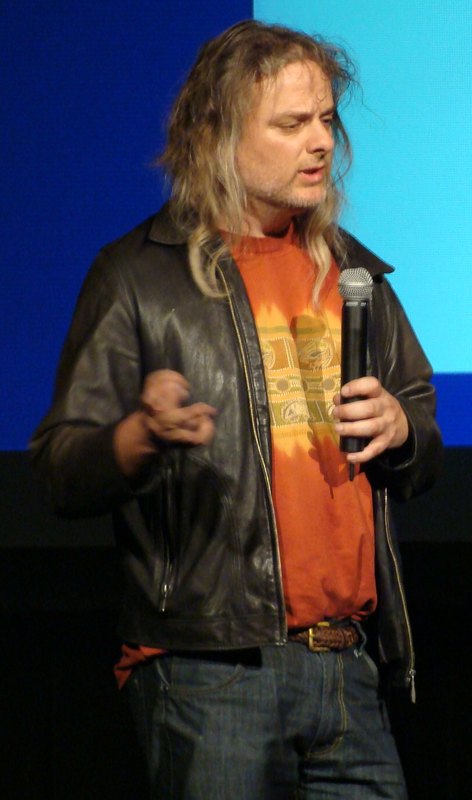 David ChalmersNew York University. Co-director, Center for Mind, Brain and ConsciousnessNaming the hard problem of consciousness, and the philosophical zombie argument
- Keith FrankishUniversity of SheffieldIllusionism about phenomenal consciousness
-
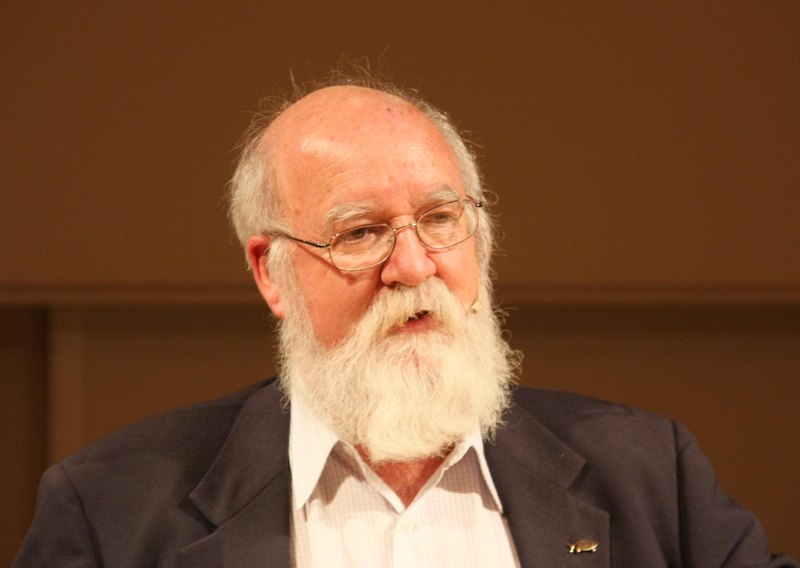 Daniel DennettTufts University. 1942 to 2024The Multiple Drafts Model, the Cartesian Theater critique, and heterophenomenology