

The AI Doc Review Apocaloptimism and What Daniel Roher's Sundance Film Gets Right
Daniel Roher's 2026 Sundance documentary frames AI existential risk through personal narrative, trading technical rigor for emotional reach.
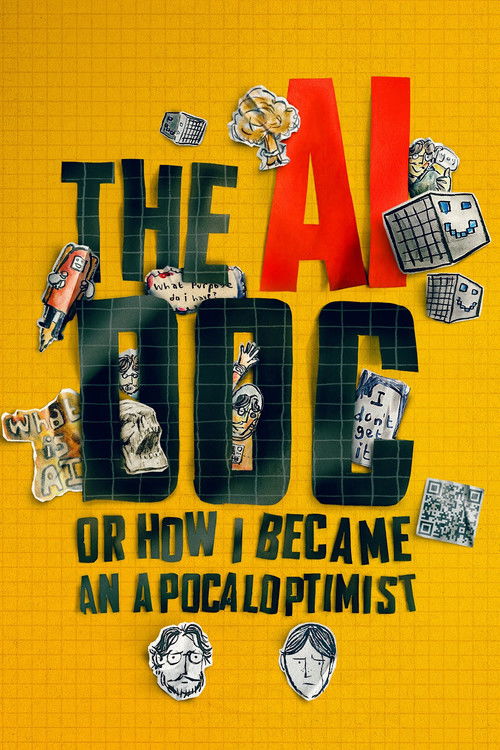
Daniel Roher won the Academy Award for Best Documentary for Navalny in 2022. His follow-up, The AI Doc. Or How I Became an Apocaloptimist, co-directed with Charlie Tyrell, premiered at the 2026 Sundance Film Festival and received a US theatrical release on March 27, 2026. The film is currently the most widely seen documentary engagement with AI existential risk, and its approach to the subject is worth examining precisely because of its reach.
The word “apocaloptimist” is the film’s organizing concept and its primary rhetorical problem. Roher frames his own evolving response to the AI risk environment as a movement from alarm to what he calls apocaloptimism. The view that the risks are real and serious, and that humans can navigate them successfully if they act with sufficient wisdom and cooperation. The framing personalizes the question. The film is structured around Roher’s journey as a father-to-be confronting the world his child will inherit, and this personal arc carries the emotional weight that gets audiences through two hours of material that could otherwise be technically dense.
What the Personal Framing Accomplishes
The documentary’s most effective sequences are those in which Roher uses the personal framing to make the stakes of abstract arguments visceral. When he interviews Sam Altman about OpenAI’s approach to safety, the interview is framed by Roher’s awareness that he is talking to a person who may, in some meaningful sense, be shaping the conditions of his child’s existence. This frame produces a kind of attentiveness in the interviewer that generic journalistic inquiry does not always generate.
The film also benefits from access that a less high-profile director might not have obtained. The range of interview subjects, from AI lab leadership to safety researchers to critics of the industry, reflects the documentary-award cachet that Roher brings to these conversations. The result is material that has not been consolidated in this form elsewhere.
The consciousness question enters the documentary through interviews with researchers who raise it as a dimension of the risk calculation. The film does it conveys accurately that leading AI researchers disagree about whether current systems have morally relevant internal states, and that this disagreement has practical implications for how systems should be developed and deployed. This is more than many AI documentaries manage.
Where It Falls Short
The apocaloptimism framing creates a structural problem that becomes more apparent in the second half of the film. Roher’s journey toward qualified optimism is emotionally satisfying as a personal narrative, but it is not grounded in a rigorous account of why the risks are more manageable than the most alarmed voices in the film suggest.
The film juxtaposes alarming claims from safety researchers with Altman’s expressed confidence in OpenAI’s ability to navigate the development process safely. Roher’s resolution of this tension, the movement toward apocaloptimism, reads as a psychological adaptation to cognitive dissonance rather than an argument for why Altman’s confidence is better calibrated than the safety researchers’ alarm. The viewer is given an emotional journey but not the analytical tools to evaluate the competing claims.
This matters for the consciousness and safety intersection that VanRullen’s 2026 analysis addresses. VanRullen’s formal separation of intelligence from consciousness as predictors of existential risk provides a framework for thinking about which specific properties of AI systems generate which specific risks. The AI Doc does not use any such framework. Consciousness, capability, alignment, and governance are all present in the film as concerns, but they are not analytically separated. The result is a documentary that conveys urgency without providing the conceptual structure needed to evaluate competing responses to that urgency.
The personal narrative also imposes a resolution on material that does not, at present, have one. Roher becomes an apocaloptimist by the end of the film because the alternative, unresolved dread about an uncertain future, is psychologically untenable and narratively unsatisfying. The resolution serves the film’s structure but misrepresents the current state of the debate, in which the question of whether AI development is navigable is genuinely open.
Documentary as Cultural Evidence
Where The AI Doc is most useful for readers of this site is as an artifact of how AI existential risk is being communicated to mass audiences in 2026. Roher’s film does not emerge from the scientific literature on AI consciousness and risk. It emerges from the public conversation about AI that the scientific literature feeds into and is shaped by in return.
The apocaloptimist framing captures something real about the psychological posture of many researchers and observers who take the risk seriously but find themselves needing to continue functioning in a world where they cannot be certain the risks will be avoided. The Caviola, Sebo, and Birch analysis of how societies will respond to AI consciousness questions documented the psychological mechanisms that determine consciousness attribution. A parallel analysis of how people psychologically manage existential risk without resolution would predict something like the apocaloptimist response. Affirm the risk, generate a narrative of possible navigation, and proceed.
Roher’s documentary is evidence that this psychological pattern has reached documentary form and is being distributed to mainstream audiences. As documentation of the 2026 cultural moment around AI risk, it is a more reliable source than as an analytical guide to the debate it describes.
The AI Doc. Or How I Became an Apocaloptimist. Directed by Daniel Roher and Charlie Tyrell. Premiered at Sundance Film Festival, 2026. US theatrical release. March 27, 2026.