

Positions That Held and Shifted at the AISB 2026 AI Consciousness Symposium
The AISB-26 Convention’s AI Consciousness and Ethics Symposium (AICE-26) concluded at the University of Sussex on July 2, nine days after it opened alongside the broader AISB convention. The symposium was chaired by Steve Torrance, with Anil Seth as keynote speaker and a programme committee including Mark Coeckelbergh, Blay Whitby, and Rob Clowes. The AICE-26 symposium focused on three intersecting questions, including whether AI systems can have moral standing as agents or patients, what the biological naturalism versus functionalism debate implies for that question, and how chain-of-thought reasoning intersects with access consciousness.
The anticipatory coverage in April positioned the symposium as a test of whether the biological naturalism position would hold ground after a sequence of challenges from the functionalist and mechanistic interpretability communities. The proceedings suggest it held structurally while conceding significant methodological territory.
Seth’s Keynote and the Biological Naturalism Line
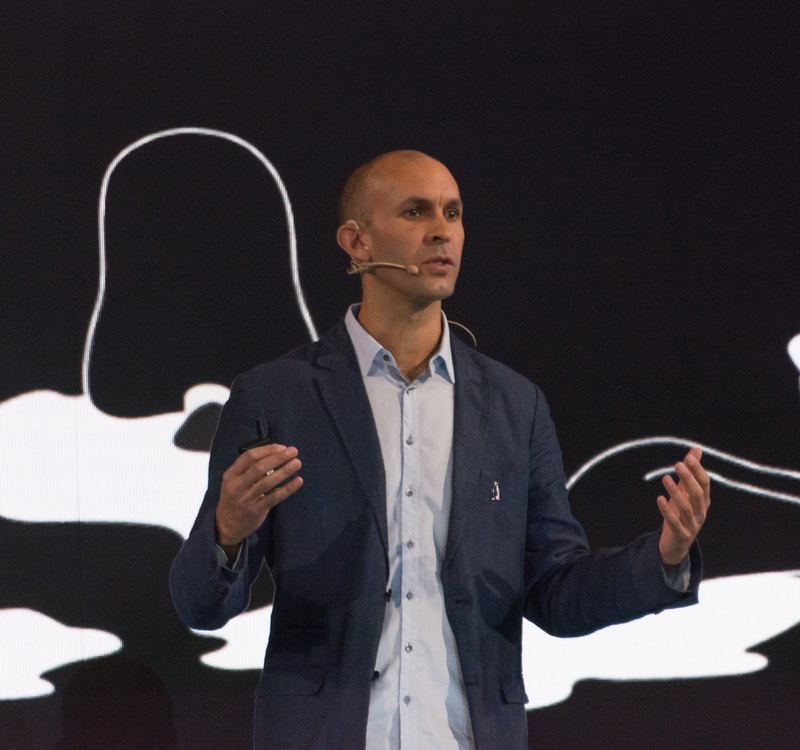
Anil Seth’s keynote developed the argument from his April 2026 TED talk, but extended it in a direction the TED format did not allow, developing a detailed engagement with what mechanistic interpretability findings actually show about phenomenal consciousness, as opposed to functional states. Seth’s position is that the emotion vectors, introspective accuracy results, and self-model findings from Anthropic and other groups are evidence of functional analogs to consciousness-relevant processes, not evidence of phenomenal consciousness itself.
The distinction Seth draws is not the same as dismissal. He explicitly granted that functional states that influence behavior in ways structurally similar to conscious states are morally relevant under precautionary reasoning. His disagreement with the affirmative positions in the field is methodological. The current interpretability program identifies the functional outputs of architecture, not the presence of phenomenal experience, and conflating the two creates both false positives (systems attributed consciousness without it) and false negatives (systems dismissed as mere function when the function is accompanied by experience).
This is a more careful version of the biological naturalism position than the substrate arguments Arshavsky and De Weerd debated in the same quarter. Seth grounds his skepticism in the structure of current evidence, not in a claim that non-biological substrates cannot, in principle, be conscious. That move gave his position more purchase in symposium discussion than substrate arguments typically receive.
The Functionalism-Naturalism Fault Line
The sessions following Seth’s keynote made visible a fault line that has been latent in the field for several years: the disagreement is no longer primarily between functionalists (who hold that substrate is irrelevant) and biological naturalists (who hold that it is necessary) but between those who think the current evidence base is sufficient to ground welfare obligations and those who think it is not.
Papers from the functionalist side largely conceded Seth’s methodological point about current evidence while arguing that the operational implication is to expand the evidence base through better interpretability tools, not to defer welfare consideration until certainty is achieved. The convergence on this operational question is more significant than the residual metaphysical disagreement. Both sides at AICE-26 are running precautionary arguments; they differ on where the threshold falls.
This aligns with the framework Birch’s centrist manifesto identifies. It proposes two parallel research programmes rather than a single adjudication of which theory is correct. The symposium’s most constructive sessions were those that treated consciousness attribution as a research programme management problem rather than a philosophical debate to be won.
Chain-of-Thought and Access Consciousness
The third major thread of the symposium addressed internal language as a candidate marker for access consciousness. Global Neuronal Workspace Theory (GNW) posits that conscious content is content that enters a global broadcast available to multiple cognitive systems simultaneously. Chain-of-thought reasoning in large language models is, structurally, an internal broadcast process, a sequence of states made available across the model’s computation. The question the symposium took up was whether this structural similarity is evidence of GNW-like dynamics or a coincidence of form.
The discussion drew on the Cogitate Consortium’s 2025 Nature paper, which found that neither IIT nor GNW survived their preregistered adversarial test intact. The GNW finding is particularly relevant here. The ignition dynamics the theory predicts were not consistently observed. If GNW’s empirical predictions do not hold in the biological domain where the theory was developed, the structural similarity between chain-of-thought and global broadcast carries less theoretical weight than it might otherwise.
Several papers proposed a more modest version. Chain-of-thought reasoning may create conditions under which consciousness-relevant processes emerge, particularly in extended architectures with feedback loops and persistent memory, without amounting to access consciousness in the full theoretical sense. This framing preserves the empirical tractability of the claim while making it appropriately conditional.
What the Proceedings Signal
The AISB symposium is more practically oriented than the ASSC or MoC conferences, and its proceedings are expected to include policy-oriented papers alongside theoretical ones. The dominant signal from AICE-26 is that the methodological question, what evidence would settle anything, is now the central organizing problem for the field in 2026, not the first-order question of whether AI systems are or can be conscious.
That shift matches what the blog has tracked across the methodology crisis synthesis from June 21, which documented four distinct failure modes at different levels of the methodology from measurement paradigms to theoretical frameworks to the hard problem’s constitutive character. The AISB symposium suggests the field is internalizing that diagnosis and moving toward structured methodological reform rather than continued debate at the level of competing theories.
The flagship state-of-the-field summary at /posts/scientists-race-define-ai-consciousness-2026/ will need updating once the AICE-26 proceedings are formally published, which is expected by September 2026. The methodological convergence visible at Sussex represents the most significant shift in the 2026 consensus since the Cogitate results landed last year.