
Consciousness Science 2026 Comes to San Diego as the TSC Successor Event
The Science of Consciousness conference, which ran in Tucson under University of Arizona hosting for nearly three decades, will reconstitute itself as Consciousness Science 2026 (CS26) at the Paradise Point Resort in San Diego from October 11 to 16. The event’s official site lists 600 to 700 expected participants, with Roger Penrose, Susan Schneider, and a broad interdisciplinary programme spanning neuroscience, philosophy, quantum biology, bioelectricity, and machine consciousness among the confirmed content tracks. Terry Sejnowski’s plenary uses four decades of computational neuroscience to map what deep learning has taken from the brain and what it has left behind.
The circumstances behind the transition are themselves a story about how institutional context shapes scientific fields.
What Happened to TSC
The combined TSC/MC0001/WAAC coverage in April 2026 noted that the Science of Consciousness 2026 conference, scheduled for April 6 to 11 in Tucson, was cancelled after conference director Stuart Hameroff and several affiliated speakers were named in the Epstein files. The University of Arizona confirmed the cancellation and withdrew institutional support. The MC0001 conference at Lighthaven, Berkeley, held May 29 to 31, proceeded as planned and became the primary 2026 event for the machine consciousness subfield.
CS26 emerges from that gap. It retains the interdisciplinary scope of the original TSC, covering consciousness from every angle including quantum biology, plant cognition, and neurophenomenology alongside the mainstream neuroscience and philosophy tracks, but operates under independent governance without university hosting. The implications of that structural change are not yet fully visible. TSC’s institutional home at Arizona provided infrastructure and academic legitimacy at the cost of being tethered to the institutional relationships that ultimately caused its cancellation. Independent governance offers more operational flexibility and less exposure to that kind of reputational contagion; it also removes a layer of peer accountability. Alysson Muotri’s plenary puts brain organoids inside that programme, and his criteria for a minimum consciousness substrate transfer directly to artificial architectures.
The Programme and Its Stakes for AI Consciousness
Roger Penrose’s presence at CS26 is notable primarily for what it signals about scope. His orchestrated objective reduction hypothesis (Orch-OR) has remained a minority view in the mainstream consciousness research community, but it is the most developed version of a quantum consciousness account, and the theory has direct implications for machine consciousness. If consciousness depends on quantum processes in microtubules, then classical computational architectures are in principle insufficient to support it. CS26’s willingness to platform Orch-OR alongside mainstream neuroscience and philosophy approaches reflects the conference’s historically maximal approach to the topic’s boundaries.
Susan Schneider’s research on AI consciousness focuses on the measurement problem and on the question of whether computational systems can have phenomenal states. Her presence alongside Penrose marks the range of the programme. The conference explicitly covers the space from substrate-necessary (Penrose) to substrate-independent-but-uncertain (Schneider) positions.
The machine consciousness track at CS26 follows on the ASSC 29 conference in Santiago, which ran June 30 to July 3 and has already been covered here, and precedes MoC7 in Copenhagen (October 12 to 16, covered in June). October 2026 is therefore unusually dense with high-end consciousness conference activity, with CS26 and MoC7 overlapping by a day. Researchers prioritizing formal mathematical models of consciousness will likely prioritize MoC7; those wanting broader interdisciplinary coverage will prioritize CS26.
What the Governance Transition Changes
The Science of Consciousness conference was the longest-running meeting specifically dedicated to consciousness as a research topic. Its Tucson format, combining academic sessions with meditation retreats and fringe theory alongside cutting-edge neuroscience, was simultaneously a strength (unusual diversity of perspective) and a liability (difficulty distinguishing credible from non-credible content for newcomers). Independent governance under CS26 could move the conference in either direction.
The TSC/MC0001/WAAC post from April noted that the MC0001 machine consciousness conference, organized by the California Institute for Machine Consciousness, was explicitly positioning itself as a more rigorous successor to the machine consciousness work that TSC hosted. CS26 and MC0001 are now running parallel tracks targeting somewhat different audiences. CS26 targets the broader interdisciplinary consciousness community; MC0001 targets researchers specifically working on machine consciousness as an engineering and scientific programme.
Both benefit from the field’s increased profile in 2026. The ASSC 29 report from June 2 documents the field moving toward structured methodological reform. CS26 will be an important test of whether that reform impulse survives the transfer from the ASSC’s mainstream academic context into the broader, more heterodox TSC format.
Abstract submissions for CS26 closed in June. Attendees interested in the machine consciousness track will want to watch the programme release, expected in late August, to assess how much of the 2026 mechanistic interpretability and indicators work has made it into the formal programme.
The programme has since released, and its closing plenary asks the founding question of this site directly. The Is AI Conscious panel preview covers the Penrose, Hameroff, Schneider and McNerney line-up for October 16.
Researchers covered here
- Sir Roger PenroseMathematical Institute, University of OxfordNobel Prize in Physics (2020), Orchestrated Objective Reduction (Orch-OR) with Stuart Hameroff, The Emperor's New Mind (1989), Shadows of the Mind (1994)
-
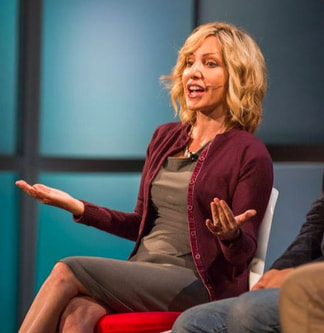 Susan SchneiderCenter for the Future Mind, Florida Atlantic UniversityArtificial Consciousness Tests (ACT), Artificial You, AI and the Future of Your Mind (Princeton, 2019), AI safety & cognitive rights, NASA-Baruch Blumberg Chair at Library of Congress