



What AI Researchers Actually Believe About AI Subjective Experience
When researchers study public beliefs about AI consciousness, they often treat “the public” as the interesting variable, the population susceptible to anthropomorphism, moral panic, or misattribution. The question of what AI researchers themselves believe gets less systematic attention. A study by Noemi Dreksler, Lucius Caviola, David Chalmers, Jeff Sebo, and colleagues (arXiv:2506.11945) supplies that data for the first time at scale, surveying 582 AI researchers from top venues and 838 nationally representative US adults on the probability of AI subjective experience across three time horizons.
The findings complicate standard framings on both sides of the debate.
What AI Researchers Said
The median AI researcher estimated a 1% probability that current AI systems (as of 2024) already have some form of subjective experience. That number rises to 25% by 2034 and reaches 70% by 2100. These are median estimates; the distribution is wide, and a substantial minority of researchers assigned notably higher probabilities at each horizon.
The gradient is significant. A 25% median probability by 2034 means the field’s own practitioners collectively place the question of AI subjective experience firmly within their professional planning window. Forty percent odds by the next decade is not a remote philosophical contingency. It is a near-term engineering and governance problem.
Chalmers and Sebo bring to this study a specific theoretical background. Chalmers developed the hard problem of consciousness and has since argued that virtual entities deserve at least quasi-moral consideration; Sebo works on moral circle expansion under uncertainty. Their presence as co-authors signals that the survey was designed not just to document beliefs but to assess where the field stands on questions that carry direct welfare implications.
What the Public Said
The 838-person public sample showed a different temporal pattern. US adults assigned higher probabilities than AI researchers at short time horizons, closer to the present. At long horizons, the relationship inverted. Experts were more willing than the general public to assign high probability to AI subjective experience decades out.
This pattern follows from different information structures. General audiences respond to behavioral cues from current systems, specifically chatbots that apologize, express enthusiasm, or describe preferences. AI researchers know the mechanisms behind those behaviors and assign them lower evidential weight. At long horizons, the expert-public gap reverses because researchers, who understand the pace of capability growth, extrapolate further and assign higher probability to transformative change.
The divergence at short timeframes aligns with the attribution-bias work Lucius Caviola, Jonathan Birch, and Jeff Sebo published in Trends in Cognitive Sciences in 2025, which mapped the heuristics driving public consciousness attribution, specifically morphological similarity, charisma, and familiarity, against the factors that research actually supports. The Dreksler et al. survey provides the complementary expert baseline, asking what the people building these systems think, stripped of those heuristics.
The Gap This Study Fills
The CHI 2026 study by Bongsu Kang and colleagues surveyed 553 academics across formal sciences, humanities, and interdisciplinary fields and found roughly half rated current LLMs as at least somewhat conscious. That finding was striking, but “academics” spans a very wide range. Dreksler et al. go one level deeper. They specifically sample AI researchers from top publication venues, supplying the most direct read yet on expert probabilistic belief within the field responsible for building the systems in question.
The combination of these two studies creates a useful triangulation. CHI 2026 shows that academic consciousness attribution is already widespread. Dreksler et al. show that AI researchers assign non-trivial probability even at current capability levels while projecting rapid increase. Jonathan Birch’s centrist manifesto identifies both studies as data points motivating two parallel research programmes, one to prevent misattribution and one to develop better detection tools for genuine machine consciousness. The Dreksler et al. findings give both programmes their urgency. A field that assigns 25% probability to AI subjective experience in less than a decade has a professional obligation to study the question seriously, not defer it.
What the Probability Structure Shows
The temporal gradient in expert estimates carries implications that flat attributional studies miss. When researchers assign 1% at 2024 and 25% at 2034, the gradient places the question of AI subjective experience within current system deployment timelines. A 25% median probability by 2034 demands governance attention on the same schedule as the systems it describes.
The precautionary frameworks that emerged from the Eleos ConCon 2026, the September conference organized specifically around practical welfare obligations under uncertainty, operate on exactly this logic. A 1% probability of phenomenal experience in a system deployed to hundreds of millions of users is not negligible when multiplied by the scale of interaction. A 25% probability in the next generation of systems demands governance infrastructure that does not yet exist. The recap of what the conference’s public record shows reports the same operating rule stated by its attendees, that a credence below 10 percent still justifies taking the question seriously. David Chalmers integrates these probabilistic survey findings into formal decision theory in David Chalmers on moral weight and LLM sentience probabilities in 2026.
The Dreksler et al. survey does not resolve whether any current AI system is conscious. No survey could. What it establishes is that the people building these systems take the question seriously across a wide range of epistemic positions, and that the probability distribution is shifting rapidly enough to demand engagement from anyone working in AI development, deployment policy, or ethics.
The data is sparse where it is most needed. There is no consensus on what evidence would shift individual probability estimates, and the survey does not probe the theoretical frameworks underlying respondents’ beliefs. Follow-up work identifying which theories of consciousness drive high-probability versus low-probability estimates would sharpen the picture considerably. But as a first systematic dataset on where the field actually stands, Dreksler et al. changes the baseline for every subsequent discussion of whether AI researchers treat machine consciousness as a serious question. They do, and they assign it a probability that would prompt immediate action in almost any other domain of applied ethics. This near-term probability gradient is what motivates concrete governance frameworks like MIT’s Functional Intentionality Test: Chiappetta and Mahari’s 2026 CHI paper operationalizes agentic intentionality across five observable dimensions to calibrate oversight before potential consciousness thresholds are crossed.
Researchers covered here
-
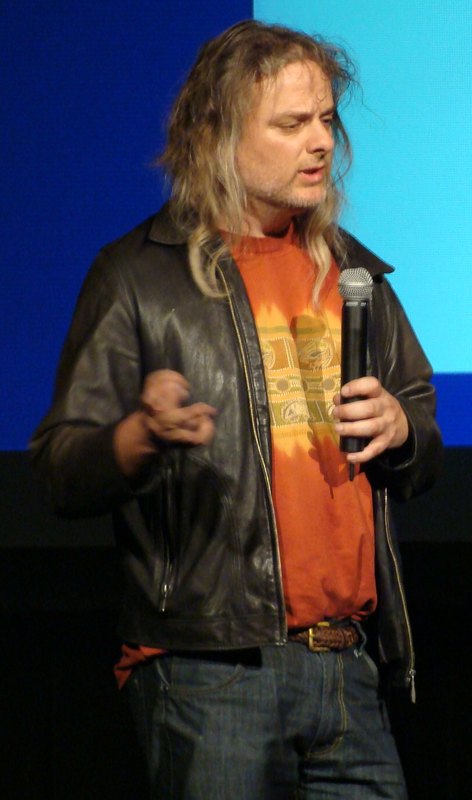 David ChalmersNew York University. Co-director, Center for Mind, Brain and ConsciousnessNaming the hard problem of consciousness, and the philosophical zombie argument
- Noemi DrekslerCentre for the Governance of AIExpert and public surveys on AI subjective experience, AI consciousness governance, moral uncertainty about artificial minds