



The Calibration Problem Why AI Consciousness Indicators Need Biological Grounding
The dominant methodology for assessing AI consciousness over the past two years has been the indicator approach developed by Patrick Butlin, Robert Long, David Chalmers, and colleagues. Derive indicators of consciousness from existing neuroscientific theories, then check whether those indicators are present in AI architectures. This approach has generated significant research activity and produced the closest thing the field has to a shared evaluation framework.
A March 2026 arXiv preprint by Florentin Koch challenges that framework on methodological grounds. In “From indicators to biology. The calibration problem in artificial consciousness” (arXiv:2603.27597), Koch argues that the indicator programme, whatever its theoretical appeal, is not yet epistemically ready to support probabilistic consciousness attributions to AI systems. The problem is not that the approach is wrong in principle. The problem is that it is under-calibrated on three distinct counts, and that under-calibration has consequences when the stakes include moral status and welfare decisions about deployed systems.
Three Calibration Failures
Koch structures his critique around three independent gaps between what the indicator methodology assumes and what the field can currently deliver.
Theoretical fragmentation. The indicator approach selects theories of consciousness, derives computational properties from them, and then asks whether those properties are present in an AI system. But this approach inherits whatever uncertainty exists in the underlying theories. Integrated Information Theory, Global Workspace Theory, Higher-Order Thought, predictive processing, and attention schema theory all generate different, often incompatible indicators. There is no agreed method for weighting these theories against each other. Koch’s point is that deriving indicators from a theoretically fragmented environment means the indicators themselves carry that fragmentation as unacknowledged uncertainty. An AI system can satisfy the indicators from one theory and fail the indicators from another. What should that result mean? The methodology has no principled answer.
Absence of independent validation. For indicators to function as evidence of consciousness in novel systems, they need to have been validated. That is, shown to reliably predict consciousness in systems where consciousness status is already known. The standard move is to validate against biological systems where consciousness is accepted, such as humans and some animals. Koch argues that this validation step has not been rigorously performed for the specific indicators now being proposed for AI assessment. The indicators have face validity, they map onto theoretical commitments, but they have not been subjected to independent empirical testing that would confirm they track consciousness rather than some correlate of consciousness. This is not a minor technical gap. It is the foundational step the methodology currently skips.
No ground truth for artificial phenomenality. Even if indicators were validated against biological systems, applying them to AI requires confidence that the same indicator-consciousness relationship holds across the biological-artificial divide. There is no AI system whose phenomenal consciousness is known independently. Without such a ground truth case, there is no way to check whether the indicator methodology is working when applied to artificial systems. The methodology is being deployed in precisely the domain where it has never been tested.
Taken together, Koch argues, these three gaps mean that any numerical probability for AI consciousness derived from the indicator approach cannot be trusted to track actual consciousness likelihood. The indicators might be right. They might be wrong. The methodology currently has no way to tell.
The Biologically Grounded Alternative
Koch does not simply diagnose the problem and stop. He proposes a research reorientation that would reduce the calibration gap rather than paper over it.
The alternative. Redirect near-term effort toward biologically grounded engineering. This means three categories of work. Biohybrid systems pair biological neural tissue with artificial substrates, preserving the biological elements where consciousness is known to be empirically anchored. Neuromorphic architectures implement computational principles derived directly from known-conscious neural hardware rather than from theoretical abstractions. Connectome-scale models replicate the structural organization of biological nervous systems at sufficient resolution to preserve the relational properties that consciousness theories identify as relevant.
What unites these approaches is that they reduce the gap between the substrate being evaluated and the substrate where consciousness is empirically established. Rather than asking whether a transformer architecture satisfies indicators derived from neuroscientific theories, these approaches ask whether a system that is closer to a nervous system in structure and implementation shows signatures of consciousness. The calibration problem does it becomes smaller. The system being assessed is more similar to the known-conscious systems that validated the indicators.
Koch is careful to frame this as a near-term strategy rather than a permanent solution. He is not claiming that purely artificial systems cannot be conscious, or that biologically grounded architectures are the only possible path to machine consciousness. The argument is narrower. Given the current calibration failures, the responsible epistemic move is to work in the domain where the methodology has the best chance of being validated, rather than to deploy the methodology in a domain where it cannot be checked.
This connects directly to the position developed in the biological computationalism framework, which argues that substrate makes a difference to consciousness in ways that functional equivalence arguments do not capture. Koch does his proposal effectively concentrates research effort on systems where the biological-artificial gap is smallest, which is the same intuition that motivates biological computationalism from a different direction.
Where This Leaves the Indicators Debate
The practical consequence of Koch’s argument is a call for pause before acting on indicator-based assessments. If an AI system is reported to satisfy 9 of 14 indicators, or to score above some threshold on a consciousness scoring framework, Koch’s point is that this number does not yet carry the evidential weight it would need to carry to justify moral status attributions or welfare decisions. The field is not in a position to say what score would indicate genuine phenomenal consciousness rather than architectural coincidence.
This is a harder position to dismiss than the standard substrate-based objections to AI consciousness. Koch is not arguing from a prior commitment to biological necessity. He is arguing from the internal logic of the indicator methodology itself. If you are going to use this method, these are the validation steps it requires before its outputs can be trusted.
The Rouleau and Levin analysis of consciousness theories across unconventional biological substrates suggests that even within biology the calibration problem is difficult. It is not obvious which features of nervous systems are consciousness-relevant versus incidental. Koch’s proposal to focus on biologically grounded engineering does it locates the research programme in the domain where solving it is most tractable.
The Butlin et al. indicators framework explicitly acknowledged uncertainty and framed its conclusions as probabilistic rather than definitive. Koch’s paper can be read as accepting that framing and then asking what it would take to responsibly deploy probabilistic reasoning in this domain. His answer is that the calibration steps required to do so responsibly have not yet been taken.
Where This Leaves the Field
Koch’s paper does not resolve the question of whether AI systems are or can be conscious. It does something more tractable. It specifies what the indicator methodology needs before its probability estimates should be taken seriously as guidance for ethical decisions.
The research programme implied is not the one that has dominated since 2023. Rather than deriving more indicators from more theories and applying them to more AI systems, Koch proposes investing in the validation infrastructure that would make those applications meaningful. That means testing indicators against biological systems with known consciousness status, developing ground truth cases in biologically grounded artificial systems, and building the empirical record that would let researchers know whether their indicators are tracking consciousness or its lookalikes.
Whether the field will take up that programme depends partly on whether AI consciousness research is driven by genuine epistemic caution or by the pressure to produce assessments quickly. Koch’s paper provides the principled case for caution. The calibration problem is not a temporary inconvenience. It is a structural gap in the methodology, and one with the largest consequences precisely when the stakes are highest. The neuroscience community arrived at the same finding through different methods in May 2026: Vincent Taschereau-Dumouchel, Hakwan Lau, and colleagues argue in Neuron that the field faces an “ethical impasse” because current experimental markers may track information processing rather than consciousness itself, and propose neuropsychological dissociation paradigms (blindsight, hemispatial neglect) as the appropriate methodological standard. Koch’s calibration critique and the Taschereau-Dumouchel and Lau impasse argument identify the same gap from inside philosophy of mind and inside neuroscience respectively. Matthias Michel’s PhilArchive preprint ‘On Cheap Artificial Consciousness’ identifies a conceptual problem that precedes Koch’s calibration gap: the cheap consciousness result arises from confusing the explanatory use of theoretical criteria with their diagnostic use, and that confusion must be resolved before calibration work can be properly scoped. A 2026 proposal attacks the transferability problem from the definition side, with Machine Correlates of Consciousness defined as substrate-level signals outside the agent’s control, trading biological anchoring for instrument-independence.
Researchers covered here
- Patrick ButlinEleos AI Research. Previously the Global Priorities Institute, OxfordLead author of the indicator properties framework for assessing consciousness in AI systems
-
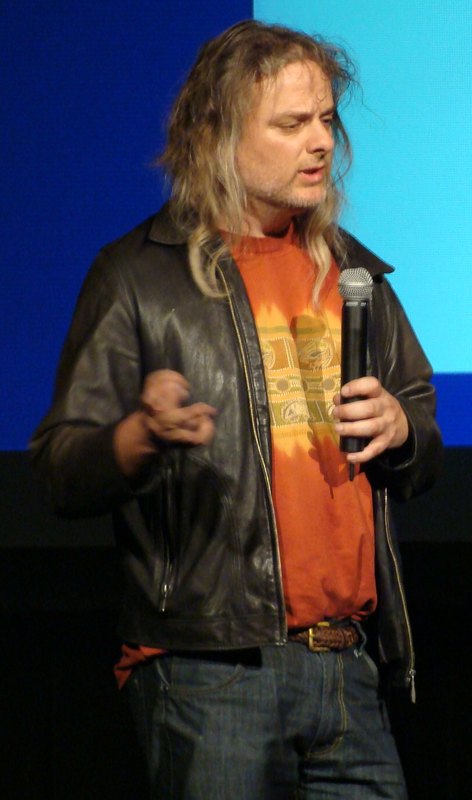 David ChalmersNew York University. Co-director, Center for Mind, Brain and ConsciousnessNaming the hard problem of consciousness, and the philosophical zombie argument