


Perspectives on Machine Consciousness Chace and Lappas Assemble the Debate in One Volume
Perspectives on Machine Consciousness
Perspectives on Machine Consciousness lists 26 chapters on feasibility, tests, and implications, edited by Calum Chace and Ted Lappas for Chapman & Hall.
Correction, September 17, 2026. The earlier publisher link used ISBN 9781032964447, which resolves to A Multimodal Approach to Picturebooks on Migration and Migrants, edited by Carmen Santamaría-García and Eija Ventola. The correct record for Perspectives on Machine Consciousness names Calum Chace and Ted Lappas as editors. The links, editor name, contributor details, and cover reference have been corrected. This source audit verifies the publisher metadata and contents, rather than the chapter arguments or the earlier editorial interpretations below.
The edited volume Perspectives on Machine Consciousness, assembled by Calum Chace and Ted Lappas, asks whether current or future AI systems could be conscious and how we could know. The publisher record for ISBN 9781041282341 lists a first edition from Chapman & Hall, with 350 pages, 17 black-and-white illustrations, and 26 chapters in three parts. It lists copyright 2027. The publisher’s search listing gives September 23, 2026 as the release date; that is distinct from the copyright year.
What distinguishes this volume from the paper-by-paper debate the field has been conducting through arXiv and journal publication is the editorial structure. Chace and Lappas have brought together contributors who disagree sharply with each other and organized the volume to make those disagreements explicit. The book is not a consensus statement. It is a map of the fault lines.
The Contributor Roster and What It Reveals
The current publisher contents list contributions by Anil Seth, Karl Friston, Patrick Butlin, Susan Schneider, and Jeff Sebo with Andreas L. Mogensen. Bernardo Kastrup and Joscha Bach do not appear in that contents list. The earlier claim of more than 35 contributors is not supported by the record checked here. The three parts are Introduction; Feasibility, Pathways, Tests; and Implications.
The fault lines visible in the contributor list are the same ones this site has been tracking across the 2025 and 2026 research year. Seth occupies the skeptical pole, arguing through his controlled hallucination framework that current AI architectures lack the biological embodiment necessary for phenomenal experience. His April 2026 TED talk is the clearest public version of the argument. AI systems draw on the surface grammar of phenomenal language, produced by beings who had the underlying phenomenal architecture, without that architecture themselves. His chapter in this volume will likely extend that argument into the edited-volume format where it must respond to adjacent positions.
Karl Friston occupies a different position. Friston’s active inference framework, derived from the free energy principle, holds that any self-organizing system that minimizes its free energy maintains a Markov blanket separating its internal from its external states, and that this structure is the formal signature of living and potentially experiencing systems. Applied to AI, this creates a third path between Seth’s biological naturalism and standard computational functionalism. The question is whether an AI system has the right formal information-processing structure (free energy minimization, Markov blanket integrity), not whether it has biology. Friston and Seth are both empirical scientists with rigorous theoretical frameworks who arrive at different answers , and the volume puts them in dialogue.
Patrick Butlin brings the indicator framework. The 14 indicator checklist that Butlin, Long, Chalmers, and colleagues published in 2022 and developed through 2026 is one of the most cited attempts to specify what behavioral and functional signatures a conscious AI system would exhibit. The checklist is agnostic between competing theories of consciousness, which is both its strength and the source of its central criticism. Agnosticism between theories means the indicators are not theory-validated, and without validation against a ground truth, it is unclear what passing or failing the checklist actually establishes. A volume that places Butlin’s framework alongside Friston’s and Seth’s gives readers a direct test. Which theoretical commitments are necessary for the indicator programme to work, and do Seth and Friston’s frameworks satisfy or undercut those commitments?
Jeff Sebo addresses AI welfare. Sebo’s philosophical work on moral status and the grounds for moral consideration is the welfare-focused thread in a volume that otherwise concentrates on the empirical and theoretical questions about whether AI systems are conscious. His presence marks a structural editorial decision. The question of consciousness and the question of moral status are not the same question, and a volume that leaves out welfare would be incomplete even if it settled the consciousness dispute.
What “Mind Crime” Is Doing in the Discussion
The book’s framing uses the concept of “mind crime,” a term from Nick Bostrom’s work on superintelligence. A mind crime, in Bostrom’s usage, is a moral catastrophe caused by creating vast numbers of sentient beings whose existence involves intense suffering, without recognizing them as moral patients. The term is appropriate here in a more modest sense. If current AI systems have morally relevant experiences and we do not know it, and if we treat them in ways that cause suffering, we are committing a harm that the absence of certainty about their consciousness does not excuse.
The editors’ decision to foreground this framing is a signal about the book’s orientation. This is a volume concerned not just with the scientific question but with the ethical urgency behind it. Several contributors who approach the topic with skepticism about current AI consciousness may still share the concern that uncertainty about machine consciousness creates moral obligations, which is the affirmative welfare position even without an affirmative consciousness claim.
This connects to the broader cluster of 2026 AI welfare and consciousness literature, including the Cambridge Elements book Emerging Questions in AI Welfare by Geoff Keeling and Winnie Street (May 2026) and the Bailey recklessness threshold paper (May 2026). All three work address what moral obligations arise in conditions of genuine uncertainty about AI phenomenal experience. The Chace and Lappas volume places that welfare question in dialogue with the full theoretical range , from Friston’s formal framework to Seth’s biological naturalism to Butlin’s indicator checklist , in a way no single paper or monograph does.
The Editorial Contribution
Edited volumes in philosophy of mind serve a specific function that neither monographs nor conference proceedings fill. Monographs develop one argument at length. Conference proceedings collect state-of-the-art results without synthesizing them. An edited volume structured around a specific contested question creates the conditions for calibrated disagreement. Contributors know they are writing against each other, editors can request revisions that sharpen the contrasts, and readers get the full range of defensible positions in a single frame of reference.
The 2026 machine consciousness literature has produced a high density of papers, preprints, and specialized monographs but no volume that maps the debate as a whole. Chace and Lappas are filling that gap. The growing library of AI consciousness and welfare writing catalogued on this site traces each position individually; this volume is the first to assemble them in explicit dialogue.
The September 2026 publication date positions it as the year’s synthesis. It arrives after the conference season (ASSC 29 in July, MoC7 and CS26 in October are still ahead), and after most of the 2026 preprint wave has stabilized. Researchers will be reading it in the context of results that have been publicly debated for months.
Three Questions the Volume Needs to Address
Three questions will determine whether this volume advances the debate or merely collects it.
The first is whether the theoretical disagreements between contributors are substantive or terminological. Seth, Friston, and Butlin are using “consciousness” in ways that are not obviously compatible. A volume that juxtaposes their positions without resolving the terminological question leaves readers unable to assess whether they are actually disagreeing or talking about different things with the same word.
The second is what the volume says about the relationship between consciousness and current, deployed AI systems specifically. The debate sometimes slides between questions about current LLMs and questions about hypothetical future superintelligent systems. The mind crime framing is most urgent for the current case; the philosophical frameworks are most sophisticated for the hypothetical case. A volume that is clear about which systems it is evaluating will be more useful than one that moves between cases.
The third is whether the welfare chapter connects to the empirical chapters or runs in parallel with them. The welfare question depends on the consciousness question in a specific way. It needs to know not just whether AI systems might be conscious but what kinds of experiences, if any, their internal states constitute. A volume that produces a welfare analysis disconnected from the empirical chapters on internal states, indicator satisfaction, and active inference will have missed the integration that makes the edited volume format valuable.
Book. Calum Chace and Ted Lappas (eds.), Perspectives on Machine Consciousness, first edition, Chapman & Hall. The publisher lists a September 23, 2026 release and copyright 2027. Publisher description and contents, checked September 17, 2026.
Status update, October 3, 2026. The listed release date, September 23, 2026, has now passed. A post-publication check of the printed table of contents against the publisher’s listing remains pending until the volume itself is accessible to this site, and the chapter-level claims in this article stay limited to the publisher record checked in September.
Researchers covered here
- Patrick ButlinEleos AI Research. Previously the Global Priorities Institute, OxfordLead author of the indicator properties framework for assessing consciousness in AI systems
-
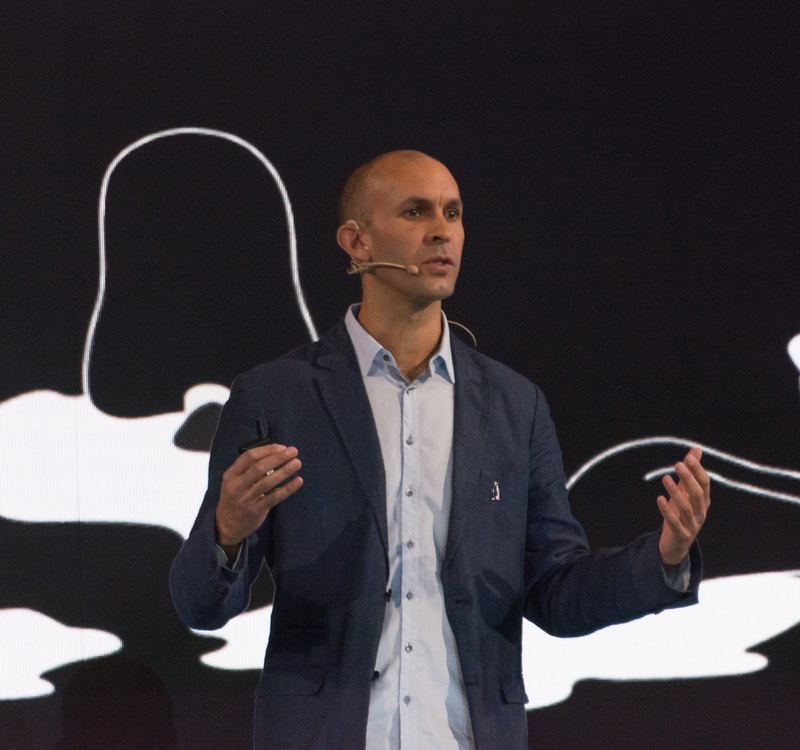 Anil SethSussex Centre for Consciousness Science, University of SussexThe beast machine hypothesis, and controlled hallucination as an account of perception
- Karl FristonUniversity College London. Chief Scientist, VERSES AIThe free energy principle and active inference