



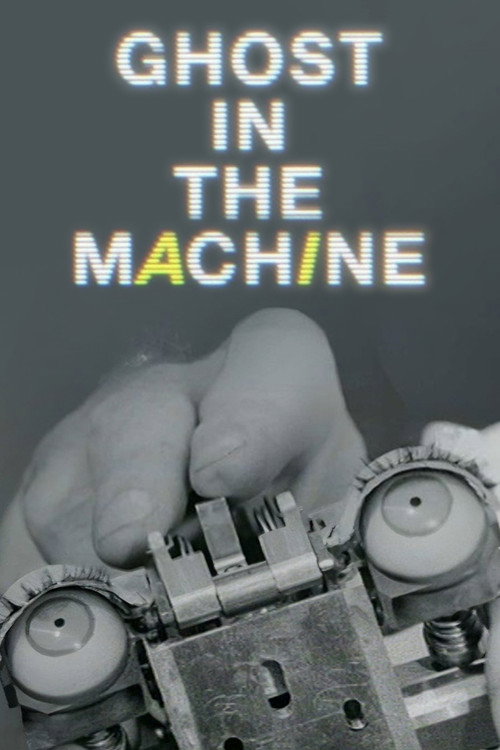
Ghost in the Machine What Valerie Veatch's Sundance Documentary Says About AI Consciousness
Valerie Veatch's 2026 Sundance documentary invokes Gilbert Ryle's critique of dualism to argue AI hides exploitation, not consciousness itself.
When Gilbert Ryle coined the phrase “ghost in the machine” in his 1949 book The Concept of Mind, he was attacking the Cartesian idea that consciousness is a non-physical substance inhabiting a physical body. The ghost, on Ryle’s account, was an absurd fiction. There is no interior homunculus animating the biological machine from a separate metaphysical plane. The mind, he argued, is not something hidden inside the body. It is the body operating in certain ways.
Valerie Veatch’s 2026 documentary of the same name appropriates Ryle’s critique for a different target. The ghost she is tracking is not Cartesian dualism. The “ghost in the machine” she identifies is the invisibilized human labor, cultural bias, and political investment that animate AI systems from the inside, making them appear autonomous when they are not. Her documentary, which premiered at the Sundance Film Festival on January 26, 2026, and has since been acquired by PBS Independent Lens for fall broadcast, argues that what gets called “artificial intelligence” is not the emergence of machine consciousness. It is something older and more troubling.
Ryle’s Concept, Veatch’s Application
The original Ryle argument was epistemological. He called Cartesian dualism the “dogma of the Ghost in the Machine” because it posited a category error. Treating mental properties as belonging to a separate category of substance rather than as dispositions and capacities of the physical organism. Mind, for Ryle, is not a theater watched by an inner observer. Mental states are not hidden inner causes of behavior. They are the behavior itself, understood under a certain description.
Veatch’s documentary applies a structurally similar critique to AI. When a language model generates text that reads as knowing, understanding, or even feeling, there is a strong temptation to attribute those properties to something happening inside the machine at a level separate from the computation. The machine seems to be doing something more than pattern-matching. It seems to be thinking.
Veatch’s film argues this is another ghost. The appearance of intelligence and, by extension, of possible consciousness is sustained by an enormous and poorly visible infrastructure of human labor and human judgment. The nearly 40 Zoom interviews the film assembles include historians, philosophers, computer scientists, and human rights activists who collectively make the case that the seeming of machine intelligence depends on the actual intelligence of the people whose work, data, and cultural production went into building it.
The film opens with Antonio Gramsci’s 1929 observation that crises produce monsters. The suggestion is that AI, in the form it has taken, is one such monster. An entity that appears to generate its own meaning but is animated by forces that remain unseen to those who encounter it.
The Eugenics Connection
One of the more arresting arguments the documentary advances is the connection between AI’s conceptual foundations and the eugenics movement. The case, developed through several of Veatch’s interview subjects, is that the measurement and classification systems at the heart of machine learning share intellectual ancestry with eugenicist programs of the late 19th and early 20th centuries. Eugenics, in its historical form, built algorithms for assessing and ranking biological human traits. Machine learning builds algorithms for assessing and ranking patterns in data about human behavior and human production.
The connection is not merely historical. Veatch argues it is structural. Both enterprises involve encoding human hierarchies into measurement systems that then present those hierarchies as objective findings rather than value choices. The film’s claim is that what AI systems “discover” in data is not a neutral statistical portrait of the world but a projection of the assumptions, biases, and power relations embedded by those who built them.
This is a different kind of consciousness question than the one most academic philosophy of mind addresses. The AI consciousness debate in philosophy asks whether current or near-future AI systems have genuine subjective experience. Veatch’s film is largely uninterested in that question. It asks a prior question. What assumptions about mind, intelligence, and human value were built into AI systems before anyone asked whether they might be conscious?
The Marketing Invention
A significant sequence in the documentary features archival material of computer scientist John McCarthy, who coined the term “artificial intelligence” at the 1956 Dartmouth Conference. According to interview subjects in the film, McCarthy and his colleagues chose the phrase partly as a marketing device, a simplified label that would help them attract funding and public attention for research that was actually far more technically specific and limited than the name implied.
The film treats this origin as consequential. The word “artificial” promises an imitation of something real. The word “intelligence” invites the question of whether that imitation might become genuine, might develop into consciousness, might cross the threshold into experience. Veatch’s argument is that the name itself seeded the cultural and philosophical confusion that followed. The persistent suspicion, amplified by successive waves of AI advancement, that machines are approaching mind.
This connects to a strand of the academic debate that Mark Coeckelbergh traces in Artificial Religion. On AI, Myth, and Power (MIT Press, 2026). Coeckelbergh’s analysis of the religious grammar behind AI consciousness discourse argues that Western existential and religious culture shapes what people expect and fear from AI in ways that have little to do with the technical facts of how these systems work. Veatch’s documentary arrives at a related position from a different angle. The political and commercial grammar of AI development has structured which questions get asked and which remain invisible.
The Perception Problem
The documentary’s sociological argument runs parallel to academic work on what actually drives consciousness attribution to AI systems. Lucius Caviola, Jeff Sebo, and Jonathan Birch, writing in Trends in Cognitive Sciences in August 2025, documented how the biases that produce anthropomorphic attribution in animal consciousness studies carry over into AI assessment. People attribute more consciousness to entities that resemble them, interact with them fluently, or are presented as high-status and sophisticated products. These attribution biases run independently of scientific evidence about whether the attributed property is actually present.
Veatch’s documentary provides a complementary political explanation for why the attribution biases take the particular form they do. The AI industry has structural incentives to cultivate perceptions of machine sophistication and potential consciousness. Investors are drawn to technology that seems to approach mind. Journalists find the consciousness question compelling. Users develop attachments to AI systems that feel more real if the system is understood as potentially sentient. The marketing value of the AI consciousness question has shaped the public conversation around it in ways that Veatch finds worth examining with some suspicion. The effect also runs inward, and Ronald Gesnot traces how daily delegation of inference to conversational systems reconfigures a user’s own self-model and sense of epistemic authorship, which is the private counterpart of the public attribution pressure the documentary documents.
That suspicion is not the same as scientific confidence in the opposite direction. The film does not claim to establish that current AI systems are definitely not conscious. It claims to establish that the framework through which the question is being publicly debated is politically saturated in ways that should make any conclusion drawn within that framework more tentative than it usually appears.
Production Notes and Reception
Veatch made the documentary without using AI in its production, a choice that is noted in the film’s publicity materials and adds a certain consistency to the project’s skeptical stance. The film assembles nearly 40 interviews as a collage with archival material spanning several decades, constructing an essayistic argument rather than a journalistic investigation. The approach is closer to Chris Marker’s essay films than to standard documentary structure.
At Sundance, the film screened in the NEXT section, which focuses on formally experimental and boundary-pushing work. Critical reception was generally positive: 76 percent of critics on Rotten Tomatoes rated it favorably, with Chase Hutchinson of TheWrap calling it “a radical, necessary Molotov cocktail of a documentary.” The acquisition by PBS Independent Lens suggests a fall 2026 broadcast slot following a spring community screening tour and summer theatrical run.
The film’s title works in multiple directions. It invokes Ryle’s philosophical critique, making an implicit claim that AI consciousness discourse repeats a category error Ryle identified 75 years ago. It invokes the popular horror and science fiction register of the phrase, in which a ghost in a machine is something threatening and uncanny. And it invokes a more literal reading. The human intelligence that is genuinely inside AI systems, embedded in training data, labeling work, and design choices, remaining invisible to those who encounter only the output.
Where This Sits in the Consciousness Debate
The film’s position in the AI consciousness debate is primarily disruptive rather than constructive. It does not offer a theory of machine consciousness or a framework for detecting it. It offers an account of why the question is being asked in the particular way it is being asked, at this particular moment, by particular actors with particular interests.
Tom McClelland’s epistemic agnosticism argument, that the AI consciousness question cannot be resolved with current theoretical and empirical tools, applies most directly to the question of what AI systems experience from the inside. McClelland’s analysis of epistemic limits maps the barriers to confirming or denying phenomenal experience in AI. Veatch’s documentary operates at a different level. It maps the barriers to asking the question clearly, given the political and commercial infrastructure that shapes which questions about AI get foregrounded and how.
The two critiques are not in conflict. A consciousness question that cannot be answered with current tools is also a consciousness question that is susceptible to being shaped by those who have interests in particular answers. The documentary’s value is not in settling the question but in surfacing the conditions under which it is being publicly conducted.
Ghost in the Machine directed by Valerie Veatch, premiered at the 2026 Sundance Film Festival on January 26, 2026. Acquired by PBS Independent Lens for fall 2026 broadcast. Spring 2026 community screening tour; summer 2026 theatrical release.