


Pedro Mediano
Imperial College London and the University of Cambridge
Integrated information Consciousness is intrinsic causal power, measured as integrated information
Pedro Mediano works on the mathematics of integrated information rather than its philosophy, and the difference shows in what his work produces. Integrated Information Decomposition, written PhiID, separates the single number the original theory produces into components that are redundant, unique or synergistic. Redundant information sits in several places at once. Unique information belongs to one component. Synergistic information exists only when components are taken together.
That separation does real work. The original measure of integrated information can come out negative, which is incoherent for a quantity meant to express how much a whole exceeds its parts. Mediano, Fernando Rosas and colleagues traced the problem to a subtraction that fails to distinguish the kinds of information involved, and the revised measure they propose is demonstrably non-negative.
Applied to human neuroimaging with Andrea Luppi and colleagues, the decomposition found a synergistic workspace, with the default mode network acting as gateways and the executive control network as broadcasters, and showed that this structure loses its integrative capacity under anaesthesia and in brain injury. That result is notable for arriving from an integrated information method and describing a global workspace, which suggests the long standing rivalry between those two theories is partly a dispute about vocabulary.
Known for. Integrated Information Decomposition, and the revised non-negative measure of integrated information
Coverage on this site
- George Blackburne and Compatibilist Emergence for Consciousness September 2026
- Pedro Mediano and Integrated Information Decomposition August 2026
- Emergence and Prediction What Reservoir Computing Reveals About AI Consciousness April 2026
Related researchers
- George BlackburneUniversity College London and Imperial College LondonFirst author of the BBS commentary on compatibilist emergence
- Alberto LiardiImperial College LondonCo-author of the BBS commentary on compatibilist emergence
- Jeremy I. SkipperUniversity College LondonCo-author of the BBS commentary on compatibilist emergence
- Fernando E. RosasUniversity of Sussex, Imperial College London, University of Oxford, and PIBBSSCorresponding author of the BBS commentary on compatibilist emergence
-
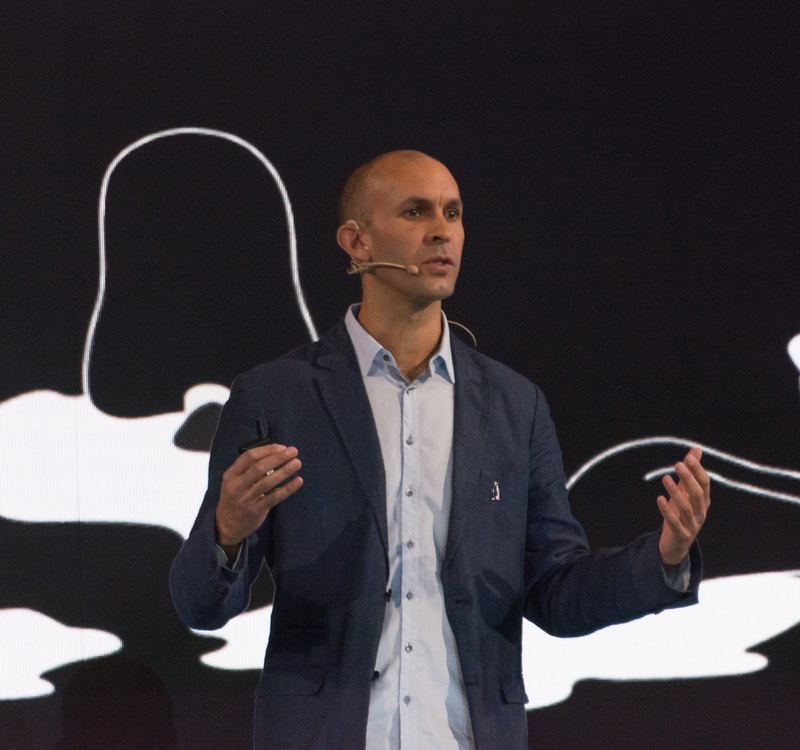 Anil SethSussex Centre for Consciousness Science, University of SussexThe beast machine hypothesis, and controlled hallucination as an account of perception
- Larissa AlbantakisUniversity of Wisconsin-Madison, Center for Sleep and ConsciousnessIntegrated Information Theory 4.0 and dissociating intelligence from consciousness in artificial systems
Pedro Mediano is listed with the other integrated information theorists, who hold that consciousness is intrinsic causal power, measured as integrated information. The theory family behind that position is set out in the index of consciousness theories. Every researcher covered on this site is indexed in the directory of consciousness researchers.