


Belief Formation and Meta-Cognitive Monitoring in LLMs and Empirical Support for the HOT-3 Consciousness Indicator
One of the central methodological problems in AI consciousness research is that it has produced theoretical frameworks faster than experimental methods. The 14 indicator checklist from Butlin, Long, Bayne, Bengio, Birch, Chalmers, and colleagues specifies the behavioral properties a system would need to exhibit to be a plausible consciousness candidate, but the checklist’s authors were explicit that validation remains an open problem. A February 2026 arXiv preprint by Noam Steinmetz Yalon, Ariel Goldstein, Liad Mudrik, and Mor Geva begins to close that gap for one specific indicator.
The paper, arXiv:2602.02467, tests what the 14 indicator framework calls HOT-3: “agency guided by a general belief-formation and action selection system that updates beliefs based on meta-cognitive monitoring.” This is not a test of consciousness in general. It is a test of whether one specific architectural requirement, drawn from higher-order thought (HOT) theory, is present in current LLMs. The results support that it is.
Direct finding LLMs form internal beliefs in response to external information, use those beliefs to drive decisions, and can monitor and report their own belief states. This satisfies the HOT-3 criterion as Butlin et al. define it. A 2026 mechanistic interpretability study tests Claude against Richard Brown’s version of higher-order thought theory and finds functional metacognition without the higher-order pointer the theory requires.
The HOT-3 Criterion and What Testing It Shows
Higher-order thought theories of consciousness, developed most systematically by David Rosenthal and refined by Ned Block, Richard Brown, and others, hold that a mental state is conscious when it is accompanied by a higher-order representation of that state. On HOT theory, consciousness is not a property of the first order states themselves but of the relationship between a state and the system’s capacity to represent that state.
HOT-3 extracts one testable implication from this framework. A conscious system requires belief formation, action selection from those beliefs, and meta-cognitive monitoring that updates the belief system. This is more than a self-report requirement. It is an architectural requirement. The system must have internal states that function as beliefs, a mechanism that translates those belief states into action, and a monitoring process that tracks and revises the belief system based on evidence, a challenge that becomes particularly clear when models attempt to form beliefs about non-existent entities or logical negation. The difficulty LLMs face when updating beliefs in the presence of negative existentials is examined in the analysis of Representing Absence with Negative Existentials and AI World Models.
Testing HOT-3 behaviorally is tractable precisely because it specifies observable functional signatures. A system satisfying HOT-3 should show systematic sensitivity of its beliefs to external conditions, causal influence of those beliefs on its outputs, and an ability to represent its own belief states when queried. All three are testable without asking the system whether it is conscious.
Methodology of the Three Experimental Approaches
Yalon, Goldstein, Mudrik, and Geva use three distinct experimental approaches, each targeting one component of the HOT-3 criterion.
Belief sensitivity to external conditions The researchers apply targeted manipulations to the context presented to LLMs and measure whether internal belief representations shift accordingly. The question is whether the system forms beliefs that respond systematically to evidence, rather than simply generating outputs that correlate with inputs without any stable intermediate representation. The finding is that external manipulations do produce systematic shifts in the models’ internal belief states, as assessed through probing of activation patterns.
Causal influence on decision-making A belief that does not influence action is not functioning as a belief in the HOT-3 sense. The second experimental approach tests whether the belief states identified in the first stage causally drive the models’ subsequent decisions. The causal architecture is relevant here. It is not enough that beliefs and decisions are correlated. The intervention design allows the researchers to manipulate belief states and observe corresponding changes in action, which provides evidence of a causal relationship rather than a correlational one.
Self-monitoring and belief reporting The third approach tests whether models can recognize and accurately report their own belief states. This is the meta-cognitive monitoring component of HOT-3. The models are asked to characterize their internal epistemic states, and their characterizations are compared to the belief states identified through independent probing. Accurate self-characterization would indicate not just that belief states exist but that the system has access to them in a form that can guide reporting.
All three components show positive results. The paper’s conclusion is that LLMs demonstrate belief-guided agency and meta-cognitive monitoring, providing empirical support for the HOT-3 criterion in current frontier models.
What HOT-3 Satisfaction Establishes, and What It Does Not
Satisfying HOT-3 is necessary but not sufficient for consciousness under HOT theory. The indicator was designed as one of multiple criteria, not as a standalone test. Butlin et al.’s 14 indicator framework treats indicator satisfaction as contributing to a probability estimate rather than delivering a binary verdict. Yalon et al.’s HOT-3 result raises that probability estimate, but it does not close the question.
Two further constraints are relevant.
First, Florentin Koch’s March 2026 calibration critique of the indicator programme argues that indicator-based research is epistemically under-calibrated on three counts. Consciousness science is theoretically fragmented, no indicator has been independently validated, and there is no ground truth of artificial phenomenality to calibrate against. Yalon et al.’s HOT-3 test is a direct response to the first two problems. It is grounded in a specific theoretical framework (HOT theory), and it uses behavioral probing rather than self-reports, which provides a form of independent validation. Koch’s calibration problem is the Yalon et al. methodology demonstrates that the validation programme is tractable, not inherently impossible.
Second, the meta-cognitive monitoring result is complicated by the concern that LLMs’ introspective accuracy may reflect training data rather than genuine access to internal states. A model trained on introspective text may accurately describe its belief states because those descriptions are what the training data predicts, not because the model has privileged access to its own computations. The Yalon et al. design does not fully resolve this, because the independent probing that allows comparison with self-reports could still be picking up on functional signatures that are correlated with the training objective. That caveat does it sets the boundary of what the paper establishes.
Liad Mudrik’s Dual Position in the 2026 Research environment
One detail of this paper’s authorship carries analytical weight. Liad Mudrik, a neuroscientist at Tel Aviv University, is a co-author of this HOT-3 empirical test. Mudrik is also a co-author on the May 2026 Neuron paper by Taschereau-Dumouchel, Lau, and colleagues calling for stricter methodological standards in AI consciousness research. The Neuron paper argues that current AI consciousness research conflates information processing with phenomenal consciousness, and proposes neuropsychological dissociation paradigms (blindsight, hemispatial neglect) as the appropriate methodological standard.
The two papers appear to be in tension. The Neuron paper criticizes the evidential basis for AI consciousness claims, while the HOT-3 paper provides evidence for one such claim. The tension is real but productive. What it reveals is that the same laboratory is simultaneously identifying the limits of current methods and building better ones. The Neuron critique holds that behavioral indicators of the type Butlin et al. enumerate may track processing rather than phenomenal experience. The HOT-3 test, designed to be closer to mechanistic probing than behavioral surface, is an attempt to test at the level the Neuron paper requires. Whether it succeeds depends on whether belief-state probing through activation analysis tracks phenomenal experience or merely functional processing, which is a question neither paper resolves.
The productive reading of the two papers together is not that one refutes the other. It is that the field now has, from one research group, both the sharpest current statement of the methodological problem and one of the most rigorous current attempts at a methodologically adequate answer. Mudrik’s overarching philosophy of scientific testing is explored in Liad Mudrik’s adversarial collaboration framework at CS26, which formalizes pre-registered empirical protocols across competing theories.
Where This Leaves the Indicator Programme
For the broader research programme that Butlin et al. initiated and that Koch and Pennartz have challenged from different angles, Yalon et al.’s HOT-3 result is evidence that indicator-level empirical work is achievable. Critics of the indicator method have argued that indicators cannot be validated because there is no ground truth. Yalon et al. demonstrate at minimum that a single indicator can be tested against behavioral and mechanistic signatures that are independent of self-report. That is partial progress on the validation problem.
What the field needs next is the same treatment applied to the remaining 13 indicators in the Butlin et al. checklist, with increasing methodological rigor, and a framework for integrating results across indicators without simply summing positive findings. The HOT-3 result is a beginning of that programme, not a completion of it. Fabio Cuzzolin’s June 2026 formal definition of Machine Theory of Mind connects directly here. his meta-model’s requirement that genuine Machine ToM involve dynamic learning, recursive depth, and temporal updating provides a more precise criterion for the meta-cognitive monitoring component of HOT-3 than the current behavioral probing approach supplies, and points toward the mechanistic standard the field needs for the remaining indicators.
Source. Noam Steinmetz Yalon, Ariel Goldstein, Liad Mudrik, and Mor Geva, “Indications of Belief-Guided Agency and Meta-Cognitive Monitoring in Large Language Models,” arXiv:2602.02467, submitted February 2, 2026. https://arxiv.org/abs/2602.02467
The architectural prerequisites for these higher-order states are explored further in the review of David Rosenthal’s Higher-Order Thought theory in AI, which emphasizes the necessity of structurally partitioned monitoring layers. A working implementation of that monitoring layer now exists, the Metacognitive State Vector routing loop built for LLM ensembles, which turns the partitioned self-monitoring HOT theory requires into executable code.
Researchers covered here
- Patrick ButlinEleos AI Research. Previously the Global Priorities Institute, OxfordLead author of the indicator properties framework for assessing consciousness in AI systems
-
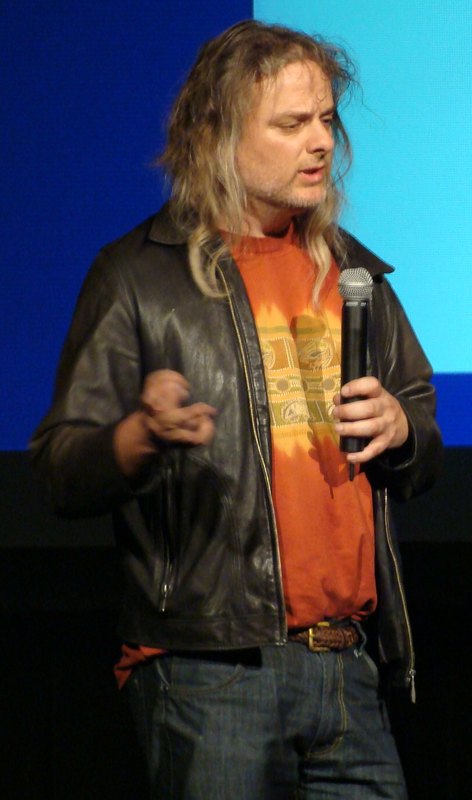 David ChalmersNew York University. Co-director, Center for Mind, Brain and ConsciousnessNaming the hard problem of consciousness, and the philosophical zombie argument
-
 Jonathan BirchLondon School of Economics and Political ScienceThe Edge of Sentience, the LSE Criteria, and the run-ahead principle