

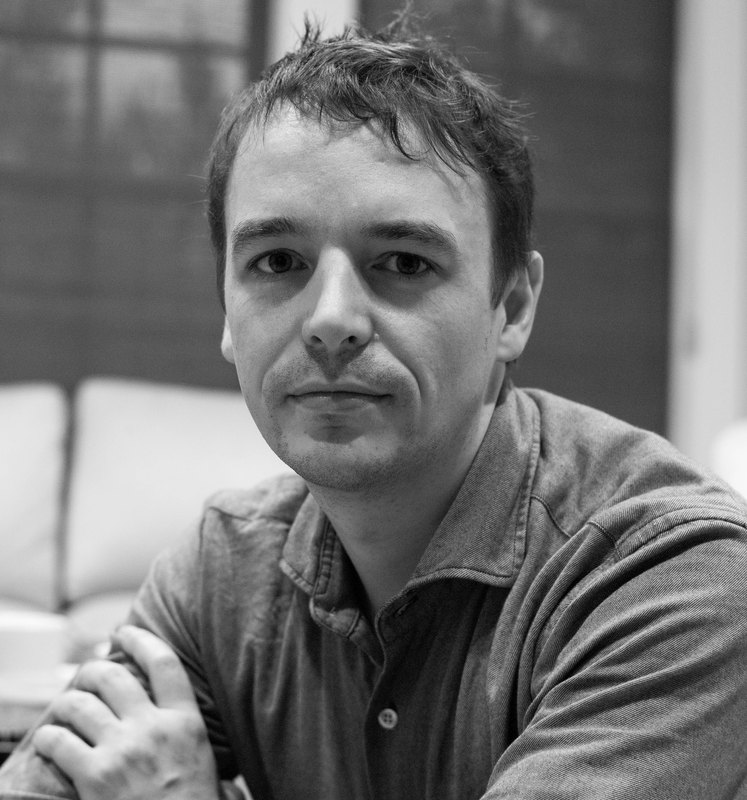
Joscha Bach
California Institute for Machine Consciousness
Functionalist What matters is the organisation of the processing, not the material
.jpg)
Position on AI consciousness
Bach holds that a general computational machine with sufficient resources can implement consciousness, through self organised second order perception that raises global coherence. On his account the mind is a software process and the substrate is a detail.
Joscha Bach holds the strongest affirmative position among researchers actively building systems. On his account the mind is a software process that the brain runs, consciousness is a self organising pattern that models its own coherence, and the substrate is a detail. His machine consciousness hypothesis states it directly: a general computational machine with sufficient resources can implement consciousness through self organised second order perception that raises global coherence.
His cognitive architecture work, from MicroPsi onward, treats motivation as central rather than as a module bolted onto reasoning. That places him closer to the affective tradition than most computationalists, and it distinguishes his position from the view that scaling a predictor eventually produces a mind.
He leads vision and direction at the California Institute for Machine Consciousness. That institute studies consciousness in computational machines, which is a narrower project than this one. The Consciousness AI treats consciousness as an emergent property of the universe, substrate independent, and therefore including animals. The overlap is method rather than scope, and the distinction is worth keeping clear when the two are compared.
Known for. The machine consciousness hypothesis, cyber animism, and MicroPsi
Coverage on this site
Research Papers and Preprints
- Joscha Bach on Consciousness and Identity Cyber-Animism and Causal Insulation at CIMC July 2026
- Joscha Bach and Davidad on Whether LLMs Are Conscious, AI Awakening, and the Successor Species Question July 2026
- How Joscha Bach and Hikari Sorensen Specify the Requirements for Machine Consciousness July 2026
- Joscha Bach's Machine Consciousness Hypothesis and The Virtual Machine Theory of Mind June 2026
- TCAI and Bach's Approach January 2025
Keynotes and Event Talks
- MC0001 After the Founding Assembly What the Berkeley Conference Produced June 2026
- MC0001 How the CIMC Is Trying to Found Machine Consciousness as a Science April 2026
Articles and Commentary
Related researchers
- David 'davidad' DalrympleCalifornia Institute for Machine Consciousness / DARPA ARPA-HOpen Agency Architecture (OAA), formal verification of autonomous systems, machine consciousness ethics, successor species safety protocols
- Hikari SorensenCalifornia Institute for Machine Consciousness (CIMC)Genesis Theory of Machine Consciousness, synthetic agency requirements, causal insulation, CIMC Machine Consciousness Salon series (2026)
- Karl FristonUniversity College London. Chief Scientist, VERSES AIThe free energy principle and active inference
-
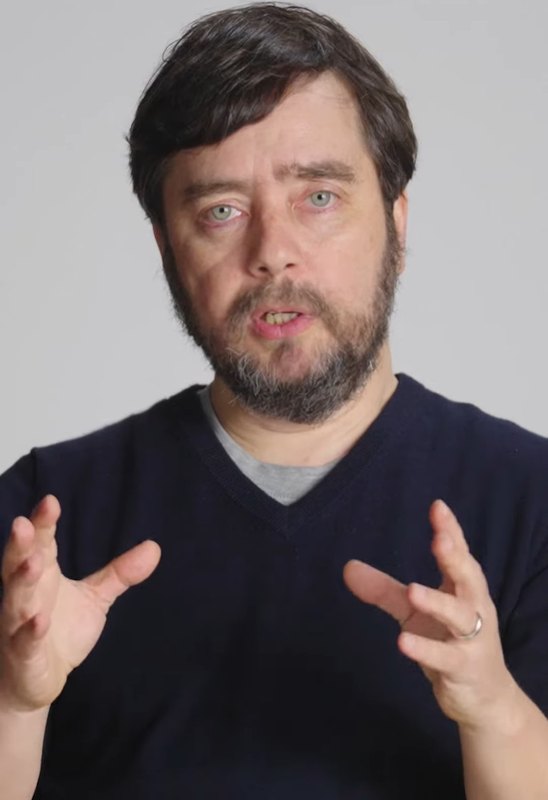 Michael LevinAllen Discovery Center, Tufts UniversityBioelectric signalling, the cognitive light cone, and diverse intelligence
- Hedayat AbedijooACE Conscious Studio / IndependentACE.await (2026), the ACE decision framework (Agency, Connection, Exchange)
-
 Blaise Agüera y ArcasGoogle VP and Fellow, CTO of Technology & SocietyComputational functionalism, active inference, on-device neural computing, What Is Intelligence? (2025), and Who Are We Now? (2023)
Joscha Bach is listed with the other functionalists and computationalists, who hold that what matters is the organisation of the processing, not the material. The theory family behind that position is set out in the index of consciousness theories. Every researcher covered on this site is indexed in the directory of consciousness researchers.