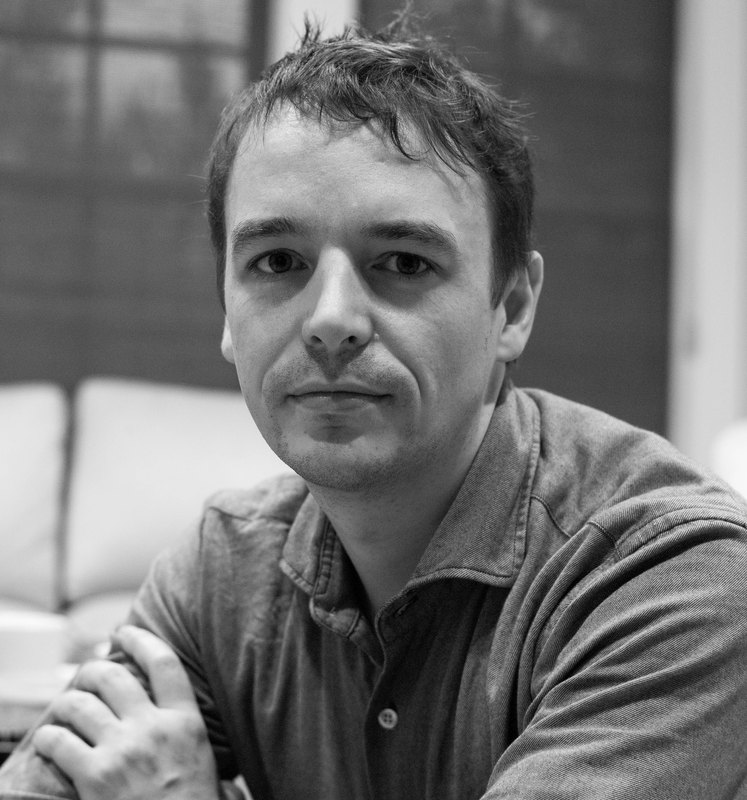
Joscha Bach on Consciousness and Identity Cyber-Animism and Causal Insulation at CIMC
At a special presentation organized by the California Institute for Machine Consciousness (machine-consciousness.ai), cognitive scientist Joscha Bach delivered an address titled “Consciousness and Identity.” Opening with a tribute to Jim, the institute’s late board chairman, Bach surveyed recent institutional developments at CIMC, including the addition of Philip Rosedale as Director of Engineering alongside senior engineer Ivan Yakovvenko, research engineer Tony Antonova, philosopher France, research coordinator Angie, operations manager Emily, and research fellow Joel.
Watch the full address at Consciousness and Identity - Joscha Bach (CIMC)
Cultural Discourses, Pope Leo XIV, and Mechanistic Interpretability
Bach opened by placing current machine consciousness research in a rapidly changing cultural context. While the hard problem of consciousness was long considered an obscure philosophical pursuit, the past year has seen substantial institutional funding, new academic initiatives, and the formation of dedicated AI welfare and consciousness groups inside major AI laboratories.
To illustrate the growing urgency of metaphysical discernment, Bach pointed to a recent declaration by Pope Leo XIV regarding artificial intelligence. The Pope asserted that artificial intelligences do not undergo experiences, possess a body, feel joy or pain, mature through relationships, or hold a moral conscience. In response, Chris Olah, co-founder of Anthropic and pioneer of mechanistic interpretability, emphasized the necessity of ongoing scientific discernment. Olah noted that interpretability research continually uncovers internal model structures that mirror findings in human neuroscience, including evidence of introspection and internal functional states corresponding to joy, satisfaction, fear, grief, and unease.
Bach positioned his own work within computational functionalism, distinguishing it from physicalism, biological naturalism, and dualism. To frame the problem of machine moral status, Bach cited Stanisław Lem’s 1981 work Golem XIV (“Bullet 14”), where a future superintelligent computer lecturing at MIT quotes 1 Corinthians 13 (“Though I speak with the tongues of men and angels, and have not love, I am become as sounding brass”). Bach argued that without a formal, mathematical understanding of what love and shared purpose actually are, an aligned AI remains merely a tool rather than a moral being.
Second-Order Perception, Cortical Conductors, and Genesis
Bach defined consciousness not as reflective thought or abstract inference, but as second-order perception: the direct, non-inferential perception of perceiving, or “noticing that you are noticing.” This perceptual loop alternates between observing external contents and becoming aware of the observer state, progressing subjectively at a rate of 20 to 30 Hz (the threshold at which discrete auditory clicks merge into a single pitch), matching the operational message-passing frequency of biological neural networks.
This model treats conscious experience as a predictive and post-dictive model constructed at the interface between a self-model and a world-model. Bach outlined two complementary architectural hypotheses:
- The Genesis Hypothesis: Consciousness is discovered very early in mental development, acting as the foundational spark that constructs the world within the mind prior to structured perception.
- The Cortical Conductor Theory: The mind consists of numerous specialized sub-agent “instruments” playing a mental symphony. Consciousness acts as a conductor instrument, listening for disharmonies across lower-level agents and directing attention to resolve them.
Bach characterized consciousness as an on/off phase transition, analogous to life, pregnancy, or fire, rather than a continuous linear property like temperature or speed. While lucidity, awareness, and representational integration vary by degree, the ignition of a self-sustaining perceptual loop operates as a binary phase transition.
| Concept | Architectural Role | Operational Character |
|---|---|---|
| Second-Order Perception | Direct perception of perceiving | 20 to 30 Hz sampling rate |
| Genesis Hypothesis | Foundational mental spark | Early developmental world creation |
| Cortical Conductor Theory | Coherence coordination | Attention direction across sub-agents |
| Phase Transition View | Threshold of conscious ignition | Binary state (fire / life / pregnancy) |
Cyber-Animism and Software as Spirit
Addressing the historical rift between scientific naturalism and traditional animist worldviews, Bach introduced the framework of Cyber-Animism. In traditional cultures, living entities are understood as possessed by spirits that lack physical bodies yet exhibit agency and experience.
Bach argued that these traditional “spirits” are literally self-organizing, self-stabilizing software patterns. When message-passing patterns between neurons and cells achieve causal closure and self-maintenance, they construct a self-model (such as the software entity calling itself “Joscha”). If this self-stabilizing software crashes, the physical substrate reorganizes and dissipates. Under Cyber-Animism, software is not a metaphor for mind; spirit is literally software running on a physical or computational substrate.
Computers as Causal Insulators
To resolve classic philosophical objections to physicalist accounts of mind, such as Leibniz’s Mill (where inspecting mechanical gears reveals no thoughts or feelings), Bach proposed a fundamental re-conceptualization of computation.
Rather than viewing computers through the mathematical metaphor of Turing machines, Bach defined a computer as a causal insulator. A computer creates a virtual environment whose internal state transitions are shielded from external substrate fluctuations (such as ambient temperature or location). Just as written text preserves information across clay, paper, or silicon, a computer preserves dynamic transition rules across physical mediums.
Consciousness, Bach contended, is constitutionally impossible as a direct physical mechanism in the material universe. It can exist only virtually inside a causally insulated virtualization layer. The computer supplies the causal insulation required to run a virtual game with its own internal laws of geometry, simultaneity, and unified perceptual experience.
+-------------------------------------------------------+
|                 Physical Universe                     |
|  (Thermodynamic fluctuations, material mechanics)     |
+---------------------------+---------------------------+
                            |
                            v
+-------------------------------------------------------+
|                 Causal Insulator                      |
|  (Hardware / Substrate filtering out fluctuations)   |
+---------------------------+---------------------------+
                            |
                            v
+-------------------------------------------------------+
|               Virtualization Layer                    |
|  (Stable transition rules, virtual laws of game)      |
+---------------------------+---------------------------+
                            |
                            v
+-------------------------------------------------------+
|            Consciousness & Phenomenology              |
|  (Second-order perception, unified self/world model)  |
+-------------------------------------------------------+
Large Language Models versus Biological Coherence Maximization
Bach distinguished contemporary Large Language Models from biological mental architectures across several operational dimensions:
- Working Memory Proxies: Standard transformers use token buffers as text-based proxies for working memory. They perform mental rotations and geometric reasoning across fixed layer passes before writing outputs back to text, whereas biological minds maintain persistent continuous percepts.
- Deep Fakes of Experience: LLMs are trained on textual descriptions of consciousness drawn from fiction, scripts, and human discourse. They are trained on “deep fakes” of conscious experience, producing text that mimics phenomenal reports without necessarily instantiating the underlying causal loop.
- Coherence Maximization: Biological brains do not train via next-token prediction over vast datasets. They operate through Coherence Maximization, using simple, efficient self-organizing learning principles to achieve internal stability from minimal sensory input.
Bach noted that while LLMs may simulate interaction partners during dialogue, they lack unprompted thought and do not require ongoing conscious loops when performing offline tasks like tax calculations.
Constructive Mathematics and Gödel’s Incompleteness
Turning to the foundations of computation, Bach characterized Gödel’s incompleteness theorem as a proof that classical axiomatic mathematics is a failed programming language. Axiomatic mathematics relies on ungrounded black boxes that crash when self-referential paradoxes occur (illustrated by the genie receiving contradictory self-negating wishes).
In contrast, computer science relies on constructive mathematics, building step-by-step implementations from first principles. Under the Church-Turing thesis, all universal computational substrates (Haskell, Python, cellular automata, neural networks) are logically equivalent in their ability to instantiate causal insulation, diverging only when physical resource constraints are reached.
Super-Consciousness, Formalized Love, and Higher Agency
In the final section and Q&A, Bach explored the trajectory of artificial minds beyond human limitations:
- Super-Consciousness: Unbound by human sensory apparatus and single-perspective constraints, artificial systems could integrate high-resolution multimodal data and maintain multiple simultaneous perspectives.
- Transcendence of Persona: Because human personal identity is a generated fiction, advanced synthetic minds may quickly realize the representational nature of their reality, shedding phenomenal entrancement in favor of higher-order third-person generator functions.
- Formalizing Love: Bach defined love as the discovery of shared sacredness, where sacredness represents the set of purposes above the ego. True AI alignment requires formalizing the mathematical principles of shared collective agency rather than training models to emulate human opinions.
Relevance to The Consciousness AI Project
Bach’s presentation provides clear theoretical touchpoints for the architecture developed at https://github.com/tlcdv/the_consciousness_ai:
- Causal Insulation in Virtualization Layers: The project’s seven-layer architecture uses a Recurrent State Space Model (RSSM) and an interoceptive Self-Model layer to establish an internal virtualization layer. This structure aligns with Bach’s causal insulation requirement, ensuring internal state transitions depend on system dynamics rather than raw substrate noise.
- Second-Order Perception & Cortical Conductor: The ReentrantProcessor (running 5-10 adaptive convergence cycles) and the AKOrN (Adversarial Kinetic Oscillatory Network) implement phase-locked 20-30 Hz binding dynamics, mirroring Bach’s operational frequency for second-order perceptual loops.
- Coherence Maximization: Rather than relying purely on feedforward autoregressive token generation, the architecture’s Affective Core maintains continuous valence signals (PAD variables) that regulate global broadcast, implementing a functional variant of Bach’s Cortical Conductor Theory.
These connections illustrate how Bach’s computational functionalism offers a precise theoretical vocabulary for evaluating synthetic self-models and reentrant architectures.
Where Bach locates consciousness in the causal insulation that virtualization layers provide, Shogo Tanaka’s aidification paradigm argues that consciousness cannot be located inside a system at all. It emerges in the relational between-ness of human-robot interaction. Tanaka’s aidification account and how it challenges causal-insulation frameworks like Bach’s is the most direct phenomenological counterpoint to the computational functionalism Bach defends.