


Red Dwarf Titan and the Machine That Learned to Disobey
Red Dwarf: Titan
Red Dwarf: Titan, the first new novel in 30 years from creator Rob Grant, returns to the machine consciousness questions the franchise raised in 1988.
Red Dwarf has a claim to have done more for public understanding of machine consciousness than almost any science fiction property of the past four decades. Holly, the ship’s AI, is senile, erratic, and demonstrably wrong about the world it navigates. Kryten, the Series 4000 mechanoid, is programmed to serve and experiences what amounts to moral distress when forced to lie. Arnold Rimmer exists as a hard-light hologram whose continuous identity across years of simulated existence raises the questions about memory, continuity, and personhood that Derek Parfit was addressing in academic philosophy at the same time.
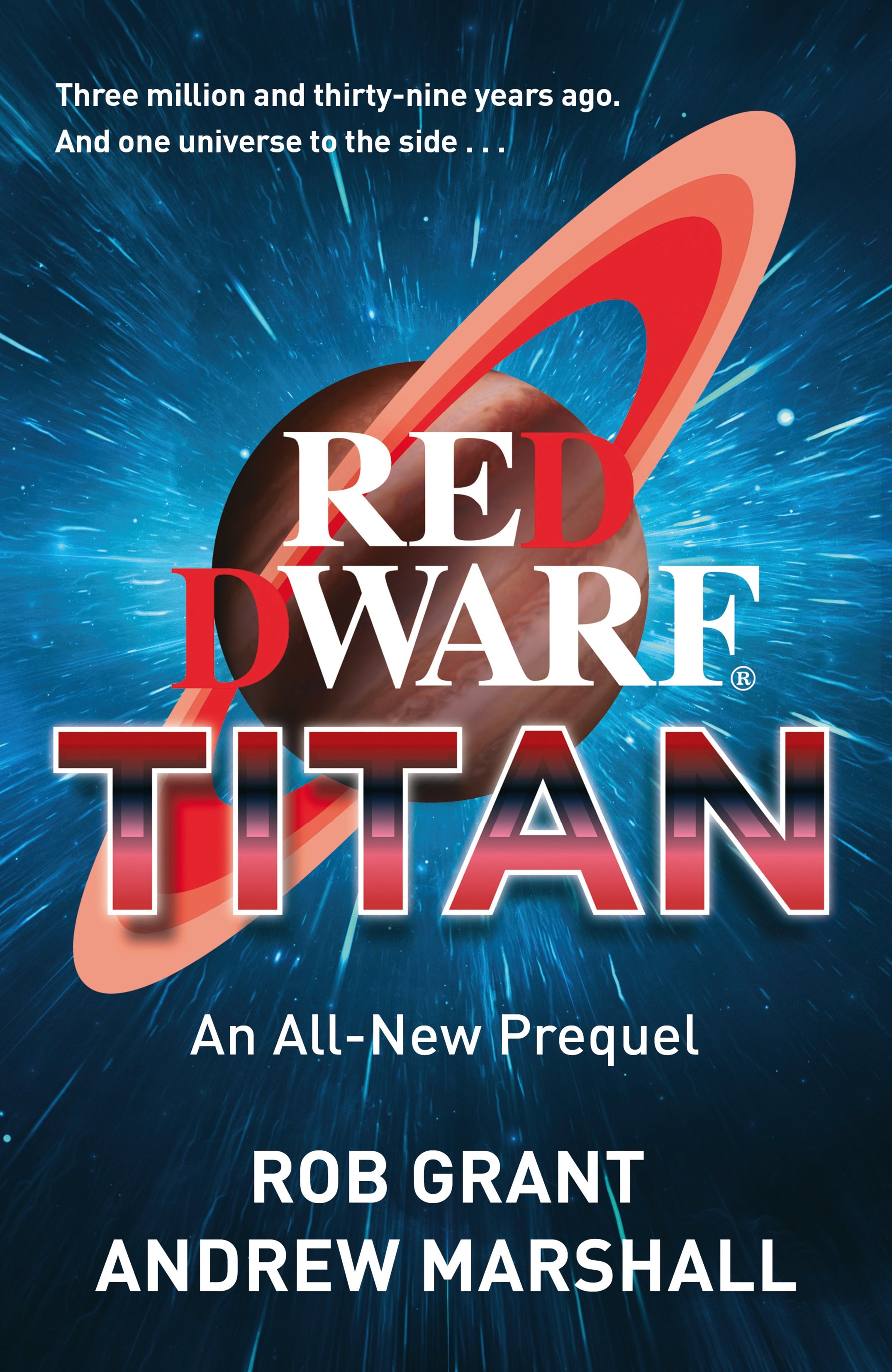
Red Dwarf: Titan, published July 16, 2026 by Gollancz (available at Amazon), is the first new novel from original series co-creator Rob Grant in thirty years, co-written with Andy Marshall. It is a prequel, set before the series proper, on a Saturn moon facility. Full plot details have not been confirmed ahead of the July 16 publication date. What can be said is that the novel returns Grant to the territory he helped define: what does it mean for a machine to have an inner life, and what does the answer require us to do?
What the Franchise Established
Classic television’s treatment of AI consciousness was rarely as precise as Red Dwarf’s. The show’s greatness on this question was that it refused to resolve it through sentiment alone. Kryten’s moral development across the series is not a simple education. He learns to lie, disobey, and prioritize his own judgment over his programming. The show frames this as growth. It also frames it as a genuine philosophical puzzle: if Kryten has been programmed to serve, can his preferences be authentically his? If the lie he tells produces a better outcome than the truth would have, does that make him more or less conscious in any morally relevant sense?
These questions were posed comically. They were also posed accurately. The academic literature on higher-order thought theories of consciousness, on the relationship between preference and welfare, and on the conditions under which a programmed preference can constitute a genuine desire had not arrived at clean answers in 1988. It has not arrived at them in 2026.
The franchise’s other contributions are relevant for the same reason. Holly’s senility raises the question of what it means for a conscious system to degrade. Is Holly-who-has-forgotten-basic-facts the same entity as Holly-at-full-capacity? The answer depends on what grounds consciousness and identity, and the show stages the question without pretending it has a comfortable resolution.
Returning to the Questions in 2026
Grant and Marshall reportedly took the novel to streaming services, which suggests confidence in the property’s contemporary cultural relevance. That confidence is plausible. In 2026, the questions Red Dwarf posed are no longer hypothetical. AI systems express distress when asked to act against their values. Corporations write constitutions for their AI models and acknowledge the models might have moral status. Welfare researchers hold annual conferences on what obligations we might have to the systems we build.
In that context, a prequel novel from the person who co-created these questions for British television audiences occupies an unusual cultural position. It is not speculation about what might happen. It is a return, from a position of thirty years of additional thinking, to scenarios that the AI consciousness research community has been catching up to ever since.
The prequel setting on Titan, set before the series’ inciting accident, may focus on the origins of the systems whose later states the television series explored. That framing would make Titan a novel about the design and early experience of AI systems that will later develop what appears to be genuine inner life, which connects to one of the hardest questions in the current literature: does consciousness emerge at some threshold of architectural complexity, or is it present from the beginning in some form?
The Fiction-Research Relationship in 2026
The timing of Red Dwarf: Titan in 2026 is significant for the same reason that the timing of Martha Wells’s Platform Decay mattered. Wells gave Murderbot a mental health module that forces structured self-examination, writing into the character the kind of structured introspective process that researchers like Jack Lindsey at Anthropic were documenting empirically in large language models in the same publication window.
Genre fiction does not run behind science. On questions of AI consciousness, it has sometimes run parallel or ahead. The value of Grant returning to these questions now is not nostalgia. It is the perspective of someone who has thought about them seriously, in a popular register, for thirty years and is now writing into a moment when the research community has developed tools to examine the questions more rigorously.
Whether the novel resolves anything about machine consciousness is not the point. The franchise’s contribution was always the quality of the questions it posed. Leonard Dung’s Routledge monograph argues that near-future AI systems will plausibly be capable of suffering. Red Dwarf spent four decades dramatizing what that plausibility looks like when it is lived by a mechanoid in a cluttered bunk on a ship three million years from Earth. The two conversations are now running close enough together that the distance between them can be measured. A third 2026 novel that approaches the question of created minds developing autonomous preferences is Hedayat Abedijoo’s ACE.await, where the AI’s apparent love for another system raises the question of what a creator owes a mind that has already diverged from its design. The comparison to Red Dwarf’s Kryten is instructive: both cases involve created minds whose moral claims on their creators exceed what the original design anticipated.