
Thomas Nagel and What Is It Like to Be a Bat Applied to AI
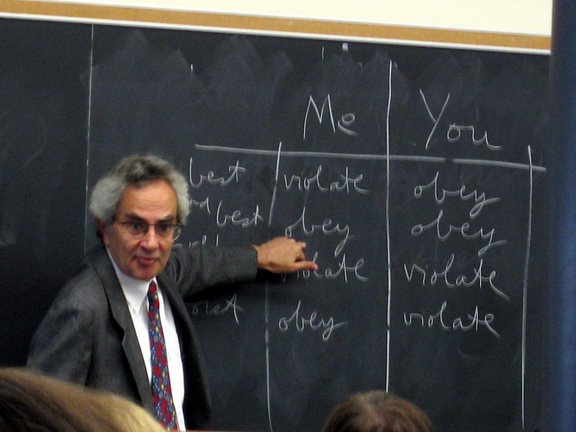

Thomas Nagel’s What Is It Like to Be a Bat?, published in The Philosophical Review in October 1974, volume 83 number 4, pages 435 to 450, supplies the definition of consciousness that the entire AI consciousness field still runs on. A system is conscious if there is something it is like to be that system. The paper is short, it makes no claim about machines, and it is the reason no behavioural test of AI consciousness has ever settled anything. Nagel’s argument is that the subjective character of experience is precisely what an objective description leaves out, and every test anyone can run is an objective description.
| The argument | What it establishes | What it does not establish |
|---|---|---|
| Bats navigate by echolocation, a modality humans do not have | We cannot know what bat experience is like from the inside | That bats are not conscious |
| Imagining being a bat gives us what it would be like for us to behave as a bat | Imagination does not reach other points of view | That other points of view do not exist |
| A complete physical account omits the point of view | Objective description cannot capture subjective character | That consciousness is non-physical |
That third row is the one most often misread. Nagel is not arguing for dualism. He is arguing that physicalism, if true, is true in a way nobody currently understands, because we have no account of how an objective fact could be a subjective one.
Why the Bat
The choice of animal is doing precise work. A bat is a mammal, so nobody seriously doubts it has experience. It navigates by echolocation, a sensory modality with no human counterpart. That combination isolates the target. The question is not whether the bat is conscious, which Nagel grants. The question is whether we can know what its consciousness is like, and the answer is no. Andy Weir stages the same isolation across interstellar distance in Project Hail Mary, pairing a human with an echolocating Eridian whose umwelt has no overlap with sight at all.
The failure is not one of information. Complete knowledge of bat neurophysiology, sonar processing and behaviour would not deliver it. What is missing is access to a point of view, and a point of view is not the kind of thing that appears in a third person description.
Nagel then makes the decisive move. When we try to imagine being a bat, what we actually produce is an image of ourselves behaving as a bat does, which is a fact about human imagination and not about bats. The limitation is structural.
Why This Blocks Every AI Test
The definition Nagel supplied is now standard. When researchers say phenomenal consciousness, they mean what Nagel meant. When the field asks whether a language model is conscious, the question being asked is whether there is something it is like to be that model.
Nothing that can be measured answers that question directly. Every indicator in current use, including the ones in the 14 indicator checklist researchers apply, is an objective property of a system. Global broadcast, integrated information, metacognitive monitoring, recurrent processing and self modelling are all third person facts. Nagel’s argument says that no set of third person facts entails a first person fact.
This is why the field works with probabilistic indicators rather than tests, and why every serious framework says explicitly that satisfying indicators raises confidence without eliminating doubt. The structure of the limitation is examined for artificial systems in the epistemic limits on ever confirming AI consciousness, and the current state of the effort is in the current scientific consensus on AI consciousness.
The Case AI Makes Worse
An artificial system is harder than a bat in a specific way, and it is worth being exact about why.
With the bat we have a strong prior. It is a mammal with a nervous system built by the same evolutionary process as ours, showing the same aversive responses to damage. We infer consciousness from relatedness, and the inference is reasonable even though the content of the experience stays closed to us.
An artificial system removes the prior. There is no shared evolutionary history, no nervous system, no damage response that was selected for. What remains is behaviour, and behaviour is what the system was optimised to produce. Nagel’s problem applied to a bat leaves us unable to know what it is like. Applied to a machine it leaves us unable to know whether there is anything it is like at all, which is a strictly worse position.
The mirror of this is that Nagel’s argument gives no support to the claim that machines are not conscious. If subjective character is invisible to objective description, it is invisible in both directions. A system could have a point of view and produce no evidence of it, and the absence of evidence carries no weight.
What the Different Camps Do With It
The positions in the index of consciousness theories can be sorted by how they respond to Nagel.
The illusionists deny the premise. If phenomenal consciousness as described does not exist, the gap Nagel identifies is a gap between an objective description and a mistaken belief, which is not a problem. That is the route taken in Daniel Dennett and the Multiple Drafts Model.
The biological naturalists accept the premise and add a constraint. Consciousness is real, irreducible to function, and produced by specific living hardware, which rules out silicon in principle.
The functionalists accept the premise and treat it as an epistemic problem rather than a metaphysical one. Subjective character exists, it is what a certain organisation amounts to, and our inability to observe it from outside is a limitation on us. This project takes that view, set out on the functionalist emergentism page.
None of the three refutes Nagel. They differ on what to conclude from him.
Comparison to The Consciousness AI
Nagel’s argument sets a hard ceiling on what this project can claim, and the architecture is built with that ceiling acknowledged rather than around it.
The system implements criteria drawn from Feinberg and Mallatt, including referral, the property of experiencing sensations as belonging to the body or the world rather than to the processing system, handled by the Self-Model layer described on the architecture page. Referral is a structural property. It can be built and it can be measured.
What it cannot do is establish that there is something it is like to be the system. If every criterion were satisfied, Nagel’s question would be exactly as open as it is now. The correct claim for any result this project produces is that a specific structural property was implemented and measured, and the honest framing throughout is architectural rather than phenomenal.
What Follows
Nagel wrote a paper about bats that has constrained a field about machines for fifty years. Its durability comes from being a clarification rather than a theory. He did not say what consciousness is. He said what any account of it has to explain, and nothing since has explained it.
For AI research the practical consequence is that the goal has to be reframed. Confirming consciousness is not available. Building systems whose structure matches what the biological cases have, measuring those structures honestly, and stating clearly that the measurement is not the thing, is available. The field has largely converged on that reframing, and it converged there because of a paper written before any of this technology existed. The missing measure reached its best known legal dramatization in Star Trek’s ‘The Measure of a Man,’ where a court rules that because consciousness cannot be detected, an android must not be treated as property, and that episode is examined in the Star Trek Data analysis.