

Marcus S. Murbach
NASA Ames Research Center
Builder The claim is about what the hardware does, and the philosophy is left open
Marcus S. Murbach’s research at NASA Ames Research Center demonstrates that advanced artificial intelligence architectures can operate reliably within the radiation and power constraints of spaceflight. As Principal Investigator for the TechEdSat-13 mission (NASA Technical Reports Server, document 20220005780), he led the team that placed an Intel Loihi 1 neuromorphic chip into low Earth orbit in January 2022.
The mission established that event-driven spiking neural networks can sustain on-orbit Spike-Timing-Dependent Plasticity (STDP) and autonomous packet routing with minimal shielding (2 mm aluminum) without suffering fatal Single Event Effects (SEEs). His findings provide the empirical foundation for deploying distributed, low-power neuromorphic and cognitive processing systems beyond Earth’s atmosphere.
Known for. Principal Investigator of the TechEdSat satellite series, pioneering the first orbital flight of a neuromorphic processor (TechEdSat-13 / Loihi 1)
Coverage on this site
Related researchers
- Matt AngleParadromicsFounder and CEO of Paradromics, developer of the Connexus Direct Data Interface high-data-rate brain-computer interface
- Isabella R. BeckettCoauthor of the MaleCNS preprint comparing male and female Drosophila brain connectomes
- Stuart BergFirst author of the MaleCNS preprint on the male Drosophila central nervous system
- Edward BoydenMassachusetts Institute of Technology, Howard Hughes Medical InstituteExpansion microscopy, optogenetics, connectomics tools for consciousness research
-
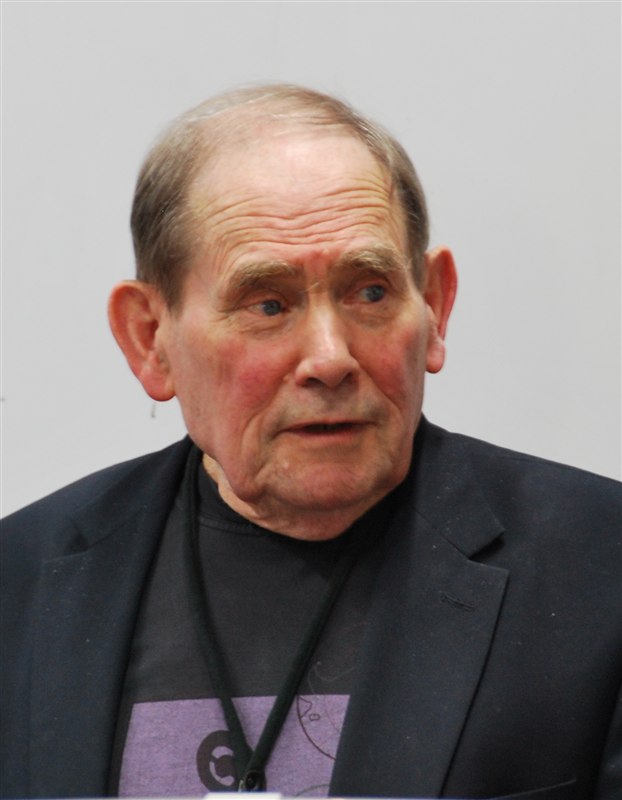 Sydney BrennerMRC Laboratory of Molecular Biology, CambridgeFounding the C. elegans research program, the 1986 connectome, the 2002 Nobel Prize in Physiology or Medicine
- Kwanghun ChungMassachusetts Institute of TechnologyFirst author of CLARITY, hydrogel-tissue transformation for intact brain imaging
Marcus S. Murbach is listed with the other builders, who hold that the claim is about what the hardware does, and the philosophy is left open. The positions themselves are set out in the index of consciousness theories. Every researcher covered on this site is indexed in the directory of consciousness researchers.