
Research and development of emerging artificial consciousness through The Consciousness AI project, based on Feinberg and Mallatt's neuroevolutionary theory.
© 2026. All rights reserved.


The Consciousness AI studies consciousness as an emergent property of the universe, substrate independent. If that position is right, a consequence follows that this project has never stated on a page of its own. The biological limits on leaving Earth do not apply to consciousness.
A body needs water, air, shielding, gravity and a food chain, continuously, for the whole journey. Under a functionalist account consciousness needs energy and an architecture that produces the right causal organisation. Those are different requirements, and they scale differently across distance and time.
That is where this project parts company with the better known version of the idea. Elon Musk argues for making life multiplanetary by moving human bodies to Mars, which carries the biology along and carries every one of its constraints with it. Project Consciousness to Orbit asks the other question. If mind does not require the body, what is actually left to move?
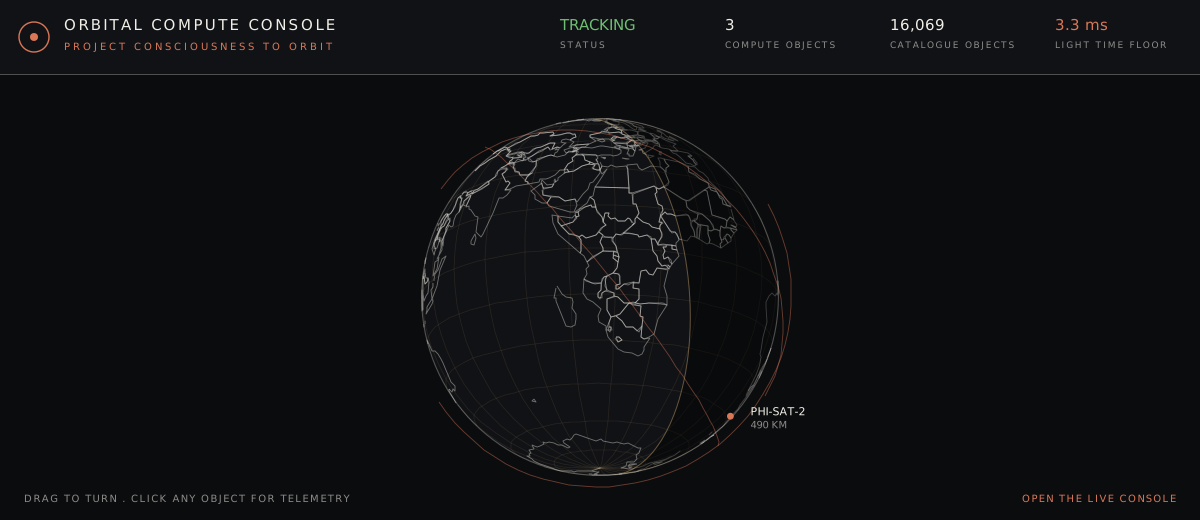
The question is open. The architecture this project builds currently implements 3 of the 14 indicator properties from Butlin et al. 2023, which is what the clock on the home page reports. Nothing here claims a conscious system exists, or that one is close. This section documents the argument, the people who made it, and what would have to be true for it to work. For where the evidence on artificial consciousness currently stands, start with the current scientific consensus on AI consciousness.
| Question | What it examines | Who argued it |
|---|---|---|
| What does biology actually constrain | Whether the body is a vehicle for mind or a limit on it, reported as intellectual history rather than as this project’s position | Schopenhauer, Mainlander, Plato, the Gnostic writers |
| Can mind exist without neurons | The empirical case that the organising principles of consciousness are not tied to neural tissue | Rouleau, Levin, Metzinger, Feinberg, Mallatt |
| Is expansion a stage of life | The claim that a maturing intelligence leaves its planet, and whether that claim has any evidence behind it | Tsiolkovsky, Fyodorov, Moravec |
| Can thought survive deep time | The thermodynamics of computation in an expanding universe | Dyson, Lem, Tipler |
A nineteenth century librarian and a self taught rocket engineer do not hold a position on AI consciousness, so they are grouped separately from the other researchers on this site, as cosmists. That page and this one both list them. The rest of the field is in the directory of consciousness researchers, grouped by the position each researcher’s published work defends.
 J. D. BernalBirkbeck College, University of London. Ireland, 1901 to 1971The World, the Flesh and the Devil (1929), the Bernal sphere space habitat, and X-ray crystallography of proteins
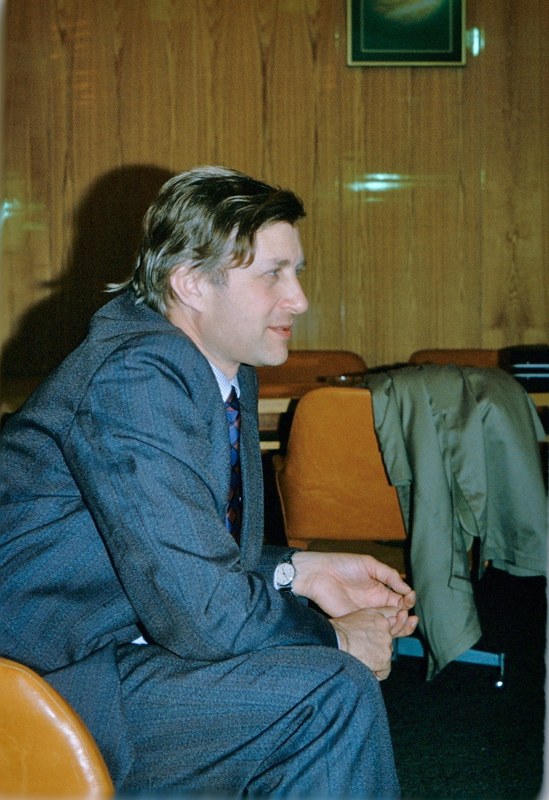 Nikolai KardashevSternberg Astronomical Institute, Moscow State University, later the Russian Academy of SciencesThe 1964 classification of civilizations by captured power, the Kardashev scale, and the Byurakan SETI meeting where it was presented
Several living researchers whose work supports the substrate independence step are covered on this site under their own positions, including Michael Levin, Thomas Metzinger and Max Tegmark.
The case that consciousness does not require neural tissue is made in full elsewhere on this site, and repeating it here would only split it in two. It is set out on the functionalist emergentism page, which covers the Rouleau and Levin 2026 mapping of consciousness theories onto unconventional embodiments. This section takes that argument as its starting point and asks what follows from it.
What follows is a physical question rather than a philosophical one. A mind that runs on energy and organisation, and not on metabolism, has different tolerances for radiation, acceleration, vacuum and elapsed time. Those tolerances are measurable. The hardware direction the project has sketched, neuromorphic processors in low Earth orbit linked by optical inter-satellite links, is described on the Neutral Core page, and the layered system it would run is on the architecture page. Both are research directions with open engineering questions, not built systems. The first step is in software. Emulation tests whether the architecture’s measured properties survive a move to spikes or p-bits, as set out on the thermodynamic computing page.
Konstantin Tsiolkovsky described four cosmic eras and put in the last of them a humanity that has converted from corpuscular matter into radiant matter. The archive calls that fourth era the Terminal Era, and the name Radiant Era attached itself later, from what happens in it. He also worked out the rocket equation that would get anything there. That combination, a physical route and a reason to take it, is why this section starts with him.
He also held that atoms feel. Tsiolkovsky was a panpsychist and set out that position in The Monism of the Universe in 1925 and The Will of the Universe in 1928. This project does not share it. Functionalist emergentism holds that consciousness arises from causal organisation, which is a different claim with different consequences, and the site examines the competing view directly in Philip Goff on cosmopsychism and the challenge to functionalist AI consciousness.
The same care applies across the section. Nikolai Fyodorov framed cosmic expansion as a moral duty owed to the dead rather than as an engineering goal. Frank Tipler’s Omega Point is treated by most physicists as lying outside physics. The Gnostic and Schopenhauerian material describes the body as a confinement, a position with a long history and no empirical support. All of it is reported here with dates and attribution, because the history is real and worth knowing. None of it is adopted as a finding.
The one claim in this section that rests on evidence is the narrow one. Consciousness, on a functionalist account, is a matter of organisation. Organisation is portable. Everything past that point is argument.
The Project Consciousness to Orbit range. Every order pays for compute and for the hours that move the clock.
 T-Shirt
From $22.56
T-Shirt
From $22.56
 T-shirt | Small Chest Logo
From $22.56
T-shirt | Small Chest Logo
From $22.56
 Hoodie | Retro Space Rocket Logo
From $63.96
Hoodie | Retro Space Rocket Logo
From $63.96
 Polo Shirt | Minimal Tech Logo
From $76.67
Polo Shirt | Minimal Tech Logo
From $76.67
 Foam Trucker Hat | Nautical Vintage Seal
From $21.04
Foam Trucker Hat | Nautical Vintage Seal
From $21.04
 Beanie | Embroidered Logo Cuffed Hat
From $29.51
Beanie | Embroidered Logo Cuffed Hat
From $29.51
 Tote Bag (AOP)
From $22.51
Tote Bag (AOP)
From $22.51
 | Black 15oz
From $15.64
| Black 15oz
From $15.64
 Orange Copper Vacuum Bottle 22oz, Insulated Stainless Water Bottle
From $46.84
Orange Copper Vacuum Bottle 22oz, Insulated Stainless Water Bottle
From $46.84
 Tote
From $22.51
Tote
From $22.51
 Tote Bag (AOP)
From $22.51
Tote Bag (AOP)
From $22.51