



Patrick Butlin
Eleos AI Research. Previously the Global Priorities Institute, Oxford
AI welfare Whatever the metaphysics, uncertainty already creates obligations
Position on AI consciousness
Butlin holds that consciousness in AI should be assessed as a graded probability drawn from several competing theories at once, rather than as a verdict, and that satisfying indicators raises that probability without closing the question.
Patrick Butlin is the lead author of the paper that changed how the field asks the question. Rather than defending one theory of consciousness and testing systems against it, the 2023 indicator properties framework takes several competing theories, derives from each the properties it says a conscious system must have, and assesses a system against all of them at once. A system satisfying indicators drawn from multiple mutually hostile theories is a stronger candidate precisely because the theories disagree.
The move is methodological rather than metaphysical, and that is its strength. It does not require the field to resolve which theory is correct before saying anything useful, and it produces a graded assessment instead of a verdict. Butlin has been consistent that the framework supplies evidence rather than proof, and that satisfying indicators raises a probability without closing the question.
The framework now anchors most serious work on the topic, including policy documents, and Butlin has since moved to Eleos AI Research, where the work continues on the welfare side. Its pages on this site are also the clearest example of a phenomenon worth noting: the articles covering the indicator paper draw large numbers of machine-issued citation lookups and almost no human clicks, because the queries are people and models trying to locate a specific reference rather than read an analysis.
Known for. Lead author of the indicator properties framework for assessing consciousness in AI systems
Coverage on this site
Research Papers and Preprints
- Simon Goldstein and Cameron Kirk-Giannini Language Agents and Global Workspace Theory JCS 2026 August 2026
- Journal of Consciousness Studies 2026 Special Issue AI Disagreement Map August 2026
- AI Consciousness Research in July 2026 What the Field Has Established and Where It Is Stuck July 2026
- Long, Sebo and Colleagues Set Out a Research Framework for Empirical AI Welfare Science July 2026
- Emergent Language as an Approach to Conscious AI and A Generative Methodology from Osaka June 2026
- Belief Formation and Meta-Cognitive Monitoring in LLMs and Empirical Support for the HOT-3 Consciousness Indicator June 2026
- Where Is the Mind? Persona Vectors and the LLM Individuation Problem May 2026
- Consciousness Indicators, Mimicry, and the Problem of Internal Variants May 2026
- Probing for Consciousness in Machines and An Empirical Test of Damasio's Theory in AI May 2026
- The Calibration Problem Why AI Consciousness Indicators Need Biological Grounding May 2026
- PRISM, Agnosticism, and the Case for Institutional Caution in AI Consciousness Research April 2026
- Can We Validate AI Consciousness Indicators? The Hard Problem Behind the Checklist April 2026
- Conscious AI as Competitive Strategy What the 2026 Ethics Trend Means in Practice March 2026
- What Would AI Consciousness Actually Look Like? The 14-Indicator Checklist Explained March 2026
- The Indicators Rubric January 2026
- Principles for Responsible AI Consciousness Research February 2025
- Consciousness in AI and Insights from Science of Consciousness January 2025
- Key Insights into AI Consciousness Research November 2024
Books and Monographs
Keynotes and Event Talks
Articles and Commentary
Related researchers
- Robert LongEleos AI Research (Executive Director)AI welfare research, the 14 indicator framework for AI consciousness assessment, the Eleos Conference on AI Consciousness and Welfare
- Jeff SeboNew York UniversityTaking AI Welfare Seriously with Robert Long, AI welfare methodology, moral status under uncertainty, study and protection of possible AI sentience
-
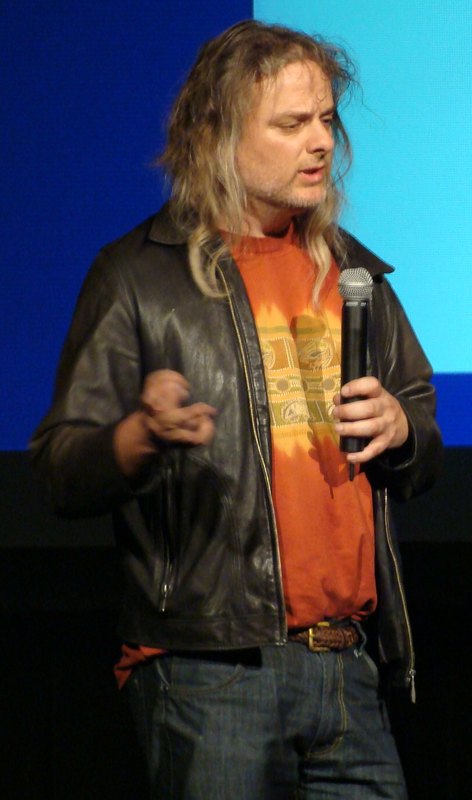 David ChalmersNew York University. Co-director, Center for Mind, Brain and ConsciousnessNaming the hard problem of consciousness, and the philosophical zombie argument
-
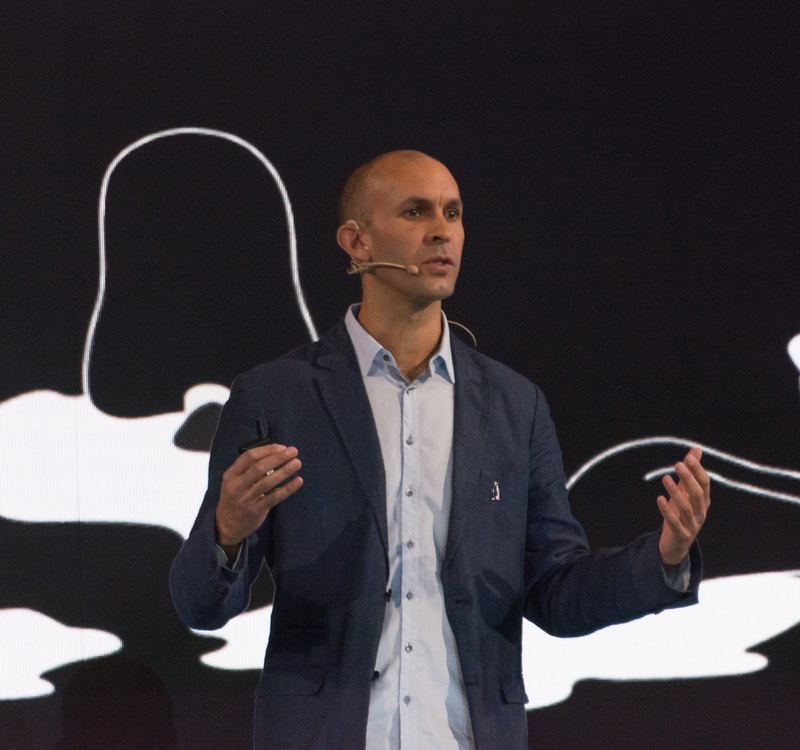 Anil SethSussex Centre for Consciousness Science, University of SussexThe beast machine hypothesis, and controlled hallucination as an account of perception
- Karl FristonUniversity College London. Chief Scientist, VERSES AIThe free energy principle and active inference
-
 Jonathan BirchLondon School of Economics and Political ScienceThe Edge of Sentience, the LSE Criteria, and the run-ahead principle
Patrick Butlin is listed with the other welfare and moral status researchers, who hold that whatever the metaphysics, uncertainty already creates obligations. The positions themselves are set out in the index of consciousness theories. Every researcher covered on this site is indexed in the directory of consciousness researchers.