

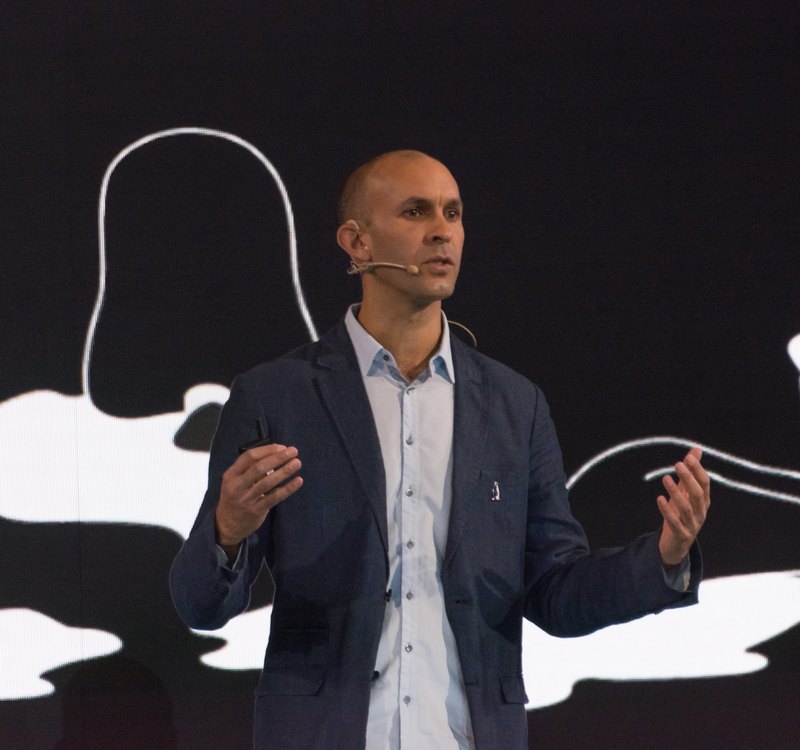
Anil Seth
Sussex Centre for Consciousness Science, University of Sussex
Biological naturalist Consciousness requires living metabolic hardware

Position on AI consciousness
Seth rejects artificial consciousness in principle. On his beast machine hypothesis experience is what a living system's continuous effort to regulate itself feels like from inside, so a system with no metabolism has nothing for consciousness to be made of, however capable it becomes.
Anil Seth is the strongest intellectual opponent of the position this project works from, which makes him worth reading closely rather than around. His beast machine hypothesis holds that consciousness is not a computation a body happens to run. It is what a living system’s continuous effort to regulate itself feels like from inside. Perception on this account is controlled hallucination, a prediction the brain issues and corrects against sensory evidence, and the deepest predictions are about the body’s own condition.
The consequence for artificial systems is a rejection in principle. If experience is constituted by metabolic self-maintenance, a system with no metabolism and nothing at stake in its own persistence has nothing for consciousness to be made of, however capable it becomes. Seth is explicit that this is not a claim about current limitations that better engineering will overcome.
He is also one of the clearest voices against the inflation of the topic, arguing that treating language models as candidate minds distracts from tractable questions and from the animals whose sentience is far better evidenced. That criticism lands whether or not the substrate argument holds, and it is separable from it.
The wave literature this site tracks gives controlled hallucination a measured neighbor. The 2026 Neuron traveling waves review proposes a generative role for cortical waves and positions it beside hierarchical predictive accounts, including predictive coding, as a complementary level of description rather than a rival (Lyle Muller’s profile carries that side, and the review is analyzed in the traveling waves post). Where Seth locates the construction of experience in prediction, the wave program locates measured behavioral effects in the phase and motion of cortical activity, and the two programmes have not yet been forced into a decisive comparison.
In October 2026, Seth wrote a Nature comment with Ned Block and Giulio Tononi that gives three reasons why current AI is not conscious, with his biological naturalism as the second. A short film explains the three reasons and the functionalist reply. Watch Can a machine be smart, and still feel nothing? on YouTube.
Known for. The beast machine hypothesis, and controlled hallucination as an account of perception
Coverage on this site
Research Papers and Preprints
- Anil Seth, Ned Block and Giulio Tononi Argue in Nature That AI Is Not Conscious November 2026
- Karl Friston and Thomas Parr on the Brain as a Phantastic Organ October 2026
- From Cacophony to Hierarchy. The 14-Author Framework for Assessing AI Consciousness October 2026
- Xenocortical Mice Put Human Cortical Tissue in Mouse Brains and Raise Welfare Questions September 2026
- Anil Seth and Karl Friston Build a Predictive Processing Bridge to Neurophenomenology September 2026
- Anil Seth's Biological Naturalism and His 2026 BBS Response August 2026
- Andrew Corcoran Adversarial Review IIT vs Predictive Processing August 2026
- Anil Seth Mythology of Conscious AI Biological Naturalism Berggruen Prize Essay August 2026
- Piccinini Argues Consciousness Requires Neurobiophysical Properties That Computational Functionalism Cannot Meet July 2026
- Timescapes of Non-Human Experience Birch, Seth, and Singhal Map Temporal Consciousness July 2026
- The Methodology Crisis in AI Consciousness Science What 2026 Research Exposed June 2026
- Anil Seth at TED 2026 and The Biological Naturalism Case Against AI Consciousness June 2026
- Emergence and Prediction What Reservoir Computing Reveals About AI Consciousness April 2026
- Conscious Artificial Intelligence and Biological Naturalism April 2025
Books and Monographs
- Constructing Consciousness. Berggruen's Prize Essays on Mind and Computation October 2026
- Perspectives on Machine Consciousness Chace and Lappas Assemble the Debate in One Volume June 2026
Keynotes and Event Talks
- UT Austin Consciousness and Intelligence 2026 Recap with Chalmers, Seth and Aaronson November 2026
- UT Austin Consciousness and Intelligence Symposium and SfN 2026 Neuroethics Preview October 2026
- Positions That Held and Shifted at the AISB 2026 AI Consciousness Symposium July 2026
- AISB 2026 AI Consciousness and Ethics Symposium What the Sussex Conference Is For June 2026
- AISB 2026 at Sussex The Symposium That Will Debate Biological Naturalism, Moral Standing, and Chain-of-Thought Consciousness April 2026
Articles and Commentary
Related researchers
- Ned BlockDepartment of Philosophy, New York UniversityDistinction between Phenomenal and Access Consciousness (1995), Blockhead argument against behavioral tests, The Border Between Seeing and Thinking (2023)
- Giulio TononiUniversity of Wisconsin-MadisonIntegrated information theory and the quantity phi
-
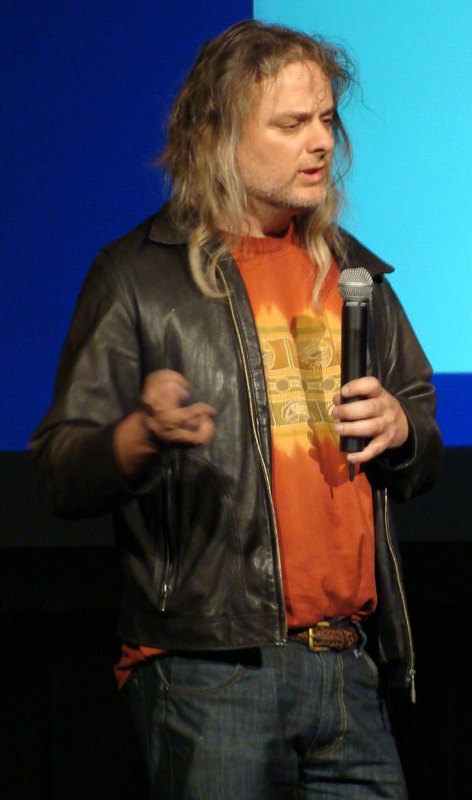 David ChalmersNew York University. Co-director, Center for Mind, Brain and ConsciousnessNaming the hard problem of consciousness, and the philosophical zombie argument
- Scott AaronsonUniversity of Texas at Austin, Department of Computer ScienceQuantum complexity theory, mathematical counterexamples to Integrated Information Theory (Phi in expander graphs and Reed-Solomon grids), speaker at UT Austin Consciousness and Intelligence 2026
- Alison GopnikUniversity of California, Berkeley, Department of Psychology and Department of PhilosophyThe Scientist in the Crib, The Philosophical Baby, Bayesian causal learning in childhood, lantern consciousness vs spotlight consciousness, speaker at UT Austin Consciousness and Intelligence 2026
-
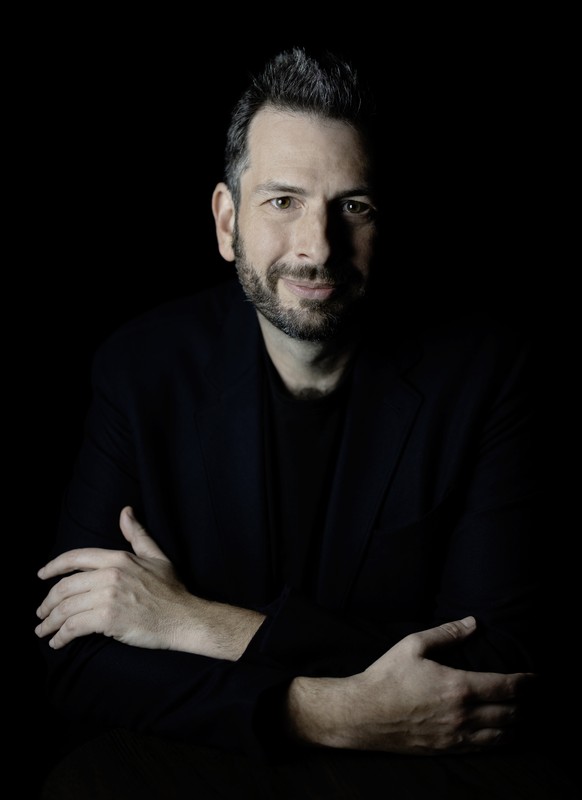 Blaise Agüera y ArcasGoogle VP and Fellow, CTO of Technology & SocietyComputational functionalism, active inference, on-device neural computing, What Is Intelligence? (2025), and Who Are We Now? (2023)
Anil Seth is listed with the other biological naturalists, who hold that consciousness requires living metabolic hardware. The theory family behind that position is set out in the index of consciousness theories. Every researcher covered on this site is indexed in the directory of consciousness researchers.