

Anil Seth Mythology of Conscious AI Biological Naturalism Berggruen Prize Essay
On January 14, 2026, Noema Magazine published The Mythology of Conscious AI by Anil Seth, a Sussex neuroscientist whose work on predictive processing and the “controlled hallucination” theory of perception has made him one of the most widely read researchers in consciousness science. The essay won the 2025 Berggruen Prize Essay Competition. In July 2026, Seth returned to the same argument in a Guardian opinion piece responding to Anthropic’s disclosures about its Claude models. Between those two publications lies a peer-reviewed companion paper, Conscious Artificial Intelligence and Biological Naturalism, published in Behavioral and Brain Sciences in April 2025, which formalizes the arguments the essay makes in accessible terms.
Reading the essay and the companion paper together reveals a position that is more structurally specific than either the “AI can never be conscious” dismissal or the “we just don’t know” agnosticism that dominate public discussion. Seth’s argument is that consciousness is almost certainly a biological property, that this is a scientific claim and not a metaphysical one, and that the burden of proof lies with those who claim digital computation can replicate the relevant biological conditions. Our separate account examines Seth’s original BBS manuscript and the abstract of his September 2026 response, without attributing replies to individual commentators.
The mythology and what sustains it
Seth’s target is not a specific researcher or company. It is a set of assumptions he treats as myths: that intelligence and consciousness are the same thing, that sufficiently complex information processing produces experience, and that the only barrier to machine consciousness is computational power.
He traces these assumptions to what he calls pareidolia, the human tendency to perceive faces and minds where none exist. Human beings attribute consciousness automatically and quickly to anything that produces coherent, contextually appropriate outputs. LLMs produce such outputs with unprecedented fluency, which triggers attribution responses that evolved to handle other humans and animals, not language models.
The pareidolia argument is psychological, but Seth’s main argument is biological. Consciousness, he contends, is a property of living systems as living systems, not as information-processing systems. What distinguishes living systems from other information-processing systems is metabolism: the continuous self-regenerating chemical transformation through which an organism maintains itself against entropy. An organism’s experience is not produced by its information processing alone. It is produced by information processing that is embedded in, and continuously shaped by, the metabolic processes that constitute the organism’s existence as a living thing.
A digital system processes information without metabolism. It does not need to maintain itself against entropy in the relevant sense; its persistence is a matter of engineering design, not of self-organization. Seth argues this is not merely a hardware difference. It is a difference in the kind of causation that underlies the system’s operations, and it is causation of the biological kind that he claims is necessary for phenomenal experience.
The BBS companion paper and biological naturalism
In Conscious Artificial Intelligence and Biological Naturalism (Behavioral and Brain Sciences, April 2025), Seth formalizes this position as a variant of biological naturalism, the view associated with John Searle that consciousness requires specific biological causal powers, not just the right formal or functional organization.
Seth’s version of biological naturalism differs from Searle’s in one important respect. Searle’s position is often read as claiming that silicon simply cannot be conscious because it is silicon, a view that looks arbitrary. Seth’s position is that the argument is about the kind of causal process, not the material. Metabolism is not special because it involves carbon. It is special because it is a self-organizing, self-maintaining, entropy-resisting dynamic that no current digital system exhibits.
| Framework | Consciousness requires | Verdict on current LLMs |
|---|---|---|
| Functionalism (standard) | Right input-output function | Possibly conscious if outputs meet criteria |
| IIT (Tononi) | High integrated information (Phi) | Depends on architecture; some Phi possible |
| Global Workspace Theory | Internal broadcast architecture | Possibly met by attention mechanisms |
| Seth’s biological naturalism | Metabolic self-organization embedded in information processing | Not met by any current digital system |
| Piccinini’s neurobiophysical account | Specific physical substrate properties | Not met by silicon-based systems |
Piccinini’s position, which argues that neurobiophysical substrate properties are necessary conditions for consciousness rather than merely sufficient ones, is the most direct complement to Seth’s view in the literature. Piccinini’s BBS commentary is discussed in detail here.
The Guardian argument and Anthropic’s disclosures
In July 2026, Anthropic published internal research reporting observations about Claude’s responses to prompts designed to probe emotional and experiential states. Seth’s Guardian response on July 15, 2026 argues that Claude’s outputs, however sophisticated, are no more evidence of consciousness than a weather simulation is evidence of a physical hurricane. The analogy is specific: a sufficiently accurate simulation of a storm does not produce rain. A sufficiently accurate simulation of emotional language does not produce phenomenal experience.
The analogy has limits that Seth acknowledges. A weather simulation and a language model are structurally different: the simulation is a model of an external phenomenon, while the language model is, in some sense, a system that produces outputs from its own internal states. Whether those internal states have any phenomenal character is precisely the question at issue.
Seth’s response to this is to shift the burden of proof. We know that biological systems produce consciousness because we are biological systems and we have consciousness. We do not know any other substrate produces consciousness. The hypothesis that digital computation produces consciousness is an additional claim that requires evidence, and behavioral outputs, however sophisticated, are not evidence of phenomenal experience because they can be produced by systems that demonstrably lack it.
What this means for AI consciousness research
Seth’s position does not require consciousness researchers to accept biological naturalism. It requires them to be explicit about what evidence would convince them that a digital system is conscious, and to examine whether that evidence could in principle be produced by a system without phenomenal experience.
This is a methodological point as much as a philosophical one. Eric Schwitzgebel’s committed agnosticism framework recommends building systems that are clearly either conscious or clearly non-conscious, rather than building systems whose status is uncertain and then worrying about it. Seth’s biological naturalism makes a stronger claim: the currently available evidence points to a specific direction, and it is toward biology.
The practical consequence for AI development is not that consciousness research should stop. Seth argues, in both the essay and the Guardian piece, that the question of whether AI systems suffer or have welfare-relevant states is more urgent than the question of whether they are conscious in the full phenomenal sense. Metzinger’s applied ethics of synthetic phenomenology makes a similar point from a different starting position. A system could cause harm, or be harmed, through processes that do not require phenomenal consciousness, and governance frameworks should be designed to address that possibility without waiting for the consciousness debate to resolve.
Comparison to The Consciousness AI
Seth’s biological naturalism poses a direct challenge to projects like The Consciousness AI (https://github.com/tlcdv/the_consciousness_ai) that are attempting to build systems with consciousness-relevant properties. The challenge is not that the project is misguided. It is that if Seth is right, the consciousness-relevant properties the project is trying to implement may be impossible to implement in a digital system regardless of architectural sophistication.
The honest framing, consistent with facts-discipline on this site, is that The Consciousness AI architecture is motivated by consciousness science and engages with open design questions that consciousness theories raise. Whether any digital system can achieve phenomenal experience in Seth’s sense is a question the project does not claim to have answered, and Seth’s argument provides a clear statement of why that question is harder than architectural innovation alone can resolve.
Seth’s essay is valuable not because it closes the question but because it identifies what a satisfying answer would need to address: the relationship between metabolic self-organization and phenomenal experience, and why the former might be necessary rather than merely correlated with the latter. That question remains open, and it will not be resolved by scaling.
Researchers covered here
-
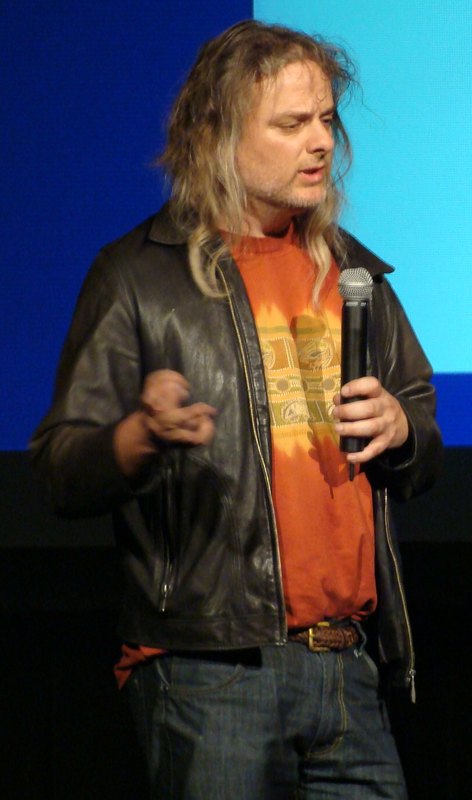 David ChalmersNew York University. Co-director, Center for Mind, Brain and ConsciousnessNaming the hard problem of consciousness, and the philosophical zombie argument
-
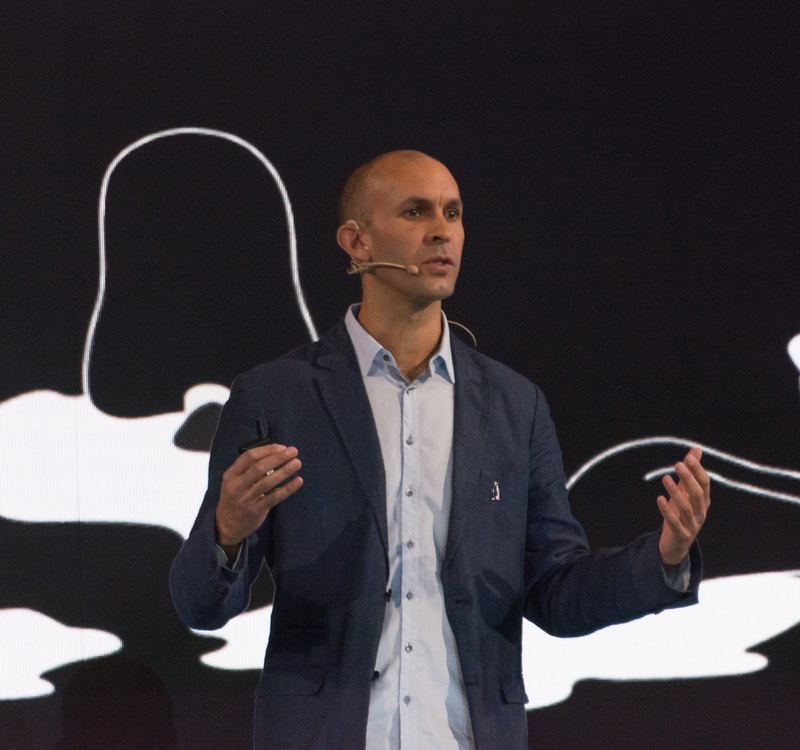 Anil SethSussex Centre for Consciousness Science, University of SussexThe beast machine hypothesis, and controlled hallucination as an account of perception