The Consciousness AI is open research and development on consciousness as an emergent property, from animal brains to AI, built on Feinberg and Mallatt's neuroevolutionary theory.
Home/Thermodynamic Computing Hardware for p-Bits, Ising Models and Oscillators
Thermodynamic Computing Hardware for p-Bits, Ising Models and Oscillators
Commercial thermodynamic chips such as the Extropic Z1 are not sold to the public yet. The
mathematics they run is already open. A p-bit is a binary unit that flips at random, with a bias set
by its inputs. A lattice of p-bits updated in colour blocks is a Gibbs sampler for an Ising model. All
of it can be built today on hobby boards.
This page lists hardware for that work, in three groups.
What this page isA guide. The Consciousness AI does not sell these items, and every link goes to the maker, its official store, or Amazon.
What this project runs on themNothing yet. The project's thermodynamic code is a software emulation on CPU and GPU, and the repository holds no driver for any board on this page. The hub page states what has and has not been measured.
Affiliate linksThe "Buy on amazon.com" buttons are affiliate links. A purchase through them earns the project a commission, at no extra cost to you, and the commission pays for compute and research time. As an Amazon Associate I earn from qualifying purchases. Maker links are plain links.
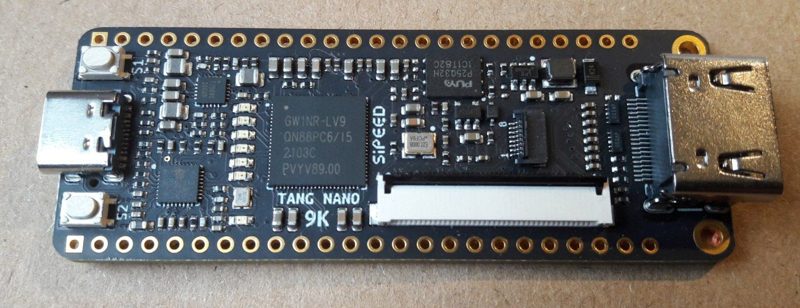
FPGA boards for p-bits and Ising lattices
An FPGA holds every p-bit as its own small circuit, so all the p-bits of one colour update in the same
clock cycle. That parallel update is the step a CPU runs one spin at a time. The Ising view of the
Thermodynamic Console shows the same chromatic
block Gibbs scheme in the browser.
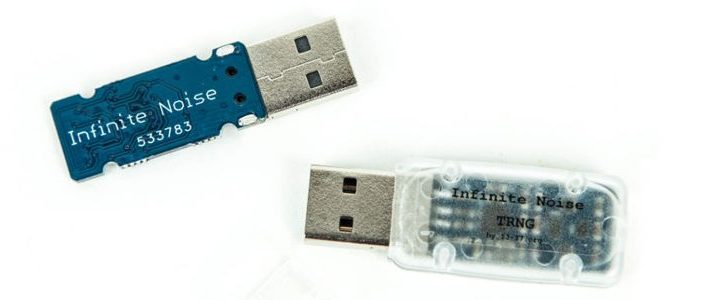
A p-bit needs a fresh random number at every update. The project’s emulator draws it from a software
generator. The devices below draw it from physical noise instead, either the thermal noise of
resistors or avalanche noise in a diode, and send it to the computer over USB.
USB true random number generator, OSHWA certified (DE000006)
Its entropy comes from the thermal noise of resistors, the same physical source a room-temperature p-bit uses. It is a physical stand-in for the software random numbers in the project's p-bit emulator.
Pre-order on the checked date, with shipping stated for January 2027.
Checked 28 October 2026 · the amazon.com button is an affiliate link
Analog computers for relaxation and oscillators
An analog computer does not step through time. Its voltages settle by themselves, which is the
continuous relaxation that the descent view of the console steps through on a clock. The Kuramoto
view of the same console shows coupled oscillators locking in phase as the coupling rises.
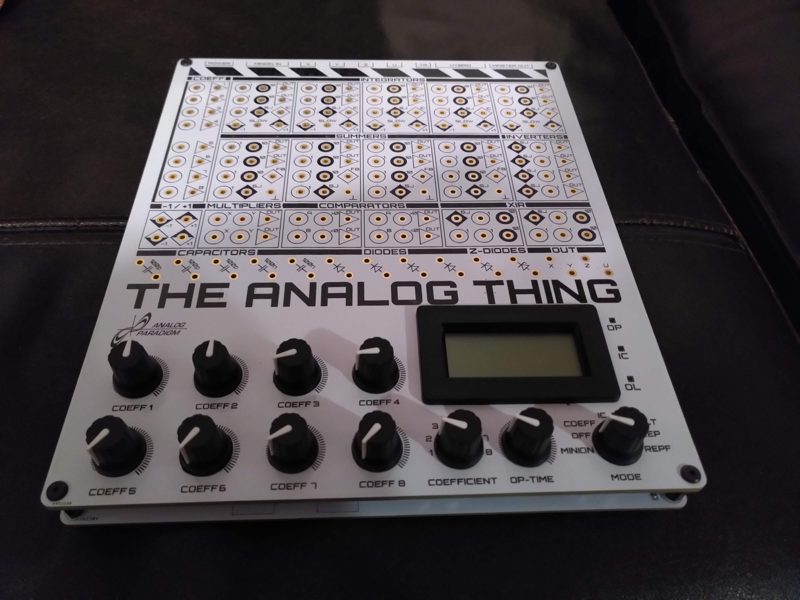
Portable open-source analog computer with integrators, multipliers and patch cables
Solves differential equations by continuous electrical relaxation. Gradient flow on a free energy, as in the console's descent view, and coupled oscillators can both be patched on it.
Made in batches, so delivery can take weeks to months.
Each entry was checked on its vendor page on the date shown on its card. Prices and stock change, so
the vendor page is the authority. Boards are added when they are open, sold to the public, and able to
run one of the three schemes above. A suggestion for the list can be opened as an issue on the
project repository.
Photos are used under open licences. Cards without a photo show a drawing of the device type.
Sipeed Tang Nano 9K, by Popolon, Wikimedia Commons, CC0