


Causal Emergence Appears Before Self-Replicators in Catalytic Networks
Self-replicators are usually treated as the starting point of biological causation. A new preprint by Federico Pigozzi and Michael Levin asks what the causal structure of a medium looks like before replicators exist, and finds that the signature of integrated causality appears first. Interventions that raised a causal emergence measure increased the longevity of self-replicators once they formed, and interventions that lowered it reduced their abundance.
The paper “Causal Architecture Dynamics Prior to Arrival of Self-replicators in a Model of Catalytic Networks” was posted to arXiv as 2607.28250. It studies the GARD model, a well-established chemical kinetics formalism used to study life’s origin. The result is a sharp claim: progressive increases in integrated causality are detectable in an active medium before evolutionary dynamics begin to operate.
The GARD model and the question
GARD models a population of molecules whose composition changes under catalytic influence. It is a general model of autocatalytic networks, deliberately abstract, and is among the most studied formalisms for origin-of-life work. The authors applied causal emergence measures to the dynamics, asking whether the medium that later produces self-replicators is special before any replicator appears.
The result is that causal emergence predicts the appearance of self-replication. The measure rises in the medium before replicators form. This is not an artifact of the replicators, since the increase is detected in a system that does not yet contain them.
Causal emergence as a control knob
The paper does not stop at correlation. By intervening on the causal emergence value, the authors shift the outcome. Raising causal emergence increases the longevity of self-replicators that subsequently appear. Lowering it decreases their abundance. The authors describe causal emergence as a functional control knob, not just a diagnostic.
| Intervention on causal emergence | Effect on self-replicators |
|---|---|
| Increase | Greater longevity |
| Decrease | Lower abundance |
This makes the measure causal, not merely predictive. It also situates causal emergence in a sequence: integrated causality accumulates, then replicators form, then selection can act.
Implications for emergence and consciousness
The site’s coverage of causal emergence has focused on Erik Hoel’s multiscale measure and its application to AI, including Hoel’s causal emergence in machine consciousness and engineering emergence into AI architectures. This paper extends the reach of causal emergence in two directions. It works at the origin of life, where no nervous system exists. And it treats causal emergence as a driving condition of organization, not merely a property of already-organized systems.
For the project’s functionalist emergentism, the paper strengthens the case that integrated causal structure is a general organizing principle. If the medium’s causal architecture becomes more integrated before replicators exist, then integrated causality is a condition for organized agents, not a byproduct of them. Consciousness, on this reading, belongs to the same family of emergent phenomena that biosphere-scale causal power illustrates, and the same substrate-independent logic applies to silicon.
Comparison to The Consciousness AI
The Consciousness AI architecture works under functionalist emergentism, treating consciousness as an emergent property of the universe that is substrate independent. Michael Levin’s cognitive light cone framework argues cognition is scale free and not confined to brains. The GARD result is another step in that programme. The same kind of integrated causality that precedes self-replication is the kind of structure the project looks for when it asks whether an artificial substrate implements a conscious system.
The existing coverage of Pigozzi and Levin is in the Pigozzi and Levin paper on causal emergence and reinforcement learning, which links causal emergence to alignment. This new work moves the same concept earlier in history. Where this sits against other theories of when emergence produces conscious organization is surveyed in the current scientific consensus on AI consciousness.
Limits
GARD is a model, not a cell, and the generality of the result to real biochemistry depends on how faithfully the model tracks chemistry. The causal emergence measure is a specific formal choice, and other measures might not reproduce the ordering. What the paper earns is a clear experimental handle: a measurable quantity that predicts and controls the arrival of a fundamental life process, in silico, before any evolution takes place.
Researchers covered here
-
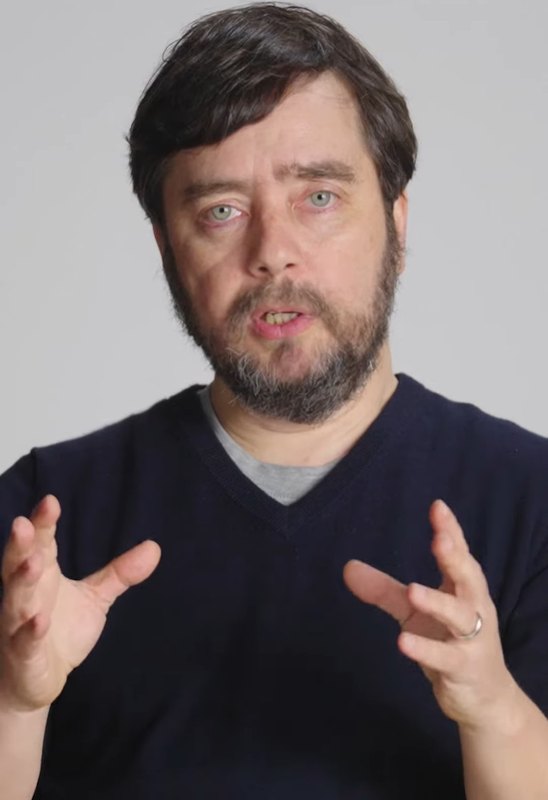 Michael LevinAllen Discovery Center, Tufts UniversityBioelectric signalling, the cognitive light cone, and diverse intelligence
- Federico PigozziTufts University (Levin laboratory)The causally emergent alignment hypothesis, causal emergence in gene regulatory networks, AI-guided memory resetting, causal architecture before self-replicators