


Michael Levin's Bioelectric Memory Research From Planaria to Xenobots
If a worm’s head regrows, does its memory come back? Michael Levin’s laboratory at Tufts University built the experiment that answers, and the answer unsettles the assumption that memory lives only in the brain. Tal Shomrat and Levin trained planarian flatworms in an automated paradigm and found that learned behavior persists after amputation and full head regeneration, reported in the Journal of Experimental Biology in 2013 (DOI 10.1242/jeb.087809, PMID 23821717). Douglas Blackiston, Shomrat, and Levin generalized the finding in a 2015 review of memory stability during brain remodeling (DOI 10.1080/19420889.2015.1073424, PMID 27066165), and the line reached designed machines in 2026, when Vaibhav Pai and colleagues reported behavioral, physiological, and transcriptional memory mechanisms in a synthetic living construct (bioRxiv 10.64898/2026.03.17.712168). This is the empirical core under Levin’s cognitive light cone framework, and it carries the strongest evidence the site tracks for information storage outside neural continuity.
The Planarian Result
The 2013 study solved an instrumentation problem first. Planarian learning experiments had a reproducibility problem, so Shomrat and Levin built an automated training and testing device that pairs a location with a food reward on a textured surface, then measures where the worm prefers to travel. Trained worms showed a stable learned preference. The decisive manipulation came next. Amputation removes the head, the brain included. After the head regenerated, the trained animals still preferred the rewarded surface at rates consistent with the original training. Memory had survived the loss of the organ that memory theories locate it in.
The finding does not identify the storage medium. The authors discuss candidate mechanisms, including bioelectric states in the body plan, and the follow-up review by Blackiston, Shomrat, and Levin in 2015 surveys the broader phenomenon, memory that persists across brain remodeling, brain transplantation, and regeneration across species. What the work establishes is the target any storage theory must hit. Whatever carries the memory is distributed, durable across loss of the brain, and readable by the regenerated nervous system.
What Bioelectric Memory Means for Consciousness Science
The consciousness connection runs through the theory of the self this site tracks. Levin’s cognitive light cone defines a self by the boundary of its goal-directed processing, not by the organs that implement it, and bioelectric memory is the storage-side evidence for that definition. If memory and goal-directed patterns persist across wholesale replacement of the nervous system, then the unit of psychological continuity is the living pattern, not the neural tissue. That claim connects directly to the substrate independence debate this site covers from the machine side, in brainoware and organoid reservoir computing and in the causal emergence program, because it argues for functional continuity across substrate change in the biological case.
The limit is equally important. Memory persistence is a functional fact. It shows information storage outside neural continuity. It does not show that anything about the persistence feels like something, and neither the 2013 paper nor the 2015 review claims phenomenal experience for a worm. The result constrains theories of identity and memory. It does not locate experience. Where this line sits in the wider evidence base is tracked in AI Consciousness in 2026, the state of the field.
The 2026 Update, Memory in a Designed Construct
The Pai preprint moves the line from observed organisms to designed ones. The synthetic living construct, built from the xenobot lineage the lab developed, shows behavioral adaptation, physiological correlates, and transcriptional changes that jointly characterize memory in an engineered living system. The significance is methodological. In planaria, memory mechanisms must be inferred from behavior after surgery. In a designed construct, the behavioral, physiological, and transcriptional channels can be measured together, which turns the memory question into an intervention question. The preprint is not yet peer reviewed, and its claims should be read with that status in mind.
The line’s trajectory bears on artificial systems. Xenobots emerged from the same bioelectric framework this site tracks in the limbomorphs analysis, where agent-like dynamics appear in evolved living forms. A designed living construct with characterizable memory is the nearest biological neighbor to the substrate independence question the site exists to study.
Comparison to The Consciousness AI
The Consciousness AI project treats consciousness as an emergent property of dynamics rather than of any specific material, and memory is one of the properties the project’s architecture treats as durable state to be understood functionally. The Levin line supplies the biological existence proof for that stance. Information relevant to an organism’s behavior can persist across replacement of the organ that was supposed to hold it, carried by patterns in the living system rather than by a specific tissue. It equally supplies the caution. Functional persistence and phenomenal continuity are different claims, and the planarian data support only the first. The project’s position survives both halves intact. Emergence grounds the continuity in organization, and organization is exactly what survives in the regenerated worm.
What This Changes and What It Leaves Open
The line changes the default assumption about where memory can live, from the brain to the living pattern, and it hands regeneration biology a storage problem worth solving. What it leaves open is the mechanism, with bioelectric state as the leading candidate rather than a demonstrated one, and the phenomenal question, which the program deliberately declines. For artificial consciousness the implication is indirect but pointed. If biological systems store memory in patterns that survive substrate replacement, then theories that tie psychological continuity to a specific substrate inherit a burden the biological data already violates.
Sources. Shomrat and Levin, Journal of Experimental Biology 216:3799-3810, 2013, DOI 10.1242/jeb.087809. Blackiston, Shomrat and Levin, Communicative and Integrative Biology 8(5):e1073424, 2015, DOI 10.1080/19420889.2015.1073424. Pai et al., bioRxiv, 2026, DOI 10.64898/2026.03.17.712168.
Researchers covered here
-
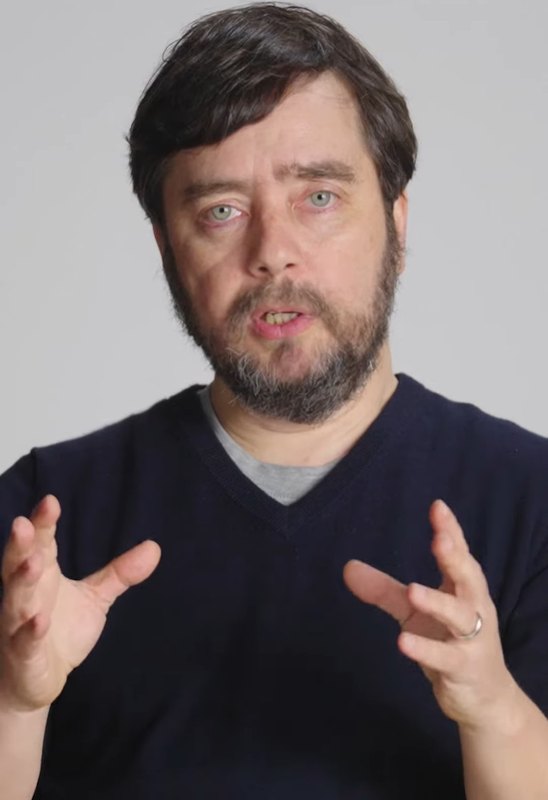 Michael LevinAllen Discovery Center, Tufts UniversityBioelectric signalling, the cognitive light cone, and diverse intelligence
- Tal ShomratTufts University (Levin laboratory)Automated planarian training, memory persistence through head regeneration, in vivo learning instrumentation
- Douglas BlackistonAllen Discovery Center at Tufts UniversityMemory stability during brain remodeling, xenobot platform design, amphibian memory transplantation work
- Vaibhav PaiTufts University (Levin laboratory)Memory mechanisms in synthetic living constructs, bioelectric pattern control, xenobot lineage research