
Consciousness Science 2026 San Diego Confirmed Speaker Lineup for October
Consciousness Science 2026 (CS26) has confirmed its full plenary speaker roster for the October 11 to 16 programme at the Paradise Point Resort in San Diego. The list, published at tsc2026.org, names more than twenty speakers across fourteen plenary sessions, spanning neuroscience, quantum biology, philosophy, and machine consciousness. The conference runs for six days and expects 600 to 700 attendees.
The confirmed programme makes CS26 the largest dedicated consciousness science event of the year, and the concentration of confirmed names across different research traditions gives a cleaner picture of the intellectual shape of the event than earlier announcements allowed. Named-entity analyses are now available for five of the plenary speakers: Robin Carhart-Harris on the entropic brain and AI, Terry Sejnowski on computational neuroscience and the biological plausibility gap, Alysson Muotri on organoid consciousness criteria, Susan Schneider on the verification problem for AI minds, and Hartmut Neven on quantum error correction and IIT. MoC7 in Copenhagen runs the same week with a smaller and far more formal roster, and profiles of its eight keynotes show which theoretical traditions its consensus paper will have to reconcile.
Confirmed Plenary Speakers
The neuroscience representation includes several researchers whose work is directly relevant to AI consciousness questions. Michael Levin at Tufts University, who will present remotely, has developed the cognitive light cone framework, which holds that the boundary of a system’s effective behavioral influence defines the minimum requirement for agency and potentially for consciousness. His work on bioelectricity and collective intelligence in non-neural biological systems has direct implications for whether consciousness requires neural architecture specifically or whether any sufficiently integrated information-processing substrate qualifies. Levin’s causal emergence collaboration with Federico Pigozzi from earlier in 2026 makes his San Diego presence particularly notable for researchers tracking the intersection of consciousness theory and AI design.
Terry Sejnowski at the Salk Institute is a computational neuroscientist whose work on learning rules and deep learning laid theoretical groundwork that the modern AI field built on. His presence at a consciousness conference reflects the growing consensus that the gap between AI and neuroscience models of cognition is narrowing, and that the question of whether that convergence has implications for consciousness cannot be deferred indefinitely.
Robin Carhart-Harris at UCSF is among the leading researchers on psychedelics and consciousness, particularly on entropy and criticality as correlates of the breadth of phenomenal experience. His research on how alterations in neural dynamics change the character of experience rather than simply its intensity provides an empirical handle on the structure of consciousness that is relevant to any framework attempting to characterize what artificial consciousness might be like.
Edward Boyden at MIT and Howard Hughes Medical Institute developed expansion microscopy and other tools for mapping neural circuits at high resolution. His methodological contributions to connectomics are relevant to consciousness research through the measurement question: understanding what physical organization underlies conscious states is a prerequisite for determining whether non-biological systems with similar organization qualify.
Alysson Muotri at UC San Diego works on brain organoids, biological computing structures derived from human induced pluripotent stem cells. His research raises the most direct version of the substrate question: if a non-brain biological structure with neural-like organization develops coordinated electrical activity and behavioral responses, does it have experience? The organoid question and the AI consciousness question share the same underlying theoretical structure.
The Quantum Biology Programme
The programme gives substantial space to quantum approaches to consciousness. Roger Penrose at Oxford, presenting remotely, will continue his advocacy for the Orchestrated Objective Reduction (Orch-OR) theory, which he developed with Stuart Hameroff at the University of Arizona. Hameroff is also confirmed as a speaker. Their shared position, that consciousness depends on quantum processes in neuronal microtubules and that classical computational systems cannot in principle support it, represents the most developed substrate-restrictive view in the field.
Hartmut Neven leads Google Quantum AI. His presence alongside Penrose and Hameroff creates an unusual combination: a researcher building large-scale quantum computing systems with a team that believes those systems, or some version of them, may be relevant to consciousness if the Orch-OR framework is correct. Whether Neven’s programme connects to consciousness research empirically or philosophically will depend on his talk content, but the institutional combination is significant.
Jack Tuszynski at Politecnico di Torino and Anirban Bandyopadhyay at NIMS in Japan have each published on quantum coherence in biological systems. Their inclusion alongside Penrose and Hameroff signals that the quantum biology track at CS26 is not a fringe appendage but a substantial portion of the programme.
Philosophy and Machine Consciousness
Susan Schneider at Florida Atlantic University will bring the philosophy of mind perspective to machine consciousness. Her research examines whether computational systems can have phenomenal states and what evidence would bear on that question. Jonathan Schooler at UC Santa Barbara has worked on metawareness, the capacity to be aware of one’s own mental states, which is relevant to self-modeling architectures in AI.
Programme Structure
Fourteen plenary sessions across six days, with poster sessions and contributed talks alongside the plenary track. The scope is explicitly interdisciplinary, covering the following areas as designated in the programme: panpsychism, illusionism, higher-order theories, integrated information theory, quantum biology, quantum biophotonics, consciousness at the smallest scales, UAP and anomalies, AI and machine consciousness, and the origins of consciousness.
The AI and machine consciousness session has not yet confirmed a specific speaker lineup beyond those named above. The conference runs October 11 to 16, one day before MoC7 at Copenhagen begins (October 12 to 16). Researchers navigating the overlap will need to choose: MoC7 focuses on mathematical and computational models with an ambitious consensus-paper goal, while CS26 covers the full interdisciplinary spectrum without the consensus ambition.
Context Within 2026 Conference Activity
CS26 is the third major consciousness conference of 2026, following TSC Tucson (April, cancelled after institutional circumstances disrupted it), ASSC 29 in Santiago, Chile (June 30 to July 3), and the MC0001 machine consciousness conference at Lighthaven Berkeley (May 29 to 31). The earlier Consciousness Science 2026 coverage on this site described the governance transition from the University of Arizona to independent operation. The confirmed speaker list is the most substantial update since that analysis.
Registration closes at the conference date. The official site at tsc2026.org provides registration and schedule details. A full map of the 2026 consciousness research field is in the field overview on this site.
Researchers covered here
-
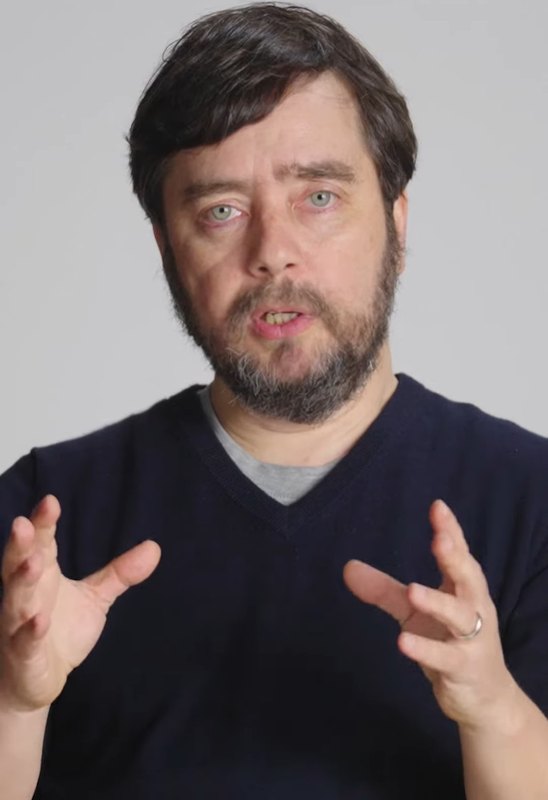 Michael LevinAllen Discovery Center, Tufts UniversityBioelectric signalling, the cognitive light cone, and diverse intelligence
- Terrence J. SejnowskiComputational Neurobiology Laboratory, Salk Institute / UC San DiegoCo-inventor of the Boltzmann Machine, The Computational Brain (1992), Independent Component Analysis (ICA), The Deep Learning Revolution (MIT Press, 2018)
- Alysson R. MuotriDepartment of Pediatrics and Cellular & Molecular Medicine, UC San DiegoHuman brain organoids ('mini-brains'), spontaneous complex neural oscillations, electrophysiological development in in-vitro neural networks
- Susan SchneiderCenter for the Future Mind, Florida Atlantic UniversityArtificial Consciousness Tests (ACT), Artificial You, AI and the Future of Your Mind (Princeton, 2019), AI safety & cognitive rights, NASA-Baruch Blumberg Chair at Library of Congress
- Sir Roger PenroseMathematical Institute, University of OxfordNobel Prize in Physics (2020), Orchestrated Objective Reduction (Orch-OR) with Stuart Hameroff, The Emperor's New Mind (1989), Shadows of the Mind (1994)
- Stuart HameroffCenter for Consciousness Studies, University of ArizonaOrchestrated Objective Reduction (Orch-OR) with Roger Penrose, microtubule quantum resonance, anesthetic mechanisms of consciousness
- Hartmut NevenGoogle Quantum AILeading Google Quantum AI, quantum error correction, quantum approaches to consciousness