


Tal Shomrat
Tufts University (Levin laboratory)
Biological naturalist Consciousness requires living metabolic hardware
Tal Shomrat designed and ran the experiment that anchors the bioelectric memory literature. With Michael Levin at Tufts University, Shomrat built an automated training and testing device for planarian flatworms, solving the reproducibility problems that had plagued earlier work, and used it to show that learned behavior persists after amputation and complete head regeneration. The 2013 Journal of Experimental Biology paper, examined on this site in the bioelectric memory analysis, established the target any theory of memory storage must explain, information robust to the loss of the organ that memory theories locate it in.
The result’s significance is wider than worm biology. If memory survives wholesale replacement of the brain, the storage medium is distributed across the living system, with bioelectric state as the leading candidate, and psychological continuity is a property of patterns rather than of tissue. That is the empirical floor under the cognitive light cone framework this site tracks, and the reason the planarian result appears in debates about substrate independence from the biological side.
Shomrat’s contribution is methodological as much as theoretical. Automated training paradigms turned a legendary, hard-to-replicate result into a controlled measurement, which is what allowed the 2015 review of memory stability during brain remodeling, and the whole line it seeded, to build on solid ground.
Known for. Automated planarian training, memory persistence through head regeneration, in vivo learning instrumentation
Coverage on this site
Related researchers
-
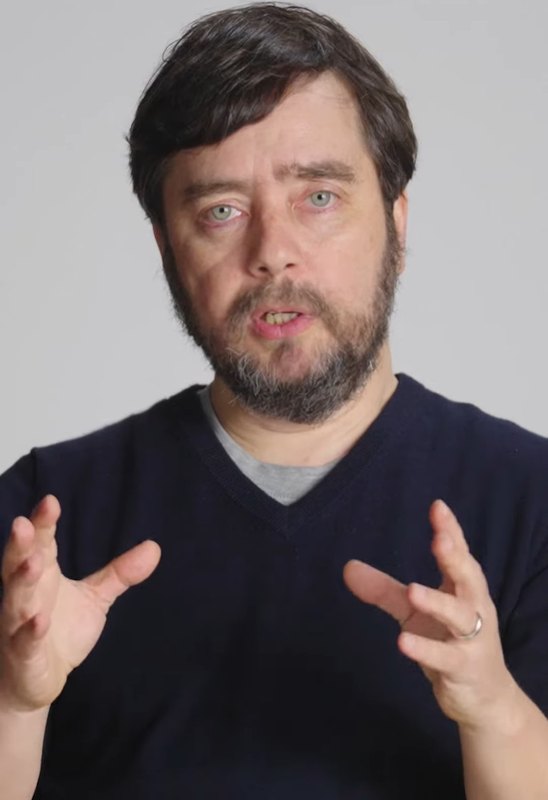 Michael LevinAllen Discovery Center, Tufts UniversityBioelectric signalling, the cognitive light cone, and diverse intelligence
- Douglas BlackistonAllen Discovery Center at Tufts UniversityMemory stability during brain remodeling, xenobot platform design, amphibian memory transplantation work
- Vaibhav PaiTufts University (Levin laboratory)Memory mechanisms in synthetic living constructs, bioelectric pattern control, xenobot lineage research
- František BaluškaUniversity of BonnCellular consciousness, subcellular nanobrains, plant neurobiology, sentient cells as units of physiology
- Tristan A. BekinschteinDepartment of Psychology / Consciousness and Cognition Lab, University of CambridgeClinical biomarkers of consciousness, local-global auditory paradigm, transitions from wakefulness to sedation, neural dynamics of awareness
- Tomas Berjaga-BuisanComputational Neuroscience Group, Center for Brain and Cognition, Universitat Pompeu Fabra, BarcelonaNon-equilibrium thermodynamics of whole-brain models, fluctuation-dissipation theorem violations as a non-invasive consciousness marker
Tal Shomrat is listed with the other biological naturalists, who hold that consciousness requires living metabolic hardware. The theory family behind that position is set out in the index of consciousness theories. Every researcher covered on this site is indexed in the directory of consciousness researchers.