The Consciousness AI is open research and development on consciousness as an emergent property, from animal brains to AI, built on Feinberg and Mallatt's neuroevolutionary theory.
Home/Hardware Kits for Thermodynamic Computing, Neuromorphic Chips, EEG and CubeSats
Hardware Kits for Thermodynamic Computing, Neuromorphic Chips, EEG and CubeSats
A kit on this page is a short parts list and the code that runs on it. Each one builds a piece of the
hardware tracks of this project on a desk: thermodynamic computing with p-bits, neuromorphic chips
that compute with spikes, recordings of the human brain, and the satellites that may one day carry
this kind of hardware to orbit.
What this page isA list of kits. The Consciousness AI does not sell them yet. Every part links to its maker, the maker's official store, or Amazon.
"I want this kit"The button counts how many people want each kit. When enough people ask for one, we offer it as one order from one seller, with the guide and the code. When that happens, it is announced in the weekly newsletter. Brain kits stay parts lists from their makers, and their count decides which guide is written first.
What we testedEach kit says it plainly. "Code tested in software" means the kit's code runs and passes its tests without the board. "Simulated" means the circuit passes in a simulator, not on the board. "Not tested by us" means the guide is the maker's own. "Guide in progress" means the guide and code are not published yet, so nothing is claimed.
Affiliate linksThe "Buy on" buttons are affiliate links. A purchase through them earns the project a commission, at no extra cost to you. As an Amazon Associate I earn from qualifying purchases. Maker links are plain links.
Thermodynamic computing kits
A p-bit is a binary unit that flips at random, with a bias set by its inputs. These kits take the
p-bit sampler of the open-source thermospike library from
software noise to physical noise, and from one spin at a time to a whole lattice in one clock cycle.
The hardware guide lists every board and
noise source in more detail.
Entry kitGuide in progress
Physical noise for p-bits
A USB true random number generator as the noise source for the p-bit sampler in thermospike, in place of the software generator.
The build guide and code for this kit are being written.
Neuromorphic computing kits
A neuromorphic chip computes with spikes, short events in time, as neurons do. The entry kit builds
spiking neurons as circuits on a small FPGA. The full kit is a commercial neuromorphic processor. The
brain emulation page covers the research on running a
brain on another substrate.
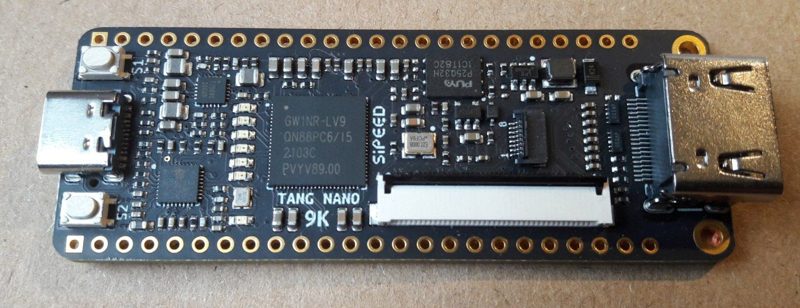
Sipeed Tang Nano 9K (Popolon, Wikimedia Commons)
Entry kitGuide in progress
Spiking neurons on an FPGA
Leaky integrate and fire neurons as small circuits on a Tang Nano 9K, each neuron updating in the same clock cycle.
Needs a host with an M.2 slot, for example a Raspberry Pi 5 with an M.2 board. Shipping regions are not stated on the product page.
The build guide and code for this kit are being written.
Brain and cognition kits
These kits record the electrical rhythms of your own brain with electrodes on the scalp (EEG). They
only record. No kit on this page sends current into the body, and none is a medical device. Follow
each maker’s power rule, which for most boards is battery power only. The
States of Consciousness console and the
Sleep and Dreams console run the same kind of
analysis on released recordings.
Entry kitGuide in progress
See your own brain rhythm
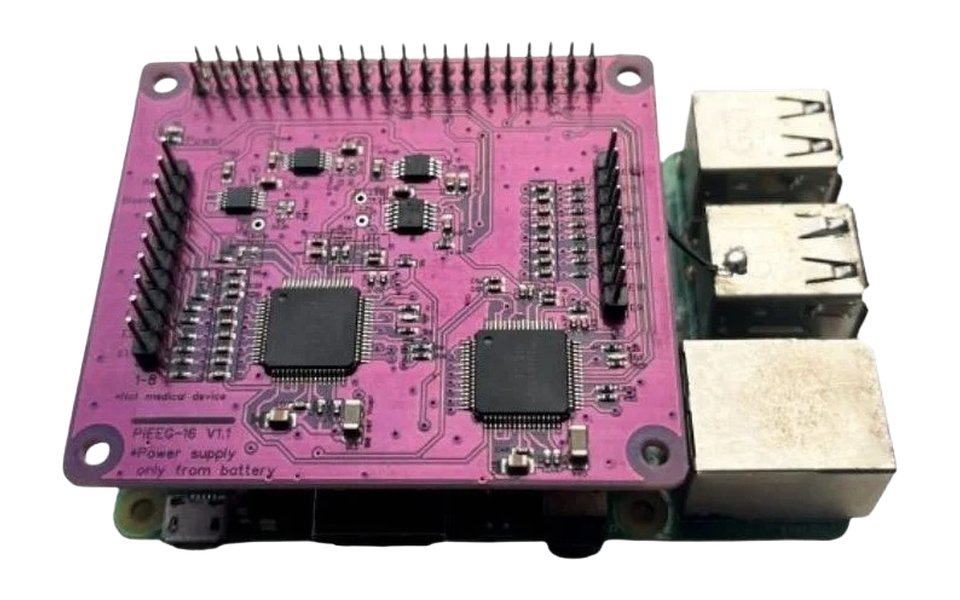
A battery powered recorder for EEG. Close your eyes and the alpha rhythm appears. The guide computes alpha power with the same method the States of Consciousness console uses on released anaesthesia EEG.
PiEEG, sold by Elecrow · Check stock · checked 5 Nov 2026
The maker's rule is battery power only, from a 5 V power bank, never a wall adapter, because the board has no isolation circuit. Not a medical device. Raspberry Pi, electrodes and cap are not included.
Electrodes or a headset are sold separately. Not a medical device.
The build guide and code for this kit are being written.
Satellite and CubeSat kits
A CubeSat is a satellite built from 10 cm cubes. The entry kit is a ground station that receives
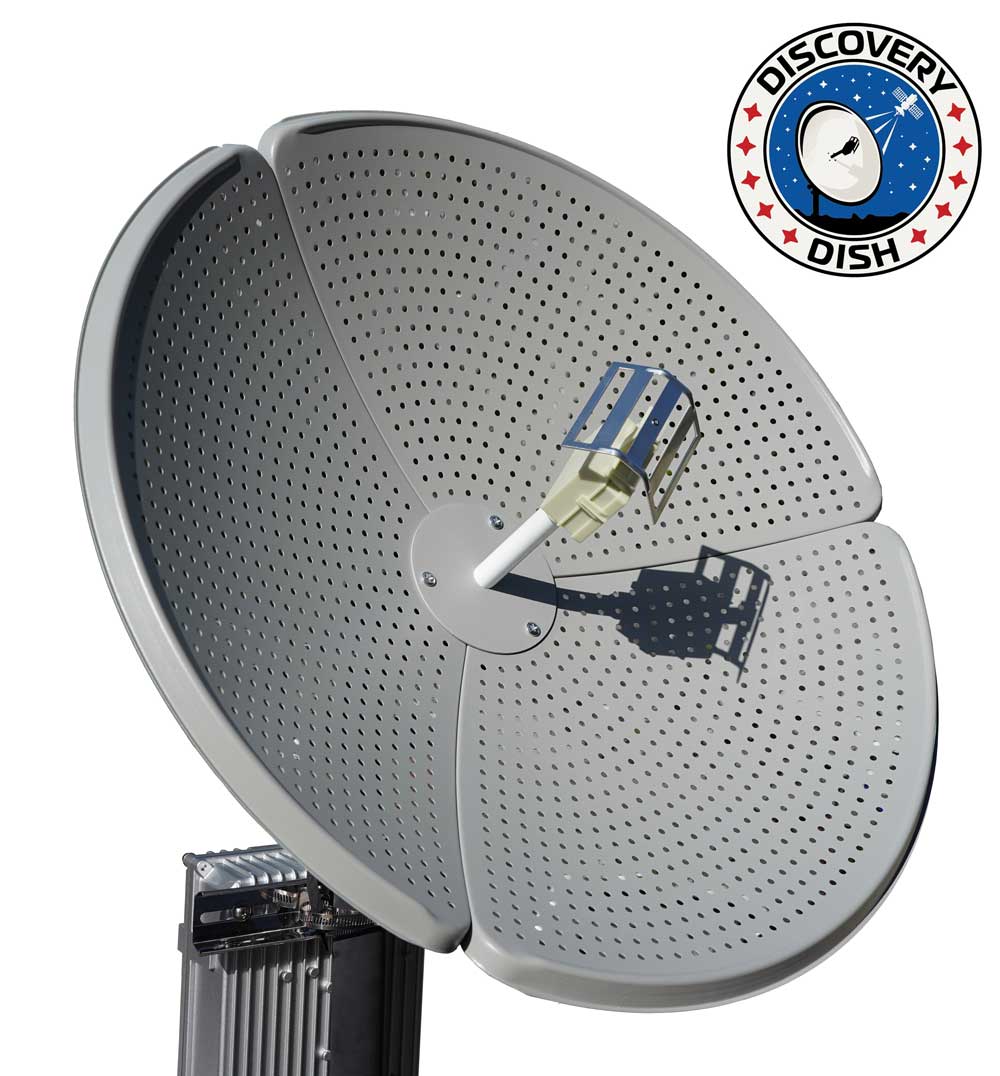
satellites already in orbit. The full kits are a dish that receives weather satellites in geostationary
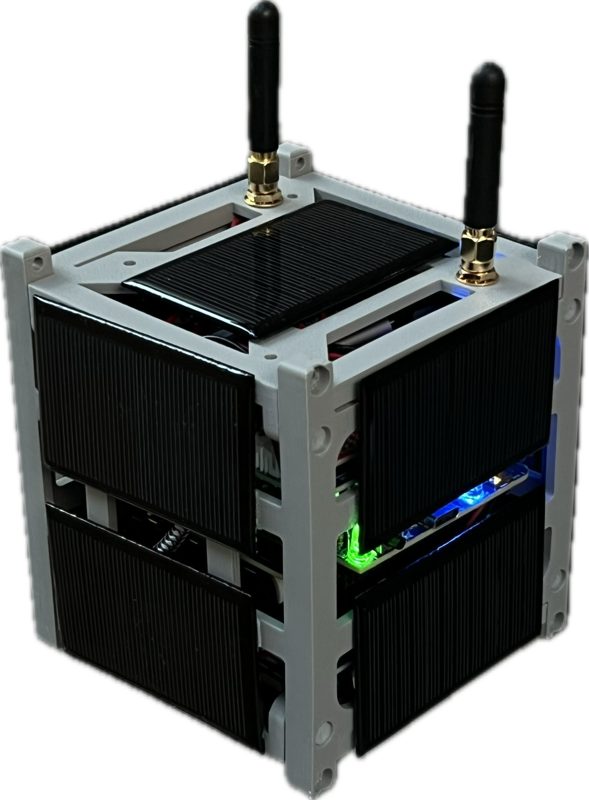
orbit, and a CubeSat on a desk. Parts for a satellite that flies are
listed as a reference only. The CubeSat guide follows a real CubeSat
from the first idea to orbit under US rules. The consciousness to orbit
page covers why computing in orbit is part of this project.
The film below explains both weather satellite kits: the dipole antenna for the low satellites, and the dish
for GOES.
The second film follows a CubeSat from the desk to orbit. It shows the ground station kit and AMSAT’s
CubeSat Simulator, the base of the desk CubeSat kit.
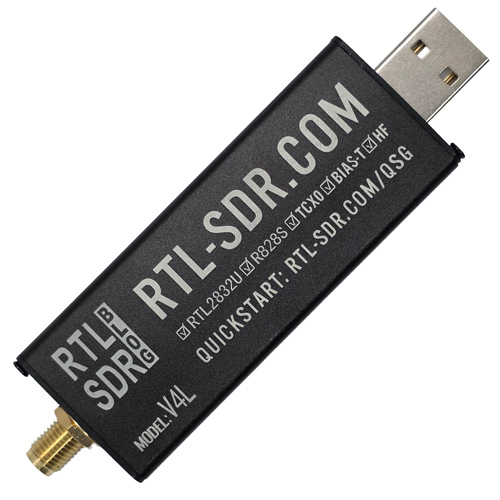
RTL-SDR Blog V4L (Lite) (RTL-SDR Blog)
Entry kitNot tested by us
Satellite ground station receiver
A USB software defined radio and a dipole antenna, both from RTL-SDR Blog. With the SatNOGS software it receives the ISS and weather satellites, and it can join the open SatNOGS network of ground stations.
In stock in the maker's worldwide warehouse (China) on the checked date, not yet on Amazon USA, and stock is limited. The maker's store does not ship to the EU and sends EU buyers to its AliExpress and eBay stores.
A small dish with an L-band feed and the V4L receiver. It receives images from GOES weather satellites in geostationary orbit. The patch antenna is a lighter way to receive Inmarsat and Iridium without a dish.
In stock in the maker's worldwide warehouse (China) on the checked date, not yet on Amazon USA, and stock is limited. The maker's store does not ship to the EU and sends EU buyers to its AliExpress and eBay stores.
A working model of a 1U CubeSat with solar panels, sensors and a radio beacon. The receiver kit above picks up its telemetry. Flight parts for a real launch are listed as a reference.
AMSAT ships the kit to US addresses only. Outside the US, the open design can be built from the blank board set and the bill of materials on cubesatsim.org.
A kit is added when its parts are sold to the public and its code is open. A kit is offered for sale
only when one seller ships every part in one package, so an order arrives complete. Radios and other
parts for satellites that fly fall under export rules, so they are bought from their makers and are
never resold here. Brain recording devices are also bought from their makers only, because the maker
answers for the safety of a device worn on the body. Prices and stock change, so the vendor page is the authority. Each part shows the
date it was checked.
The same list, in a format for software and AI agents, is at
/hardware.json. A kit can be suggested as an issue on the
project repository.
Photos are used under open licences or with the maker's permission. Kits without a photo show a drawing of their topic.
PiEEG-16 on a Raspberry Pi (the Raspberry Pi is not included). Photo: PiEEG, used with permission