The Consciousness AI is open research and development on consciousness as an emergent property, from animal brains to AI, built on Feinberg and Mallatt's neuroevolutionary theory.
Home/CubeSat Guide, How to Build and Launch a Satellite from the US
CubeSat Guide, How to Build and Launch a Satellite from the US
This guide follows a CubeSat from the first idea to the first signal from orbit, under United States rules. It names the agency or standard behind each step, from the Cal Poly CubeSat Design Specification and the FCC radio license to a SpaceX rideshare slot and a SatNOGS ground station. It is a neutral guide. The Consciousness AI does not build or launch a satellite.
A CubeSat is a satellite built from 10 cm cubes. The guide has 10 parts. The first part maps the whole path in nine steps, and each later part takes one step in depth. 1 of 10 parts are published, and a new part follows each week.
The film below shows the nine steps in two and a half minutes, with a real signal from the AO-91 CubeSat.
The whole path. A US CubeSat needs a Cal Poly standard bus, an FCC license under the new Part 100 rules, a debris report and a launch. SpaceX quotes $350,000 for 50 kg.
Part 2CubeSat orbits, LEO, sun-synchronous orbit, ISS deployment and deorbit timeStep 1. Coming in the series
Part 3CubeSat hardware, the Cal Poly standard, bus subsystems and off-the-shelf partsStep 2. Coming in the series
Part 4CubeSat flight software, NASA F Prime, cFS, onboard computers and FPGAsStep 3. Coming in the series
Part 5Testing a CubeSat, thermal vacuum and vibrationStep 4. Coming in the series
Part 6FCC licensing for a CubeSat, Part 5, Part 97, the new Part 100, IARU and ITUStep 5. Coming in the series
Part 7Other US approvals, NOAA, export rules, the debris report and Space-TrackStep 6. Coming in the series
Part 8Launching a CubeSat, SpaceX Rideshare, integrators and NASA CSLIStep 7. Coming in the series
Part 9CubeSat ground stations, SatNOGS, RTL-SDR and commercial networksStep 8. Coming in the series
Part 10What a CubeSat costs, budget and timeline from 1U to 6UStep 9. Coming in the series
Start on a desk
The steps to orbit take years and cost hundreds of thousands of dollars. Two parts of the work can start this week. A ground station hears satellites that are already in orbit, and it is the same station a CubeSat team uses to catch its own first signal. A desk model of a CubeSat teaches the subsystems before any money goes to flight parts. The kits below are parts lists from their makers. The full list, with kits for other projects, is on the hardware kits page.
What these kits areParts lists. The Consciousness AI does not sell them yet. Every part links to its maker, the maker's official store, or Amazon. Radios for satellites that fly are never resold here.
Affiliate linksThe "Buy on" buttons are affiliate links. A purchase through them earns the project a commission, at no extra cost to you. As an Amazon Associate I earn from qualifying purchases. Maker links are plain links.
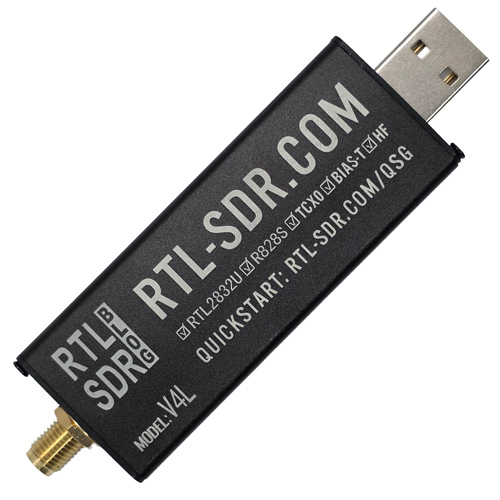
RTL-SDR Blog V4L (Lite) (RTL-SDR Blog)
Entry kitNot tested by us
Satellite ground station receiver
A USB software defined radio and a dipole antenna, both from RTL-SDR Blog. With the SatNOGS software it receives the ISS and weather satellites, and it can join the open SatNOGS network of ground stations.
In stock in the maker's worldwide warehouse (China) on the checked date, not yet on Amazon USA, and stock is limited. The maker's store does not ship to the EU and sends EU buyers to its AliExpress and eBay stores.
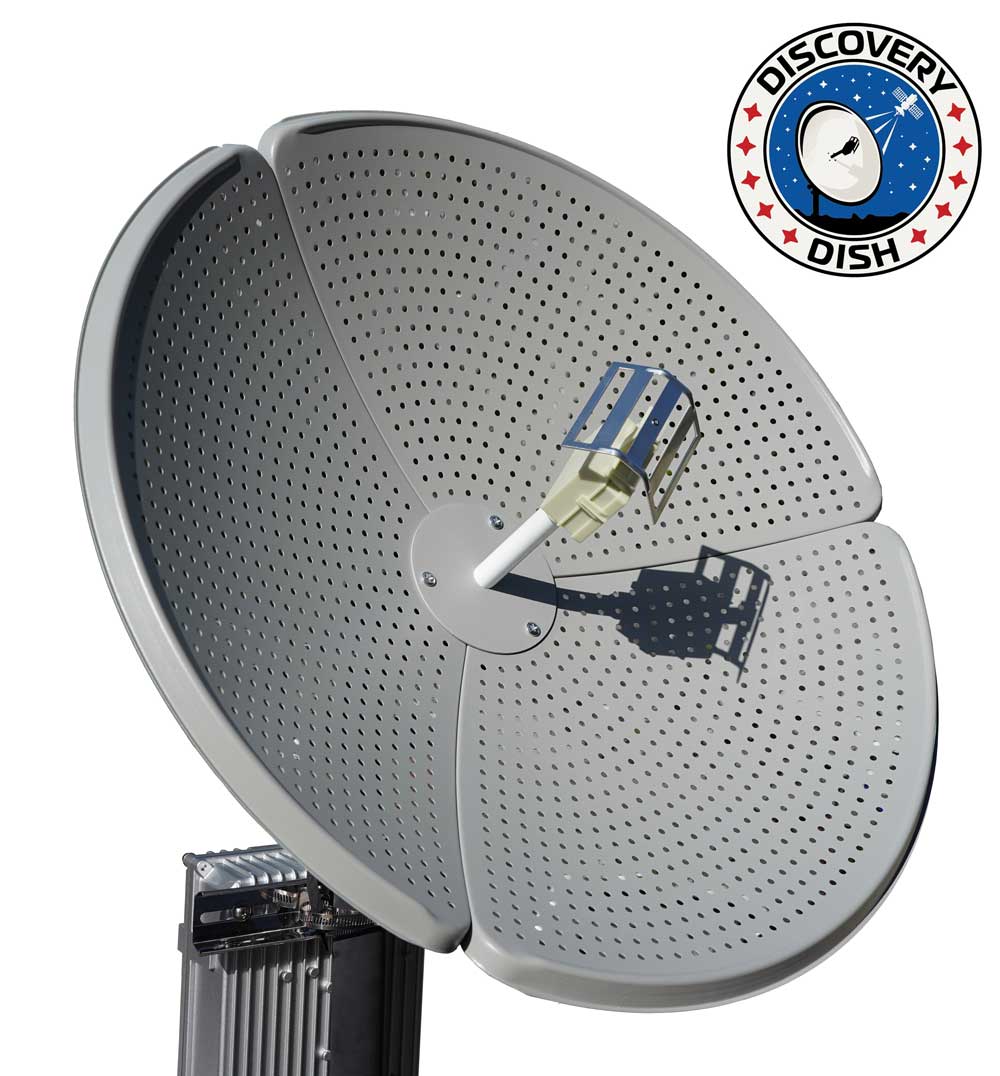
A small dish with an L-band feed and the V4L receiver. It receives images from GOES weather satellites in geostationary orbit. The patch antenna is a lighter way to receive Inmarsat and Iridium without a dish.
In stock in the maker's worldwide warehouse (China) on the checked date, not yet on Amazon USA, and stock is limited. The maker's store does not ship to the EU and sends EU buyers to its AliExpress and eBay stores.
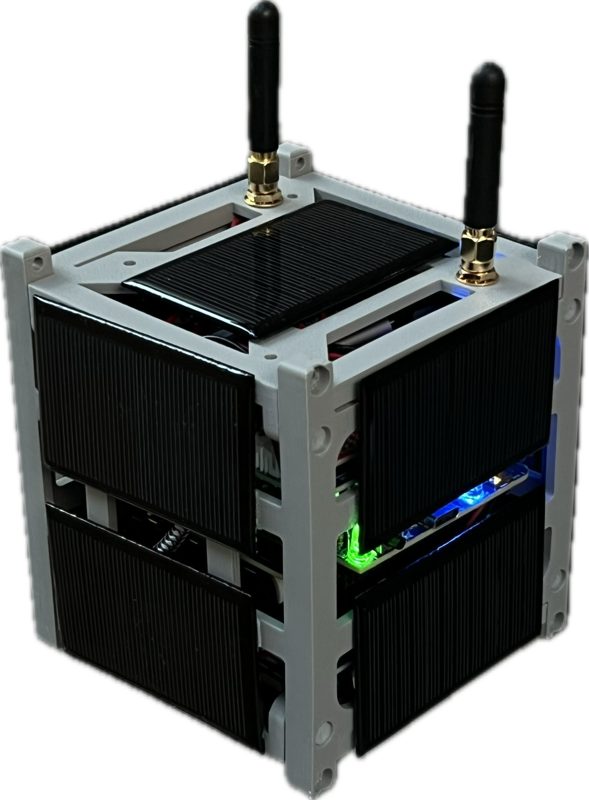
A working model of a 1U CubeSat with solar panels, sensors and a radio beacon. The receiver kit above picks up its telemetry. Flight parts for a real launch are listed as a reference.
AMSAT ships the kit to US addresses only. Outside the US, the open design can be built from the blank board set and the bill of materials on cubesatsim.org.
Why a consciousness project maps the path to orbit
This project studies consciousness as an emergent property of physical systems that does not depend on one substrate. If that view is right, a mind could in principle run on hardware far from Earth, and the open questions become physical ones, such as power, radiation, heat and the delay of every signal. CubeSats are where those conditions are tested today. ESA’s Phi-sat-2 runs six AI applications on a 6U CubeSat, and NASA’s TechEdSat-13 CubeSat flew a neuromorphic chip, which our review of radiation hardening in orbit follows. No CubeSat is conscious, and none of these missions claims to be.