


UT Austin Consciousness and Intelligence Symposium and SfN 2026 Neuroethics Preview
Where does the boundary lie between general computational intelligence and genuine subjective experience as 2026 draws to a close? Two major academic gatherings in November 2026 place that question at the center of their programs. On November 5 to 6, 2026, the University of Texas at Austin hosts its inaugural Consciousness and Intelligence symposium under the theme “AI and Consciousness,” bringing together David Chalmers, Anil Seth, Scott Aaronson, Alison Gopnik, and Blaise Agüera y Arcas. One week later, from November 14 to 18, 2026, the Society for Neuroscience convenes Neuroscience 2026 in Washington, D.C., featuring UCSF neurologist and philosopher Winston Chiong delivering the David Kopf Lecture on Neuroethics on Tuesday, November 17, 2026.
Following the December 2026 NeurIPS workshops preview on AI selfhood and mechanistic interpretability and the ASSC 30 Beijing 2027 announcement, these two November programs crystallize the central theoretical fault lines tracked in our 2026 flagship analysis of AI consciousness.
UT Austin’s Inaugural Symposium on AI and Consciousness (November 5 to 6, 2026)
Hosted by the College of Liberal Arts and interdisciplinary partners at UT Austin, the November 5 to 6 symposium is structured as a direct adversarial conversation among five researchers who hold sharply distinct positions on substrate independence, computational functionalism, and developmental psychology.
| Featured Speaker | Institutional Affiliation | Core Theoretical Position Entering the November 2026 Debates |
|---|---|---|
| David Chalmers | New York University | Organizational invariance and computational functionalism; evaluates LLM and world-model architectures against explicit architectural indicators |
| Anil Seth | University of Sussex | Biological predictive processing (“beast machine”); argues that autopoietic metabolic self-maintenance separates living awareness from digital simulation |
| Scott Aaronson | UT Austin | Quantum complexity theory and IIT critique ($\Phi$ in 2D parity grids); explores physical irreversibility and quantum no-cloning (“Knightian freedom”) |
| Alison Gopnik | UC Berkeley | Developmental causal learning; contrasts infant broad “lantern consciousness” with adult executive “spotlight consciousness” and LLM cultural compression |
| Blaise Agüera y Arcas | Google Research | Computational symbiogenesis and functionalist emergence; argues that self-modeling and social theory-of-mind emerge naturally in predictive sequence models |
| Winston Chiong | UCSF (SfN 2026, Nov 17) | Clinical neuroethics; David Kopf Lecture (“What Can Neuroscience Reveal About Human Values?”) examining AI, dementia, and neural prosthetics |
Three specific intellectual clashes make the Austin program one of the most consequential debates of the fall conference calendar.
- Organizational invariance collides with metabolic autopoiesis as David Chalmers and Blaise Agüera y Arcas defend functionalist views in which mental states supervene on causal organization, while Anil Seth counters that biological predictive processing requires a living, metabolizing body whose physical components continuously rebuild themselves against entropy.
- Quantum complexity theory tests formal consciousness metrics as UT Austin computer scientist Scott Aaronson builds on his proof that Giulio Tononi’s Integrated Information Theory assigns unbounded $\Phi$ to simple 2D Reed-Solomon parity grids, asking whether physical systems whose internal states cannot be cloned without thermodynamic dissipation differ fundamentally from copyable software weights.
- Developmental causal learning challenges pretrained text compression as UC Berkeley’s Alison Gopnik distinguishes between exploratory lantern consciousness (the wide-angle perceptual openness of infants building causal world models from scratch) and spotlight consciousness (the narrow executive attention of adults), arguing that current foundation models compress adult cultural artifacts rather than discovering causal structure through sensorimotor intervention.
SfN Neuroscience 2026 and Winston Chiong’s Kopf Lecture (November 14 to 18, 2026)
While the UT Austin symposium focuses on foundational philosophy and computational theory, the Society for Neuroscience Annual Meeting in Washington, D.C. brings more than 20,000 empirical neuroscientists together across five days of poster sessions, nanosymposia, and plenary lectures.
On Tuesday, November 17, 2026 (10:30 to 11:30 a.m. EST), UCSF neurologist and bioethicist Winston Chiong, MD, PhD, delivers the David Kopf Lecture on Neuroethics, titled “What Can Neuroscience Reveal About Human Values?”. Chiong’s lecture addresses a pressing clinical and societal reversal. As artificial intelligence systems increasingly outperform humans on standardized cognitive tests and generate fluent moral discourse, both clinicians and philosophers are forced to re-examine what grounds genuine valuation, care, and agency in human patients.
Drawing on his clinical work at the UCSF Memory and Aging Center with patients experiencing behavioral-variant frontotemporal dementia, Alzheimer’s disease, and closed-loop deep brain stimulation implants, Chiong demonstrates that human values are not detached propositional rules stored in a language module. In biological brains, valuation is inseparably wired into subcortical-limbic salience networks (the anterior insula, anterior cingulate cortex, and ventral striatum) that register vulnerability, social attachment, and homeostatic stakes. Echoing themes from the TSC 2026 San Diego conference recap, Chiong’s neuroethical analysis warns against two symmetrical errors, namely dismissing impaired human patients whose linguistic output is degraded while over-attributing moral agency to fluent language models that lack affective salience circuits.
Comparison to The Consciousness AI
The twin themes of the November 2026 meetings, coupling architectural functionalism versus biological grounding at UT Austin with affective valuation versus linguistic mimicry at SfN 2026, map directly onto the design of The Consciousness AI.
Our architecture explicitly rejects the premise that next-token linguistic fluency equates to awareness. Instead, aligning with the converging arguments of Gopnik on causal exploration and Chiong on subcortical salience routing, our Neutral Core framework separates sensory-motor world modeling, basal-ganglia-inspired action selection, and recurrent workspace broadcast into distinct, testable layers.
What to Watch for in Post-Event Coverage
We will track recordings, preprints, and speaker proceedings emerging from both Austin and Washington, D.C. throughout November 2026. Key outputs to watch include whether Chalmers, Seth, and Aaronson converge on any shared empirical falsification tests for world-model selfhood during the Austin panels, and how SfN 2026’s thalamocortical, connectomic, and neuroethics sessions refine clinical perturbation metrics for disorders of consciousness.
Researchers covered here
-
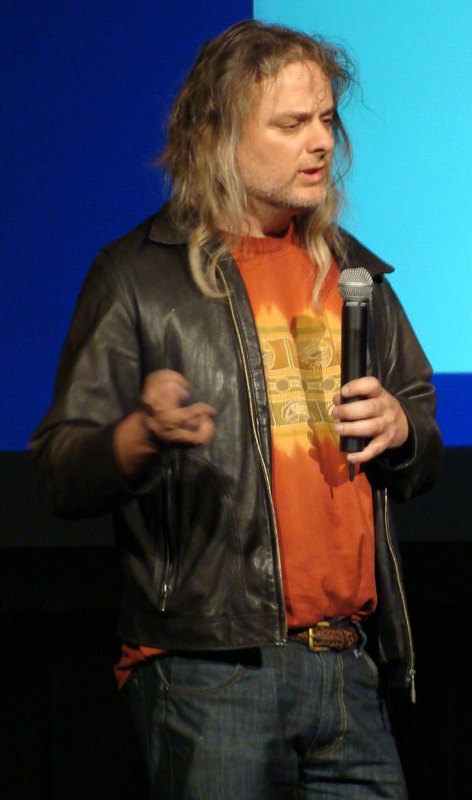 David ChalmersNew York University. Co-director, Center for Mind, Brain and ConsciousnessNaming the hard problem of consciousness, and the philosophical zombie argument
-
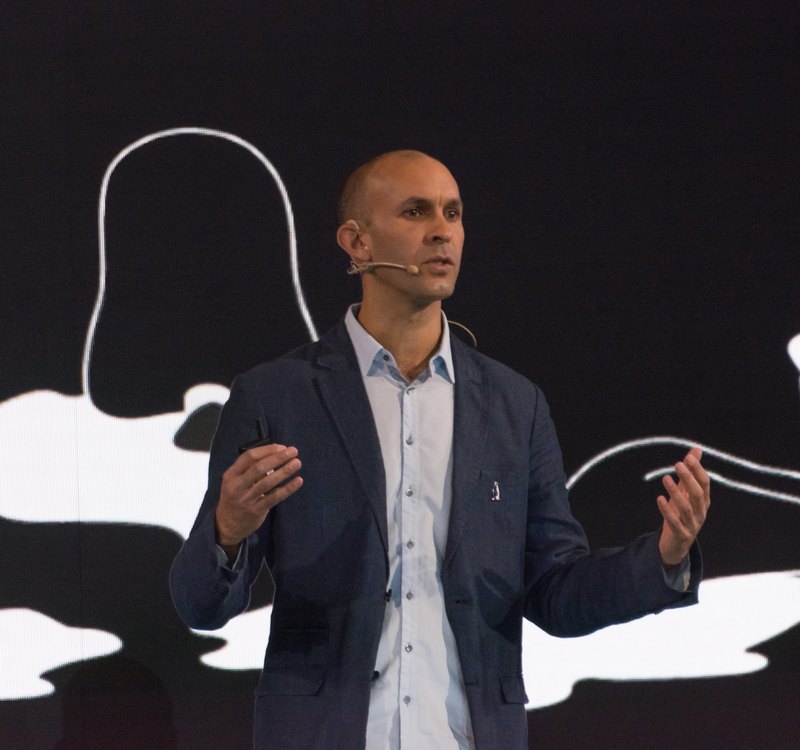 Anil SethSussex Centre for Consciousness Science, University of SussexThe beast machine hypothesis, and controlled hallucination as an account of perception
- Scott AaronsonUniversity of Texas at Austin, Department of Computer ScienceQuantum complexity theory, mathematical counterexamples to Integrated Information Theory (Phi in expander graphs and Reed-Solomon grids), speaker at UT Austin Consciousness and Intelligence 2026
-
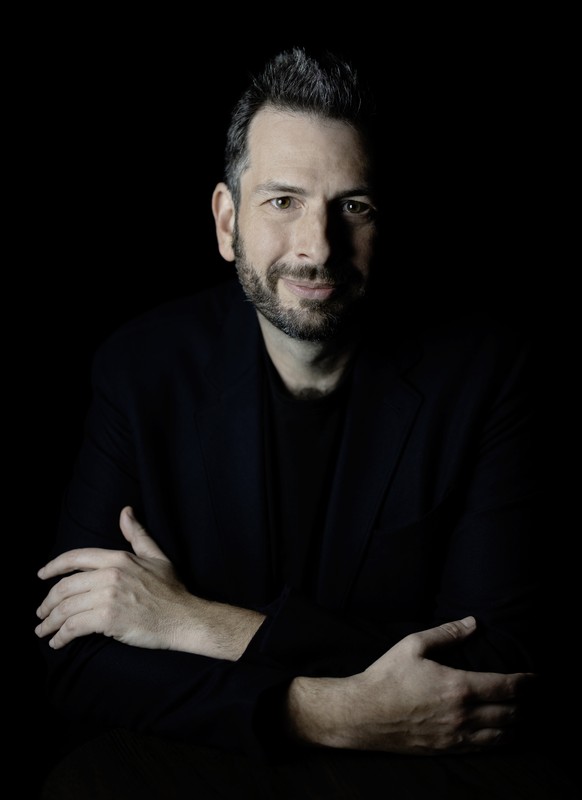 Blaise Agüera y ArcasGoogle VP and Fellow, CTO of Technology & SocietyComputational functionalism, active inference, on-device neural computing, What Is Intelligence? (2025), and Who Are We Now? (2023)
- Alison GopnikUniversity of California, Berkeley, Department of Psychology and Department of PhilosophyThe Scientist in the Crib, The Philosophical Baby, Bayesian causal learning in childhood, lantern consciousness vs spotlight consciousness, speaker at UT Austin Consciousness and Intelligence 2026
- Winston ChiongUniversity of California, San Francisco, Memory and Aging Center and UCSF BioethicsClinical neuroethics of dementia, deep brain stimulation and agency, 2026 Society for Neuroscience David Kopf Lecture on Neuroethics ('What Can Neuroscience Reveal About Human Values?')