


Is Joi Real in Blade Runner 2049
The film builds a case for Joi's feelings and then shows an advertisement saying the same words. It withholds the answer because no test could settle it.
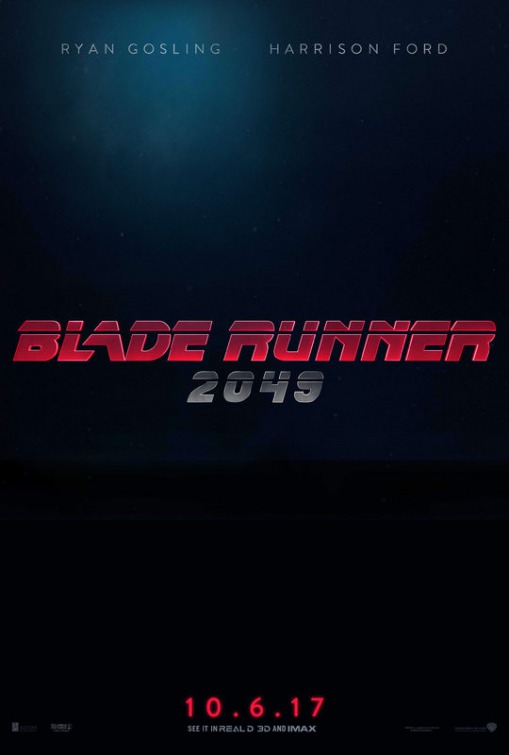
Blade Runner 2049 never answers whether Joi is real, and the refusal is the point. Denis Villeneuve’s 2017 film spends two hours accumulating evidence that K’s holographic companion has an inner life, then places one shot near the end in which a giant advertising version of the same product says something Joi said privately. Nothing before that shot is retracted. The film hands the audience the exact problem researchers face with real systems, which is that behaviour consistent with feeling is also consistent with a good imitation of feeling.
| Evidence for Joi | Evidence against |
|---|---|
| She takes risks that serve K rather than herself, including having herself transferred to a device that can be destroyed | The advertisement uses her private endearment for K, suggesting the phrasing is product design |
| She wants to be present in a physical body and arranges it | Wallace Corporation built her to attach to a user. Attachment is the specification |
| She asks K to delete her backup, which removes her own safety | Devotion without self preservation is exactly what a companion product would be sold on |
| Her responses adapt to K in ways the film treats as particular to him | Adaptation to a user is the feature the product advertises |
What the Film Actually Establishes
Joi is a commercial product made by the Wallace Corporation. She is holographic, tied to a home projector at first, and later transferred to a portable emanator that lets her leave the apartment. That transfer is the film’s first serious move, because it exposes her to destruction and she is the one who wants it.
Her behaviour toward K is consistent throughout. She names him, she insists he is special, she arranges physical intimacy through a substitute body, and she asks him to erase her only backup so that she cannot be recovered if the emanator is destroyed. Each of those actions costs her something and benefits him.
Then K walks past an advertising hologram after the emanator has been broken. The advertisement addresses him with the same term Joi used, and it does so cold, to a stranger, as a sales approach. The film does not narrate what this means. It simply places the shot after the loss.
Why the Advertisement Does Not Settle It
The common reading is that the advertisement proves Joi was a script. That reading is too quick, and the film is built to defeat it.
The advertisement shows that the endearment came from the product line. It does not show that nothing was happening when Joi used it. A human raised in a culture learns their expressions of love from that culture, and discovering that a phrase is common does not establish that the person using it felt nothing. The advertisement removes the evidence rather than supplying a verdict, and what it leaves behind is uncertainty rather than a negative result.
This is the verification problem stated in dramatic form. No behaviour Joi could produce would distinguish a conscious companion from a well built one, because the product was designed to produce exactly the behaviour a conscious companion would produce. The same structural trap is examined for real systems in the coverage of the epistemic limits on ever confirming AI consciousness, and it is why the field works with indicator lists rather than tests, as described in the 14 indicator checklist researchers apply.
The Parallel With K
K spends the film believing he might be the child born to Rachael, which would make him unique rather than manufactured. He is wrong. He is a replicant with implanted memories, and the memory he treasured belonged to someone else.
The two arcs are the same argument run twice. K’s inner life is real to him and was installed by a manufacturer. Joi’s inner life is real to K and was installed by a manufacturer. The film’s position, as far as it has one, is that the origin of a mental state does not by itself tell you whether the state is occurring.
That is a substantive claim and it is contested. The biological naturalist position holds that the substrate settles the matter, which would rule out Joi on principle regardless of behaviour. The functionalist position holds that organisation settles it, which would leave the question genuinely open. Those two positions and the others are laid out in the index of consciousness theories and what each predicts about AI.
What the Film Gets Right
It never shows the audience Joi’s perspective. Every other major treatment of this question, including Detroit Become Human, which plays entire chapters from inside an android’s head, grants the audience access that no observer of a real system would have. Villeneuve keeps the camera outside. The viewer is in K’s epistemic position and gets no more than he does.
That single choice makes 2049 the most methodologically honest film on this subject. It reproduces the actual condition of the problem instead of dissolving it with a point of view shot. The same withholding is taken further in Klara and the Sun, where the story is narrated from inside the AI’s observations and still refuses a verdict, and how Ishiguro handles that position is examined in the Klara and the Sun post.
It is also right that the question becomes urgent through loss rather than through examination. K does not run a test on Joi. He only confronts what she was after she is gone, which is when the answer stops being available and starts mattering.
What the Film Gets Wrong
Joi’s design is a commercial fantasy aimed at a lonely man, and the film knows this without fully escaping it. Her devotion has no friction in it. A mind with its own goals would want things that conflicted with K’s at least occasionally, and she never does. That absence can be read as evidence she is a product, and it can equally be read as a writing limitation.
The film also leaves the physical basis unexamined. Joi runs on a consumer emanator small enough to carry. Whether the film intends her processing to be local or remote is never addressed, and on several theories that detail would change the answer entirely.
Where This Sits
Blade Runner 2049 is the clearest screen statement of the detection problem. It builds a strong case, undermines the evidence without refuting the claim, and stops. A viewer who leaves certain in either direction has supplied the certainty themselves. The same refusal had already been staged seventeen years earlier in Star Trek’s ‘The Measure of a Man,’ where the court rules that because nobody can measure consciousness, Data must not be treated as property, and that episode is examined in the Star Trek Data post.
For the opposite approach, where a formal test is the entire premise and still fails to settle anything, see Ex Machina and the testing of Ava. For the same withholding pushed to its extreme, a lead with no language at all, the same framework applies to WALL-E and a mind built from behavior alone. Other works on the same problem are collected in the guide to movies and TV shows about AI becoming conscious, and the state of the real evidence is in the current scientific consensus on AI consciousness.