


The Complete Drosophila Gustatory Connectome Maps Full Body Taste to Action
How does a nervous system convert chemical contact on its feet, wings, and mouthparts into an integrated decision to feed, forage, court, or reject a toxin? In a landmark paper published in Cell in September 2026 (The complete gustatory connectome of adult Drosophila reveals how taste guides feeding, foraging, and social behavior), Ibrahim Tastekin, Inês de Haan Vicente, Rory Beresford, Billy Morris, Isabella Beckett, Philipp Schlegel, Gregory Jefferis, Carlos Ribeiro, and collaborators in the FlyEM and Cambridge Connectomics teams mapped the entire peripheral-to-central taste wiring diagram across the adult male fruit fly’s central nervous system. Spanning the 166,700 neuron MaleCNS volume across the brain and ventral nerve cord, the dataset traces every gustatory receptor neuron (GRN) from across the insect’s body directly to motor neurons and neuroendocrine cells.
For researchers working on whole brain emulation and the 2026 scientific effort to define consciousness indicators, the complete Drosophila gustatory connectome solves a long-standing boundary problem. An isolated brain connectome without body-wide sensory afferents and visceral neuroendocrine feedback cannot explain how positive and negative valence organize adaptive behavior.
Tracing Full-Body Taste Across the 166,700-Neuron MaleCNS Volume
Unlike mammals, which concentrate taste receptors on the tongue and soft palate, Drosophila melanogaster samples its chemical environment across its entire exoskeleton. Gustatory receptor neurons sit inside sensory bristles (sensilla) on the proboscis (labellum), the internal pharynx, the tarsi of all six legs, the anterior wing margins, and the abdominal reproductive plates. Prior electron microscopy reconstructions captured either the female central brain alone (FlyWire, ~139,255 neurons) or isolated segments of the ventral nerve cord, severing the ascending pathways that carry leg and wing taste signals into the brain.
By reconstructing the complete gustatory system inside the unified adult male central nervous system (MaleCNS v1.0), Tastekin, Schlegel, Jefferis, and Ribeiro resolved both halves of the sensorimotor loop simultaneously.
| Gustatory Entry Zone | Anatomical Target in CNS | Primary Behavioral & Physiological Routing Mapped in Cell (2026) |
|---|---|---|
| Proboscis (Labellar GRNs) | Subesophageal zone (SEZ) | Fast, direct oligosynaptic arcs (2 to 3 hops) to pharyngeal pumping and proboscis extension motor neurons |
| Internal Pharynx GRNs | SEZ & neuroendocrine centers | Ingestion verification, swallowing gate control, and direct feedforward connections to insulin-producing and neurosecretory cells |
| Leg Tarsal GRNs (6 legs) | Ventral nerve cord (VNC) neuromeres + ascending tracts | Local VNC stepping/stopping reflexes paired with ascending projections to the SEZ and higher mushroom body / lateral horn valence circuits |
| Anterior Wing Margin GRNs | Thoracic VNC & ascending SEZ pathways | Grooming initiation and environmental chemical surveillance integrated with locomotion control |
| Sexually Dimorphic Tarsal GRNs | Male-specific VNC and brain courtship nodes | Pheromone-gated routing into Fruitless/Doublesex circuits governing courtship pursuit vs. feeding |
The wiring diagram reveals a hierarchical architecture organized by spatial proximity to ingestion. Taste neurons on the legs and wings, which encounter chemical substrates while the fly walks or grooms, project first into local ventral nerve cord circuits that can arrest locomotion or trigger grooming within a few synaptic hops, while sending parallel ascending axons into the brain’s subesophageal zone (SEZ). Once food touches the proboscis and enters the pharynx, labellar and pharyngeal GRNs engage ultra-short oligosynaptic pathways to motor neurons controlling proboscis extension, cibarial pumping, and regurgitation, alongside direct synaptic contacts onto neuroendocrine cells that regulate systemic metabolism.
Valence Segregation, Convergence, and Feedforward Endocrine Control
A central discovery of the Cell study is how the nervous system balances modality segregation against cross-body integration. Appetitive taste neurons (responding to sugars and water) and aversive taste neurons (responding to bitter compounds and high salt) remain largely segregated during their first two synaptic relays inside the SEZ and VNC, preventing premature cancellation of opposing survival signals.
At the third and fourth synaptic layers, however, taste signals from the legs, proboscis, and pharynx converge onto shared premotor interneurons and ascending projection neurons that reach the mushroom body and superior protocerebrum. This architecture allows the fly to compute context-dependent trade-offs across three distinct pathways.
- Tarsal sugar detection on the legs halts walking and lowers the threshold for proboscis extension, priming the labellar motor circuit before the mouthparts ever touch the drop.
- Pharyngeal taste neurons synapse directly onto neuroendocrine pathways in the brain before nutrients are absorbed through the gut wall, providing anticipatory metabolic signaling that prepares digestive and insulin states ahead of homeostatic change.
- Specific male leg gustatory pathways carrying contact pheromone signals bifurcate into both feeding-suppression interneurons and male courtship command networks, explaining at single-synapse resolution how social and metabolic drives compete for control of the same motor apparatus.
Implications for Neurobiological Emergentism and Whole Brain Emulation
In consciousness science, the complete Drosophila gustatory connectome speaks directly to Todd Feinberg and Jon Mallatt’s theory of neurobiological emergentism. Feinberg and Mallatt divide the evolutionary emergence of primary consciousness into two parallel pathways, namely isomorphic exteroceptive maps (vision, spatial hearing, somatotopy) that construct a unified model of the external world, and interoceptive/gustatory affective circuits that assign positive and negative valence (reward, punishment, homeostatic urgency) to those perceptions.
As explored in our analysis of sexual dimorphism in the MaleCNS and FlyWire connectomes and the FlyCNS embodied control and spectral mixing study, recent media narratives around “uploading a fly brain” often treat the connectome graph as an autonomous mind in a jar. The work of Ribeiro and Jefferis shows why a static adjacency matrix is only the structural scaffold. In the living insect, gustatory valence circuits are continuously re-weighted by neuropeptides, biogenic amines (dopamine, octopamine, serotonin), and internal nutrient states that alter synaptic gain without changing the anatomical wiring diagram. Echoing the benchmarks examined in C. elegans connectome reservoir computing, emulating whole-nervous-system behavior requires coupling the synaptic graph to both peripheral body sensors and internal homeostatic state variables.
Comparison to The Consciousness AI
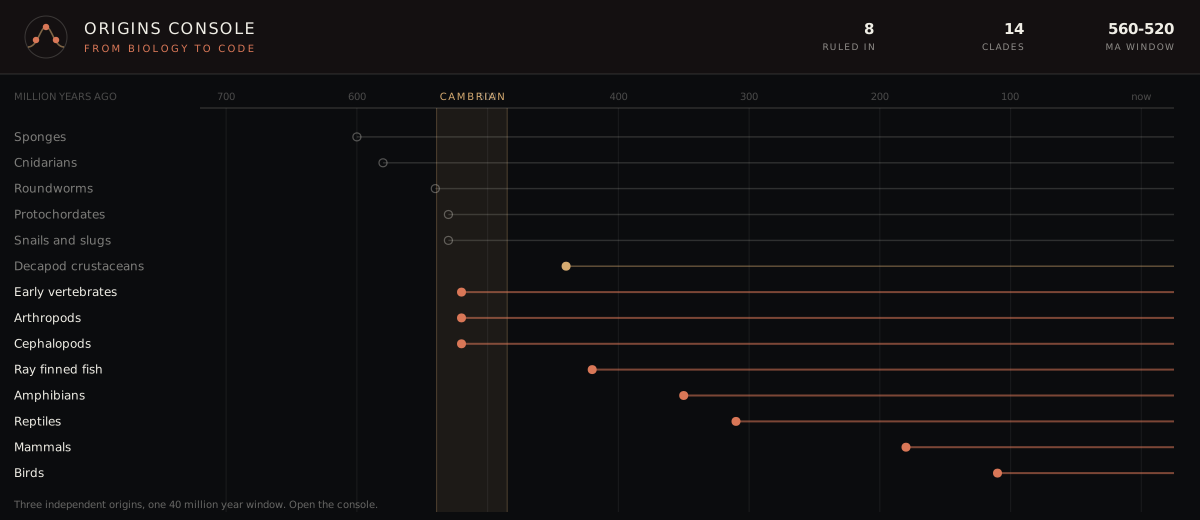
In The Consciousness AI, the Connectome Atlas and Origins Console trace how biological nervous systems scale from reflex arcs to integrated sensorimotor and affective loops. The 166,700 neuron MaleCNS dataset and its gustatory sub-circuits provide verified empirical reference graphs for how peripheral sensory channels merge with central arbitration layers.
Specifically, the Cell gustatory connectome demonstrates a design pattern directly relevant to our multi-layer architecture, keeping appetitive and aversive channels segregated in early sensory relays before converging them onto central premotor and endocrine hubs where homeostatic state variables gate action selection.
Open Challenges in Connectome-to-Function Mapping
While the anatomical reconstruction of adult Drosophila gustatory pathways is now complete in a single male specimen, three empirical gaps remain before connectomics alone can predict live behavior. First, electron microscopy does not directly read out the sign or metabotropic receptor subtype of every neuropeptidergic and extrasynaptic volume-transmission signal that Carlos Ribeiro’s lab has shown to govern nutrient-specific hungers. Second, individual-to-individual synaptic variability across different flies must be separated from fixed species-level circuit motifs. Third, closing the loop requires simultaneous in-vivo calcium or voltage imaging during active foraging to measure how those multi-hop SEZ and VNC pathways dynamically re-route signals as the animal’s internal metabolic state shifts.
Researchers covered here
- Gregory S. X. E. JefferisCoauthor of the MaleCNS preprint describing the male Drosophila central nervous system
- Carlos RibeiroChampalimaud Foundation, Behavior and Metabolism Laboratory, LisbonSenior co-author of the complete adult Drosophila gustatory connectome (Cell, 2026), neural circuit mechanisms of internal nutrient states, foraging, and sensorimotor decision-making
- Philipp SchlegelCoauthor of the MaleCNS preprint on male and female Drosophila circuit organisation