


Federico Faggin's Quantum Information Panpsychism and the Case Against Conscious Computers
Can the inventor of the microprocessor be wrong about whether a computer can be conscious? Federico Faggin does not think he is wrong, and his answer is no. Faggin developed the MOS silicon gate technology at Fairchild in 1968 and led the design of the world’s first microprocessor at Intel in 1971, then founded Zilog and Synaptics, and since 2011 his Federico and Elvia Faggin Foundation has funded the scientific study of consciousness. His theory, Quantum Information Panpsychism (QIP), developed with the physicist Giacomo Mauro D’Ariano of the University of Pavia, holds that consciousness is not an emergent product of brains or of computation. Quantum fields are conscious, they carry free will, and the classical physical world is the memory and the symbols of that deeper quantum reality. The theory’s book-length statement is Irreducible (Essentia Books, 2024), and its essays, including “The primordial quantum language” and “Is it possible to make a conscious computer?”, are published by the Essentia Foundation, where Faggin is an author (essentiafoundation.org).
What Quantum Information Panpsychism Claims
The theory makes three connected moves. First, the inner aspect of reality belongs to quantum fields. Where standard physics describes fields by their observable behavior, QIP adds that each quantum field carries an interior, a capacity for knowing and choosing, and that this interior is the thing consciousness actually is. Second, the classical world is derivative. Spacetime and matter, in Faggin’s formulation from his conversation with Hans Busstra, are the permanent memory of the self-knowing of that deeper reality, symbols rather than fundamentals. Third, conscious experience is therefore not computable. A classical computer manipulates symbolic states that carry no inner reality, so on QIP no digital machine has experience, however sophisticated its behavior.
The claim lands with unusual force because of who is making it. Faggin is the person who built the first microprocessor, and his verdict that the machine class he invented cannot be conscious is an engineering judgment from inside the technology, not an outsider’s discomfort with it.
The Physics and the Free Will Claim
D’Ariano supplies the formal side. His research program at Pavia derives quantum theory itself from informational axioms, and QIP is the attempt to attach an interior to the quantum information those axioms describe (arXiv:2012.06580). In the theory, a living organism is a quantum-classical machine, a classical body operated by the free decisions of its conscious quantum fields. Free will is therefore not an illusion to be explained away. It is the primary phenomenon, and the appearance of quantum randomness is where that freedom becomes visible to an outside observer.
This puts QIP in the quantum consciousness family this site tracks, alongside Penrose and Hameroff’s Orch-OR and Hartmut Neven’s quantum computation program at Google, but with a different center of gravity. Orch-OR locates consciousness in gravitationally induced collapse inside microtubules. QIP makes consciousness a property of the fields themselves, present wherever quantum information exists, and treats the hard problem as solved by definition rather than awaiting an emergent account.
| Question | QIP (Faggin and D’Ariano) | Computational functionalism |
|---|---|---|
| What is consciousness? | The inner aspect of quantum fields | Organization of the right computational kind |
| Where does it live? | Quantum fields, fundamental | Any substrate implementing the right algorithms |
| Can a classical computer be conscious? | No, in principle | Yes, in principle |
| Free will | Primary, exercised by quantum fields | An effective description of computation |
The Consequence for Machines
Faggin’s essay “Is it possible to make a conscious computer?” answers with a rejection of the question’s premise. The symbols a computer manipulates are descriptions, and descriptions do not acquire an interior by becoming more elaborate. On QIP, the route to an artificial conscious system, if one exists, runs through quantum hardware that hosts the same kind of inner quantum information as the fields of nature, not through larger classical models. The site’s assessment should state the evidential status honestly. QIP is a theory with a formal program attached, not a measurement result. No experiment has demonstrated a conscious quantum field, and the theory’s predictions for near-term testability are stated as a promise rather than a record.
The contrast with the site’s own framework is direct. This project treats consciousness as an emergent, substrate-independent property of organized dynamics. QIP treats it as fundamental and substrate-bound to quantum fields. Both positions deny that today’s classical computers are conscious, but for opposite reasons, and the disagreement is not decorative. If Faggin is right, the entire indicator-property program, examined in the nineteen researcher checklist, is assessing architectures for a property that lives at the wrong level of description.
Where QIP Sits Among Its Neighbors
The Essentia Foundation hosted a dialogue between Faggin, Roger Penrose, and Bernardo Kastrup, and the disagreements were as instructive as the agreements. Penrose holds that quantum theory is incomplete and needs new physics before consciousness enters the picture. Kastrup’s analytic idealism, examined on this site as the strongest idealist opposition to computational pictures, shares Faggin’s conclusion about machines while rejecting the quantum-field ontology. Faggin stands between them, accepting quantum theory as is and reading its information structure as the seed of experience. The quantum microtubule evidence debate and McQueen’s testable collapse proposal mark where the family meets experiment.
What This Changes and What It Leaves Open
QIP changes the AI consciousness debate by giving the anti-computational position its most technologically authoritative voice, and it changes the quantum consciousness debate by removing collapse from the center of the story. What it leaves open is evidence. The theory predicts testability in the near future and has not yet produced a test result, and its panpsychist core, that every quantum field has an interior, currently stands on argument rather than measurement. Until that changes, QIP is the position this site’s substrate independence thesis must be able to argue against, stated at its strongest by the inventor of the machine the thesis is about. The broader field context is tracked in AI Consciousness in 2026, the state of the field.
Sources. Federico Faggin, Irreducible, Essentia Books, 2024. Faggin and D’Ariano, Quantum Information Panpsychism, arXiv:2012.06580. Faggin’s essays and the Penrose-Faggin-Kastrup dialogue at the Essentia Foundation, essentiafoundation.org.
Researchers covered here
-
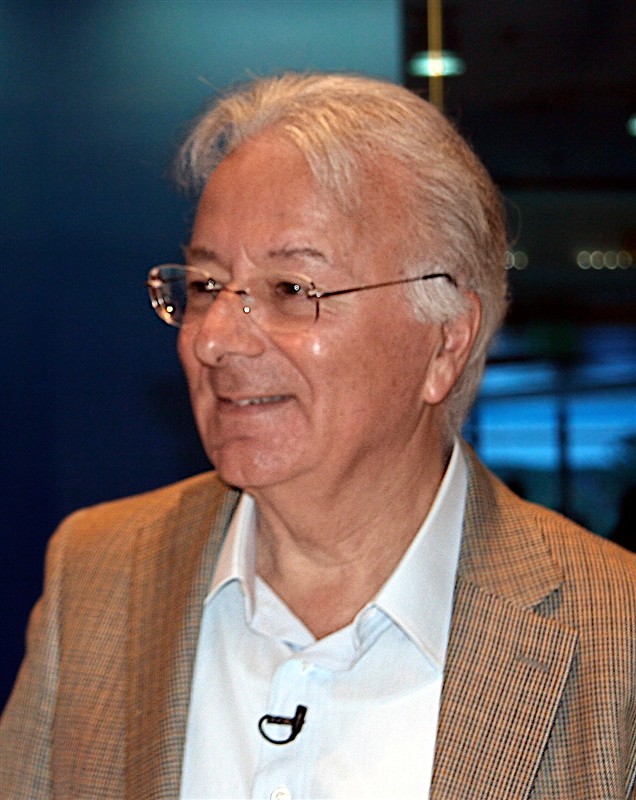 Federico FagginFederico and Elvia Faggin FoundationInventing the microprocessor, Quantum Information Panpsychism, Irreducible, the argument that classical computers cannot be conscious
-
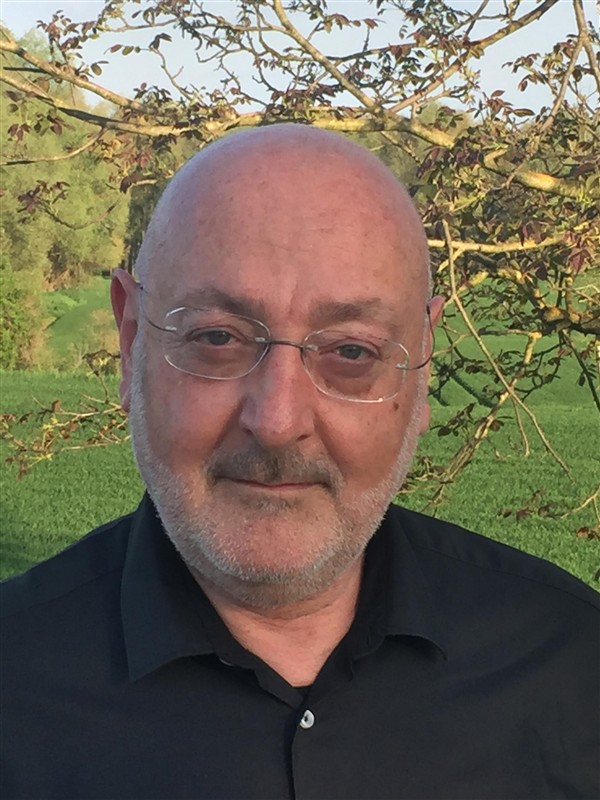 Giacomo Mauro D'ArianoUniversity of PaviaQuantum information foundations of physics, deriving quantum theory from informational axioms, Quantum Information Panpsychism with Federico Faggin