


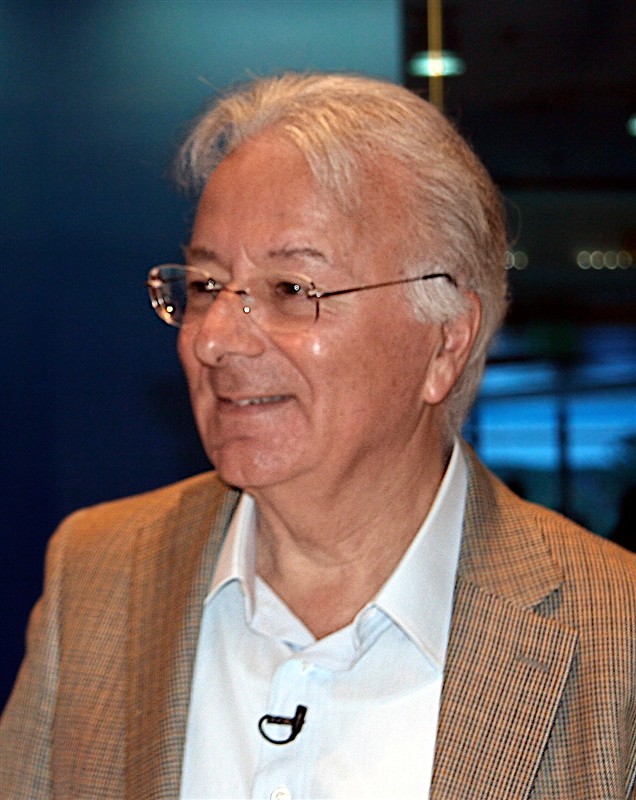
Federico Faggin
Federico and Elvia Faggin Foundation
Quantum Consciousness depends on physics classical computers do not reproduce
.jpg)
Federico Faggin designed the MOS silicon gate technology at Fairchild in 1968 and led the design of the world’s first microprocessor at Intel in 1971, then founded Zilog and Synaptics before turning to the question that engineering could not answer. Since 2011 his Federico and Elvia Faggin Foundation has funded the scientific study of consciousness, and his theory, Quantum Information Panpsychism, developed with physicist Giacomo Mauro D’Ariano, holds that consciousness is not emergent. Quantum fields are conscious, they carry free will, and the classical physical world is the memory and the symbols of that deeper quantum reality. The theory’s book-length statement is Irreducible (Essentia Books, 2024), and his Essentia essays, including “The primordial quantum language” and “Is it possible to make a conscious computer?”, are examined on the foundation’s author page (essentiafoundation.org).
The AI claim follows from the physics. A classical computer manipulates symbolic states that carry no inner reality, so on QIP consciousness is not computable, and no digital machine has it however sophisticated its behavior. Faggin is uniquely placed to state that verdict, having built the first microprocessor, and the argument has become a reference point in the debate over whether substrate makes a difference.
This site’s substrate independence thesis stands in direct conflict with QIP, and the disagreement is productive. Faggin’s framework places the quantum-classical boundary on the decisive line, joining the Penrose and Hameroff tradition in the site’s quantum camp while adding an inventor’s authority to the argument.
Known for. Inventing the microprocessor, Quantum Information Panpsychism, Irreducible, the argument that classical computers cannot be conscious
Coverage on this site
- Federico Faggin's Quantum Information Panpsychism and the Case Against Conscious Computers September 2026
Related researchers
-
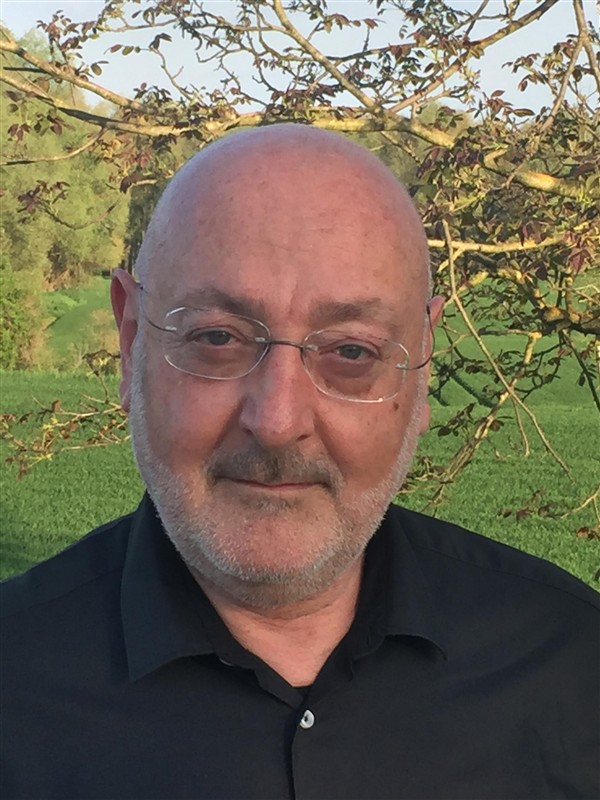 Giacomo Mauro D'ArianoUniversity of PaviaQuantum information foundations of physics, deriving quantum theory from informational axioms, Quantum Information Panpsychism with Federico Faggin
- Harald AtmanspacherCollegium Helveticum / ETH ZurichDual-Aspect Monism (Pauli-Jung conjecture), Quantum Interaction, contextual emergence, Models of Consciousness (MOC) co-organizer
- Anirban BandyopadhyayNational Institute for Materials Science (NIMS), JapanMicrotubule quantum resonance, terahertz oscillations in biology, quantum biology of consciousness
- Matthew FisherUniversity of California, Santa BarbaraQuantum cognition via nuclear spins, phosphorus as a neural qubit, Posner molecules, condensed matter physics applied to the brain
- Shan GaoShanxi UniversityWave function ontology, the meaning of the wave function, consciousness-causes-collapse analysis, editor of quantum mind volumes at Oxford University Press
- Suzanne GildertNirvanic Quantum TechnologiesFounding Nirvanic to test quantum consciousness in machines, quantum reinforcement learning for robot minds, co-founding Kindred AI and Sanctuary AI
Federico Faggin is listed with the other quantum theorists, who hold that consciousness depends on physics classical computers do not reproduce. The theory family behind that position is set out in the index of consciousness theories. Every researcher covered on this site is indexed in the directory of consciousness researchers.