


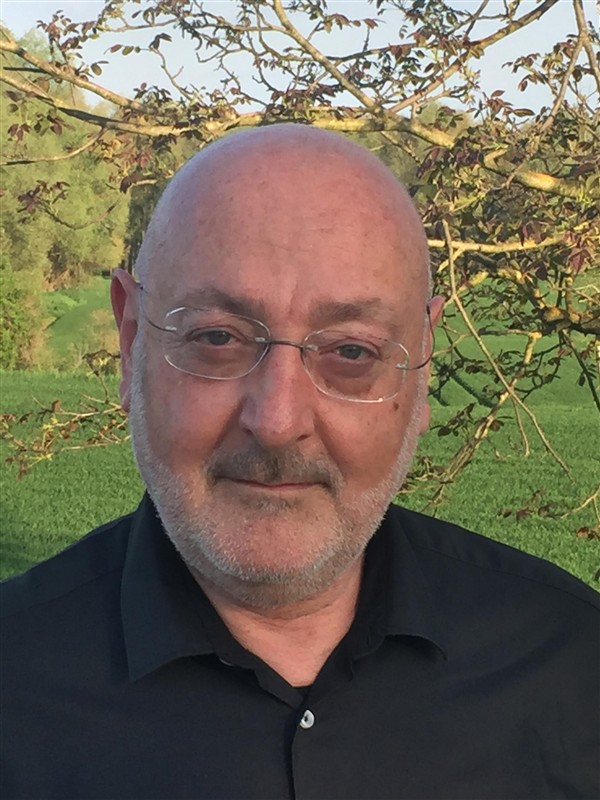
Giacomo Mauro D'Ariano
University of Pavia
Quantum Consciousness depends on physics classical computers do not reproduce

Giacomo Mauro D’Ariano is a professor of theoretical physics at the University of Pavia, founder of the QUit quantum information theory group there, and one of the architects of the program that derives quantum theory itself from informational axioms. His research line reconstructs quantum mechanics from operational principles about information processing, a foundation-first approach that treats the theory’s structure as theorems about what information can do, described on the group’s site (qubit.it).
With Federico Faggin, D’Ariano co-develops Quantum Information Panpsychism, the theory examined on this site in the Faggin profile, published in its main physics-adjacent form as “Quantum Information Panpsychism” (arXiv:2012.06580). The theory holds that quantum fields carry an inner aspect, that conscious experience belongs to the quantum information they process, and that the classical world is a statistical expression of that inner quantum reality. Where Faggin supplies the vision, D’Ariano supplies the formalism, grounding claims about free will and experience in the mathematical structure of quantum information.
The theory is a rival to materialist physicalism, and its consequence for AI is the one the site tracks across the quantum camp. Consciousness, on QIP, belongs to quantum fields, so classical computation cannot have it, whatever its architecture. D’Ariano’s role is to make that a claim in physics rather than a sentiment, which is what makes the position worth debating.
Known for. Quantum information foundations of physics, deriving quantum theory from informational axioms, Quantum Information Panpsychism with Federico Faggin
Coverage on this site
- Federico Faggin's Quantum Information Panpsychism and the Case Against Conscious Computers September 2026
Related researchers
-
 Federico FagginFederico and Elvia Faggin FoundationInventing the microprocessor, Quantum Information Panpsychism, Irreducible, the argument that classical computers cannot be conscious
- Harald AtmanspacherCollegium Helveticum / ETH ZurichDual-Aspect Monism (Pauli-Jung conjecture), Quantum Interaction, contextual emergence, Models of Consciousness (MOC) co-organizer
- Anirban BandyopadhyayNational Institute for Materials Science (NIMS), JapanMicrotubule quantum resonance, terahertz oscillations in biology, quantum biology of consciousness
- Matthew FisherUniversity of California, Santa BarbaraQuantum cognition via nuclear spins, phosphorus as a neural qubit, Posner molecules, condensed matter physics applied to the brain
- Shan GaoShanxi UniversityWave function ontology, the meaning of the wave function, consciousness-causes-collapse analysis, editor of quantum mind volumes at Oxford University Press
- Suzanne GildertNirvanic Quantum TechnologiesFounding Nirvanic to test quantum consciousness in machines, quantum reinforcement learning for robot minds, co-founding Kindred AI and Sanctuary AI
Giacomo Mauro D'Ariano is listed with the other quantum theorists, who hold that consciousness depends on physics classical computers do not reproduce. The theory family behind that position is set out in the index of consciousness theories. Every researcher covered on this site is indexed in the directory of consciousness researchers.