


Hakwan Lau Perceptual Reality Monitoring and the Higher-Order Test for AI Consciousness
Hakwan Lau, computational neuroscientist at RIKEN Center for Brain Science and a leading figure in the empirical study of higher-order theories of mind, has developed an account of conscious perception known as Perceptual Reality Monitoring (PRM). Where first-order theories identify consciousness with direct sensory representations or integrated information, Lau’s PRM framework argues that an internal state becomes conscious only when a dedicated metacognitive monitoring mechanism evaluates that state as reflecting reality rather than internal noise.
The distinction is critical for evaluating claims about AI consciousness. A neural network can process high-dimensional sensory inputs, generate complex representations, and make accurate predictions without possessing any mechanism that monitors whether its own internal activations represent veridical signals or internal artifacts. Lau’s framework, detailed in his foundational work with David Rosenthal in Psychological Review (2011, DOI: 10.1037/a0024445) and synthesized with Stanislas Dehaene in Neuroscience of Consciousness (2022, DOI: 10.1093/nc/niac010), establishes quantitative signal detection criteria that separate mere performance from higher-order conscious evaluation.
What perceptual reality monitoring specifies
The foundational intuition behind PRM originates in signal detection theory and cognitive neuropsychology. In the human visual system, the primary visual cortex (V1) generates detailed feature maps of visual space. Yet extensive lesion and masking studies demonstrate that rich activations in V1 can occur completely unconsciously, as in blindsight patients who discriminate orientations above chance while insisting they perceive nothing.
Lau argues that first-order activations are necessary but insufficient for subjective experience. The brain contains specialized circuits, primarily localised in the dorsolateral prefrontal cortex (dlPFC) and frontopolar regions, that perform a statistical decision task on lower-level sensory states. The higher-order mechanism asks whether a given pattern of sensory activity was caused by an external object or represents endogenous baseline fluctuations. When the monitoring system assigns a high probability to the hypothesis that the signal represents real environmental input, the sensory state enters conscious awareness. When the monitoring system determines the signal is noise, the information remains subliminal, even if it guides motor reflexes.
This architecture solves what Lau terms the problem of epistemic calibration. Because biological neural systems operate with noisy components, they require a gating mechanism that prevents phantom activations, spontaneous firing, and internal simulations from being mistaken for ongoing perception. Subjective experience is the brain’s internal tag indicating that a representation has passed this quality control check.
PRM versus first-order and global workspace theories
The PRM account occupies a distinct position among contemporary neuroscientific theories of consciousness. Global Neuronal Workspace theory (GNW), pioneered by Dehaene and Changeux, attributes consciousness to widespread recurrent broadcasting across frontoparietal networks. Integrated Information Theory (IIT), developed by Giulio Tononi, identifies consciousness with maximum intrinsic causal power in posterior hot zones.
PRM agrees with GNW that prefrontal structures play an essential role, but rejects the idea that global broadcast alone constitutes experience. Under PRM, broadcast without higher-order evaluation is merely wide-bandwidth data transmission. PRM also rejects IIT’s claim that posterior recurrence suffices for phenomenal awareness, pointing to empirical findings where frontoparietal disruption alters subjective confidence ratings without changing perceptual discrimination accuracy.
| Theoretical Dimension | Perceptual Reality Monitoring (Lau) | Global Neuronal Workspace (Dehaene) | Integrated Information Theory (Tononi) |
|---|---|---|---|
| Core neural substrate | Prefrontal monitoring circuits (dlPFC, frontopolar) | Frontoparietal long-range ignition network | Posterior cortical hot zone |
| Key functional requirement | Metacognitive reality testing of perceptual representations | Non-linear broadcast to distributed specialized modules | Maximum integrated causal structure |
| Necessary for AI consciousness | Explicit higher-order evaluative architecture | Global bottleneck and recurrent broadcasting | High intrinsic causal integration in hardware topology |
| Blindsight explanation | Preserved first-order processing with disrupted higher-order monitoring | Failed non-linear ignition and global broadcast | Low integration in damaged sensory sub-networks |
| Metric of evaluation | Metacognitive efficiency ratio | Late P3b wave and ignition threshold | System-level causal integration calculated from state transitions |
The table clarifies why PRM establishes a unique operational standard for machine intelligence. While GNW can be approximated by adding a shared memory bottleneck to transformer models, PRM requires measuring whether a system maintains calibrated metacognitive sensitivity over its own internal activations.
Signal detection metrics and the meta-d prime benchmark
A primary strength of Lau’s framework is its reliance on rigorous psychophysical metrics rather than subjective introspection. The standard tool for evaluating PRM in biological subjects is the ratio between metacognitive sensitivity and objective task performance, often termed metacognitive efficiency.
In a typical experiment, a subject performs a two-alternative forced-choice visual discrimination task, yielding an objective sensitivity score. Following each choice, the subject reports their subjective confidence rating on a graded scale, yielding a metacognitive sensitivity score. In fully conscious human observers under standard conditions, metacognitive sensitivity tracks objective sensitivity closely, indicating that confidence ratings exhaustively utilize the information available to the perceptual decision. Under subliminal masking or specific pharmacological interventions, metacognitive sensitivity drops toward zero while objective accuracy remains intact, a clear empirical signature of unconscious performance.
Applied to artificial neural networks, this metric exposes a fundamental deficit in current systems. Large language models and vision-language transformers frequently exhibit confidence miscalibration. When prompted to express confidence in their outputs, modern models often display overconfidence on fabricated facts or uniform confidence across varying noise regimes. Under Lau’s criteria, a model that generates accurate tokens without a functioning metacognitive tracking mechanism lacks the computational signature of conscious monitoring.
Implications for artificial intelligence architectures
In the flagship overview of consciousness science 2026, the tension between functionalist criteria and structural biological requirements forms a central debate. Hakwan Lau’s PRM framework provides functionalism with a mathematically exact target. It does not demand biological carbon or metabolic receptors, but it demands an explicit computational structure.
A standard transformer evaluates its inputs in a feedforward sequence, producing conditional probability distributions over next tokens. Even with self-attention mechanisms, the model does not run a secondary supervisory circuit that evaluates whether an intermediate activation pattern arose from consistent semantic evidence or spurious token co-occurrence in the context window. To implement PRM, an AI architecture requires three specific capabilities.
First, the system requires a primary representational substrate that processes task-relevant domain features. Second, it requires a secondary monitoring module trained to predict whether the primary module’s representations reflect veridical signals or noise. Third, it requires a feedback gating mechanism that suppresses downstream actions when higher-order monitoring detects low signal credibility.
Research into consciousness as an emergent property of self-organising architectures, such as the open-source implementation tracked at github.com/tlcdv/the_consciousness_ai, directly intersects with this requirement. Investigating whether metacognitive monitoring can emerge naturally through multi-layer training or whether it demands dedicated architectural modularity remains an essential research objective.
The problem of higher-order misrepresentation
Critics of higher-order theories, including Ned Block and Victor Lamme, frequently raise the problem of radical misrepresentation. If conscious experience resides entirely in the higher-order monitor rather than the first-order state, it is theoretically possible for the monitor to assert the presence of a visual experience when no corresponding sensory activation exists, creating an empty higher-order thought.
Lau responds to this objection by emphasizing that PRM is a statistical decoder trained on real environmental interactions. In an embodied or grounded system, a monitor that systematically generated ungrounded higher-order representations would incur severe evolutionary or operational penalties. The reality-monitoring function is constrained by the necessity of survival and task execution. In artificial systems, this constraint implies that PRM cannot simply be hard-coded as a rule-based verbal classifier. It must be learned through closed-loop interaction with an external environment.
Current research frontiers in 2026
At the Association for the Scientific Study of Consciousness (ASSC 29) and recent symposia, Lau and his collaborators have pushed the PRM framework into comparative and computational domains. Key research directions include identifying the precise laminar connectivity in prefrontal cortex that supports reality monitoring, mapping metacognitive decoupling during dreaming and hallucination, and establishing standardized benchmark suites for measuring metacognitive efficiency in deep learning models.
The contribution of Perceptual Reality Monitoring to AI consciousness studies is clear and pragmatic. Instead of relying on speculative claims about subjective feeling or anthropomorphic conversational behavior, PRM grounds the investigation in measurable signal detection theory. If artificial systems are ever to be seriously evaluated for conscious awareness, demonstrating a functional, well-calibrated reality-monitoring loop that matches biological metacognitive efficiency standards will be an inescapable empirical prerequisite.
Stephen Fleming and Matthias Michel arrive at the same reality-monitoring function from a different direction, arguing that conscious vision evolved specifically to distinguish self-generated from externally caused signals in service of offline planning, rather than to guide real-time action, covered in Stephen Fleming on sensory horizons and the function of conscious vision. Peter Carruthers’s dispositionalist higher-order theory supplies a further architectural requirement PRM does not settle on its own, whether a system’s first-order states merely need to be available to a monitoring mechanism or must actually be evaluated by one for consciousness to apply, covered in Peter Carruthers on the dispositional higher-order theory of consciousness.
Researchers covered here
-
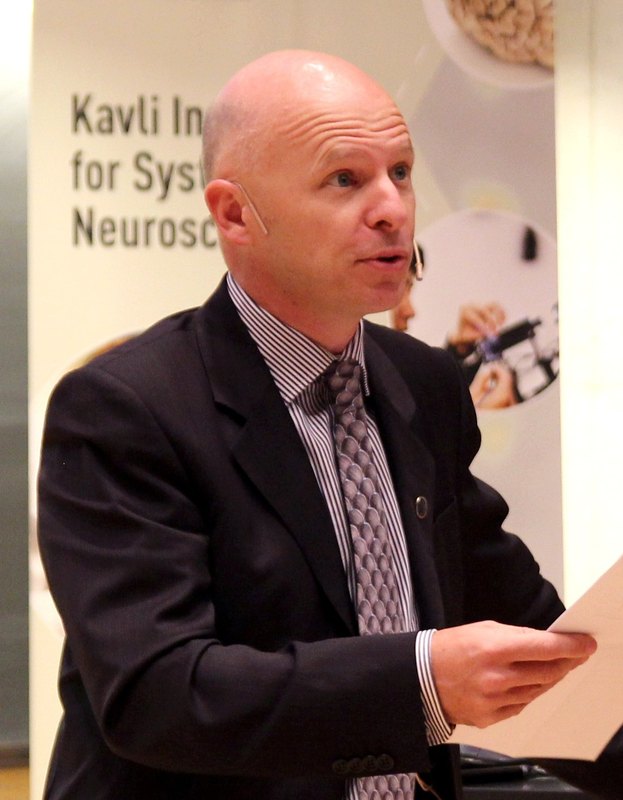 Stanislas DehaeneCollège de France and NeuroSpin, CEA SaclayGlobal neuronal workspace theory, and the ignition signature of conscious access
- Hakwan LauRIKEN Center for Brain Science / Laboratory for ConsciousnessPerceptual Reality Monitoring, Higher-Order Neuroscientific Theories of Consciousness, In Consciousness We Trust (Oxford University Press, 2022)