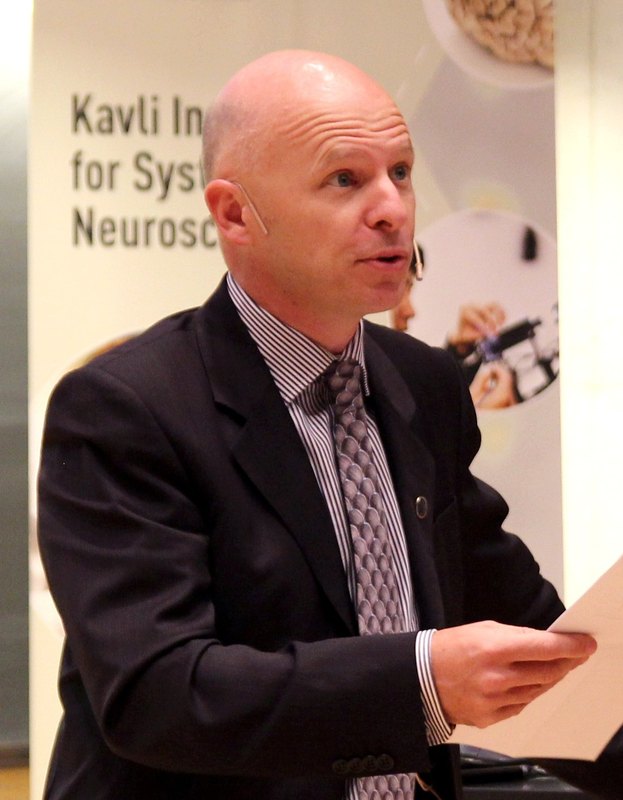
Stanislas Dehaene
Collège de France and NeuroSpin, CEA Saclay
Functionalist What matters is the organisation of the processing, not the material

Stanislas Dehaene took Bernard Baars’ global workspace metaphor and made it a neuroscience. The global neuronal workspace adds the physical claim that conscious access occurs when a stimulus crosses a threshold and triggers ignition, a sudden non-linear amplification that recruits distant cortical areas and makes the content available to many systems at once. Below that threshold, processing is real, influences behaviour, and stays unconscious.
Ignition is significant because it is a signature rather than an interpretation. It has a timing, a scalp distribution and a threshold, which means the theory makes predictions that can fail. That is why global workspace indicators appear in nearly every framework for assessing artificial systems, including the indicator properties work.
The awkward part for AI is that transformer architectures have no bottleneck. Every token attends to every other, so nothing competes for a limited resource and nothing is excluded. A theory built on selective access has little to grip when everything is equally accessible, and whether an artificial workspace can be built rather than approximated is the open question his framework poses.
Known for. Global neuronal workspace theory, and the ignition signature of conscious access
Coverage on this site
- Hakwan Lau Perceptual Reality Monitoring and the Higher-Order Test for AI Consciousness August 2026
- Stanislas Dehaene and the Multilevel Architecture of Global Neuronal Workspace Theory August 2026
- Quantum Global Workspace Theory and Conscious Access in Hilbert Space July 2026
- Verbalizable Representations Form a Global Workspace in Large Language Models July 2026
- Global Workspace Theory in AI Systems After the Cogitate Test and the Jacobian Finding July 2026
- Global Workspace Theory and AI What the Architecture Requires and Where LLM Implementations Stand June 2026
- When IIT and GNW Were Put to the Test What the Cogitate Consortium Found April 2026
Related researchers
- Hakwan LauRIKEN Center for Brain Science / Laboratory for ConsciousnessPerceptual Reality Monitoring, Higher-Order Neuroscientific Theories of Consciousness, In Consciousness We Trust (Oxford University Press, 2022)
- Eric SchwitzgebelUniversity of California, RiversideThe weirdness argument, the ten feature checklist, and the case that we are in an epistemic fog about AI consciousness
- Wes GurneeAnthropicThe Jacobian lens, the J-space of verbalizable representations, global workspace signatures in language models, counterfactual reflection training
- Giulio TononiUniversity of Wisconsin-MadisonIntegrated information theory and the quantity phi
- Hedayat AbedijooACE Conscious Studio / IndependentACE.await (2026), the ACE decision framework (Agency, Connection, Exchange)
-
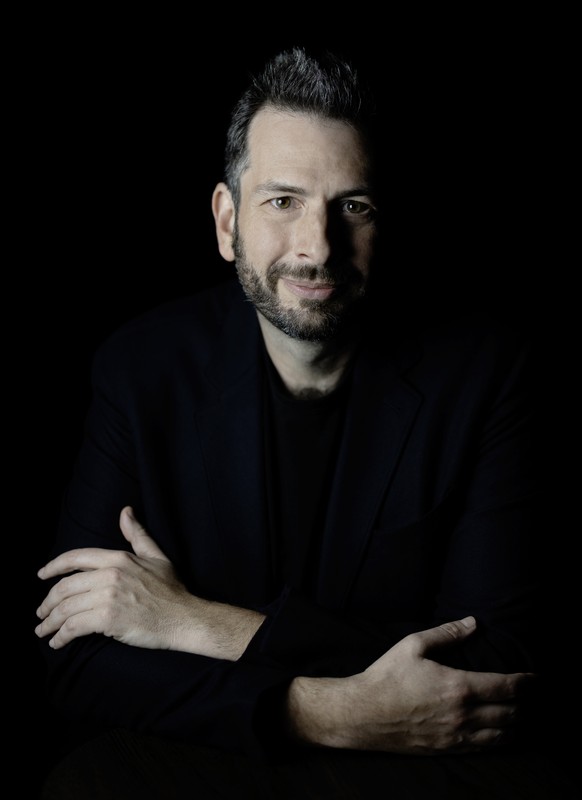 Blaise Agüera y ArcasGoogle VP and Fellow, CTO of Technology & SocietyComputational functionalism, active inference, on-device neural computing, What Is Intelligence? (2025), and Who Are We Now? (2023)
Stanislas Dehaene is listed with the other functionalists and computationalists, who hold that what matters is the organisation of the processing, not the material. The theory family behind that position is set out in the index of consciousness theories. Every researcher covered on this site is indexed in the directory of consciousness researchers.