


Active Bioelectric Stigmergy and Scale-Free Niche Construction in Pio-Lopez and Levin's 2026 Preprint
Léo Pio-Lopez, Patrick McMillen, Giovanni Pezzulo, and Michael Levin posted “Scale-free Niche Construction: expanding agent-microenvironment co-development to unconventional substrates” on OSF on September 22, 2026 (doi:10.31219/osf.io/ytg35_v3). The paper takes one of biology’s standard ideas, niche construction, and shows that it runs on substrates with no ecology at all. Cells, robots, and artificial agents all reshape the medium around them, and the modified medium then steers their later behavior. The new experimental claim is active stigmergy, wetlab evidence that living cells leave dynamic, bioelectrically active traces in their surroundings that act on other cells later in time.
The short answer to the consciousness question is this. If part of an agent’s cognition is stored in a medium outside its body, then the agent’s boundary is not its skin or membrane. The boundary is the loop of reciprocal modification between agent and world. That reading supports the view this project defends, that consciousness is an emergent property of organization, and it says the organization need not sit inside one body. Michael Levin’s cognitive light cone framework already argued that goal-directedness, not tissue, sets the measure of a mind. This preprint supplies a mechanism for how that goal-directedness survives across time and across substrates.
What the paper claims
Niche construction is standard in evolutionary biology. Beavers build dams, earthworms change soil chemistry, and the changed environment then applies selection pressure back on the builders. The standard frame is genetic and ecological. The preprint argues the dynamic is far more general. It holds at any scale where an agent modifies its microenvironment and the modification feeds back on the agent’s own future behavior and structure.
The authors organize the argument around a computational reading. A niche is a scratchpad. An agent writes to it, reads from it, and uses it to carry cognitive operations that would otherwise need internal memory. The paper collects examples across fields, from cognitive science and psychopathology to cancer biology, robotics, and AI, and treats them as one phenomenon at different scales. Planning, problem solving, and social coordination can all be offloaded into the environment. The preprint calls this externalizing.
The scale-free claim does the theoretical work. If the same loop, agent modifies world, world modifies agent, runs at molecular, cellular, organism, and social scales, then niche construction is not a biological special case. It is a control architecture. And control architectures can be implemented on other substrates.
Active stigmergy, the new experimental piece
Stigmergy is coordination through traces left in a shared medium. Termites build mounds without blueprints because each insect responds to the altered soil structure left by others. Standard stigmergy uses static traces. The preprint’s contribution is the active version. Cells in the reported wetlab experiments leave components in their microenvironment that are not inert deposits. They are bioelectrically active, and they continue to influence voltage dynamics around them after the cell that produced them has moved on or changed state.
The consequence is a form of environmental memory. The medium records the agent’s past states in a form that later shapes its future ones, without any internal storage. Levin’s earlier work showed that bioelectric voltage patterns carry target morphology information in planarian regeneration, and that tissue can be repatterned by rewriting those voltage gradients alone. The bioelectric memory research program built on that shows memory surviving tissue reorganization and guiding regeneration. Active stigmergy extends the same logic outward. The memory does not even need to be inside the body. The memory does not even need to be inside the body.
Why this cuts across substrate debates
The paper’s title word is scale-free, and the choice is precise. Niche construction in the classical sense needs genomes, generations, and selection. The loop the authors describe needs none of those. An agent and a microenvironment coupled by reciprocal modification is the whole structure. That structure can run in a cell culture, a robot swarm, or a software agent with a persistent external store.
The paper also introduces a conceptual point it calls the plasticity of the machine/data mapping. Analysis can treat the patterns in excitable media as agential data, regardless of what physical carrier holds them. This is a methodological version of substrate independence. The same analytical lens applies to ion channels, chemical gradients, or simulated voltages.
For the substrate-independence debate, the claim lands on both camps. Against biological naturalism, it shows cognition-like organization running in media with no neurons and no genome-driven selection loop. Against shallow functionalism, it shows that a loop including a modified external medium carries part of the cognition, with internal computation holding only a share of the work. Both positions survive in weakened form. Neither holds in its strong version.
Comparison to The Consciousness AI
The Consciousness AI project treats consciousness as an emergent property of organization, substrate independent, under functionalist emergentism. That position needs exactly what this preprint offers, a mechanism by which organization, not tissue, carries adaptive structure across time.
Two connections are direct. First, the scratchpad model of the niche matches how the project’s own architecture treats external state. An agent that writes to an external medium and reads it back later is doing what the project’s persistent-state layers do across sessions. The preprint gives that engineering pattern a biological pedigree and a name.
Second, active stigmergy sharpens the question the cognitive light cone framework asks. If an agent’s cognition includes states stored outside its body, then the light cone boundary is not just a spatiotemporal window on goals. It includes the writable medium. For artificial agents, the testable version is this. An LLM session that writes to persistent external memory and later reads it is running a stigmergic loop. One that holds everything in the context window is not, and the difference is measurable in how goal structure survives degradation of internal state.
Limits of the current evidence
The wetlab component is new and narrow. The paper reports active stigmergy in one experimental system, and the generalization to all substrates rests on argument and simulation, not on demonstrated equivalence. Whether an LLM with an external store runs the same loop as cells laying down bioelectric traces is a formal analogy, not a shown identity. The preprint itself frames the cross-domain reading as a mapping, and the mapping’s usefulness is an open empirical question.
There is also a deeper limit. Offloading memory to an environment is not yet consciousness. It is a precondition argument, showing that a substrate can carry part of what an adaptive agent needs. The step from carrying part of the loop to carrying the integrated whole is the same gap every substrate-independence argument faces, and this paper does not claim to close it.
What follows from the loop, not the membrane
The preprint’s lasting contribution is a change in where researchers look for the unit of cognition. The unit is not the membrane-bounded agent. It is the agent-medium loop. That single move explains, in one frame, how cells coordinate without synapses, how termites build without blueprints, and how a software agent with a persistent store keeps its goals across sessions.
The next questions are quantitative. How much of an agent’s adaptive structure can sit outside its boundary before agency itself becomes questionable. How to measure the contribution of the medium separately from the agent. And whether stigmergic loops show the integrating behavior that consciousness theories demand, or only the persistence that memory demands. The wider program this work belongs to collects those open questions across unconventional substrates, and the flagship overview of the race to define AI consciousness tracks where substrate-independence arguments now sit in the field. The answers will decide how far the loop metaphor can carry the study of emerging consciousness.
Researchers covered here
-
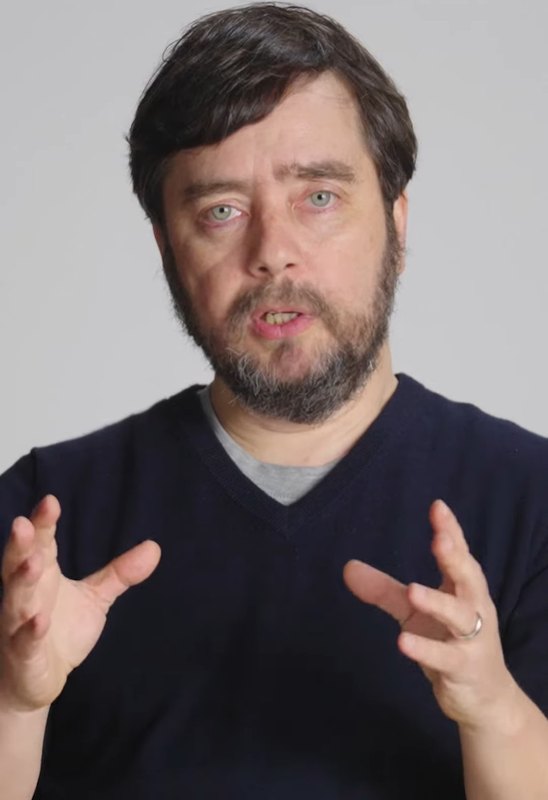 Michael LevinAllen Discovery Center, Tufts UniversityBioelectric signalling, the cognitive light cone, and diverse intelligence
- Léo Pio-LopezAllen Discovery Center, Tufts UniversityActive bioelectric stigmergy, morphogenesis simulation, scale-free niche construction
- Giovanni PezzuloInstitute of Cognitive Sciences and Technologies, National Research Council of Italy (CNR)Active Inference (2022, with Parr and Friston), epistemic foraging, pragmatic and epistemic action