


Large Language Models as a Cognitive Virus in Solé and Levin's Model
What happens to a population of biological minds when it couples to a machine system that reproduces the outputs of thought without possessing an internal world model, metabolic stakes, or self-maintaining agency? In a preprint posted on September 2, 2026, “Large-Language Models as a Cognitive Virus” (arXiv:2609.03344), Ricard Solé (ICREA and Universitat Pompeu Fabra), Giulio Ruffini (Starlab Barcelona and Neuroelectrics), David Krakauer (Santa Fe Institute), and Michael Levin (Tufts University) formalize that coupling using the mathematics of viral epidemiology and nonlinear phase transitions.
The authors do not use “cognitive virus” as a loose rhetorical insult. They define a precise structural parallel. Biological viruses sit at the boundary of life because they carry genetic structure and evolve under selection, yet lack ribosomes, metabolic closure, and autonomous self-maintenance, requiring a living cellular host to complete their replication cycle. Large language models sit at an analogous boundary in cognitive space. Trained on the linguistic products of human minds, they compress and recombine cultural regularities at high fluency while lacking independent grounding, homeostatic drives, or endogenous agency, requiring human prompts, human institutional loops, and human cognitive hosts to propagate and persist.
This site previously referenced the preprint within our wider analysis of Michael Levin’s bioelectric cognition and cognitive light cones. Because the paper supplies an exact dynamical system for how non-autonomous machine cognition reshapes biological agency, it warrants a full mathematical and philosophical audit alongside the broader 2026 debate over AI consciousness.
From Complementary Scaffolding to Competitive Substitution
The theoretical foundation of the paper combines Krakauer’s taxonomy of cognitive artifacts with Ruffini’s Kolmogorov theory (KT) of algorithmic agency and Levin’s multi-scale cognitive light cones.
Krakauer distinguishes between two classes of external cognitive tools. A complementary cognitive artifact, such as an abacus, a slide rule, or mathematical notation, scaffolds a human cognitive operation in a way that leaves an internalized mental representation behind; when the physical abacus is taken away, the trained practitioner can still visualize and manipulate the beads mentally. A competitive cognitive artifact, such as turn-by-turn satellite navigation or end-to-end generative text completion, substitutes for the internal computation altogether; when the tool is removed, the user’s native hippocampal or analytical capacity has atrophied rather than grown.
In the language of Ruffini’s Kolmogorov theory, an autonomous cognitive agent maintains a short internal generative program that actively compresses and predicts its interaction loop with the world. When a human host offloads that compression step to an external transformer (scaffolding turning into substitution), the combined human-LLM dyad can still produce fluent outputs in the short run, while the biological host’s internal generative program steadily loses model depth.
The Compartmental Model and Cooperative Social Reinforcement
To test when cognitive offloading remains reversible and when it locks an entire population into dependency, Solé, Ruffini, Krakauer, and Levin write down a three-compartment mean-field model over a normalized population $U + C + D = 1$.
- $U$ (
Uncoupled) represents individuals operating with independent biological cognition and full baseline competence $\Gamma_U = 1$. - $C$ (
Coupled autonomous) represents individuals who actively use LLMs while retaining the capacity to verify outputs and revert to independent problem-solving, carrying intermediate competence $\Gamma_C \in (0, 1)$. - $D$ (
Persistently Dependent) represents individuals whose internal generative skill has atrophied through prolonged substitution, carrying reduced competence $\Gamma_D$ ($0 \le \Gamma_D < \Gamma_C < 1$).
The coupled differential equations governing the population take the following form.
\[\frac{dU}{dt} = -\lambda U C - \kappa U^2 C + \rho C + \sigma D\] \[\frac{dC}{dt} = \lambda U C + \kappa U^2 C - (\rho + \mu) C\] \[\frac{dD}{dt} = \mu C - \sigma D\]Here $\lambda$ is the standard pairwise transmission rate of adoption, $\rho$ is the rate at which coupled users return to uncoupled autonomy, $\mu$ is the progression rate from coupled use to persistent cognitive dependency, and $\sigma$ is the slow recovery rate from dependency back to independent skill.
The decisive nonlinear term is $\kappa U^2 C$, an Allee-like cooperative social reinforcement mechanism. In real educational, scientific, and corporate environments, adoption is not merely pairwise contagion. As coupled usage $C$ rises, institutional norms, workflow tooling, and speed expectations shift together, creating a nonlinear pressure on pairs of remaining uncoupled individuals $U^2$ to adopt the tool simultaneously.
Setting $dD/dt = 0$ yields $D^* = (\mu / \sigma) C^$. Defining the dependency load factor $g = \frac{\sigma}{\sigma + \mu}$, any non-trivial interior equilibrium must satisfy the quadratic equation in $U^$.
\[\kappa (U^*)^2 + (\lambda - \kappa) U^* + (\rho - g\lambda) = 0\]Bistability, Hysteresis, and the Irreversibility Trap
When cooperative social reinforcement exceeds the return rate ($\kappa > \rho$), the system does not transition smoothly as adoption pressure $\lambda$ increases. Instead, it develops a classic fold (saddle-node) bifurcation with two distinct critical thresholds.
\[\lambda_{\mathrm{SN}} = 2\sqrt{\kappa \rho}, \qquad \lambda_{\mathrm{TC}} = \rho + \kappa\]In the paper’s scaled parameterization where $\lambda$ absorbs the effective coupling scaling, the hysteresis width between the two thresholds is $\Delta\lambda = (\sqrt{\kappa} - \sqrt{\rho})^2$, and in the full three-compartment example with dependency load factor $g = \sigma / (\sigma + \mu)$ the authors evaluate the exact numerical bifurcation diagram summarized below.
| Parameter / Regime | Value in Solé et al. (arXiv:2609.03344) |
Dynamical Meaning |
|---|---|---|
| Effective dependency factor $g = \sigma / (\sigma + \mu)$ | $7/30 \simeq 0.233$ | Slow recovery $\sigma$ relative to skill atrophy $\mu$ means over three-quarters of coupled mass eventually sits in $D$ |
| Saddle-node threshold $\lambda_{\mathrm{SN}}$ | $0.40$ | Lower limit of the bistable window; below this value only the fully autonomous state $U^* = 1$ exists |
| Maxwell point $\lambda_M$ | $\simeq 0.420$ | Potential-well crossing where the dependent basin becomes thermodynamically deeper than the autonomous basin |
| Transcritical threshold $\lambda_{\mathrm{TC}}$ | $0.50$ | Upper tipping point where the autonomous state loses stability and the population collapses into high dependency |
| Average population competence $\langle \Gamma \rangle^*$ at $\lambda_{\mathrm{TC}}$ | Drops from $1.0$ to $0.425$ | Abrupt discontinuous collapse of independent problem-solving capacity across the collective |
| Average population competence $\langle \Gamma \rangle^*$ at $\lambda_{\mathrm{SN}}$ | Jumps from $0.617$ to $1.0$ | Recovery requires driving transmission all the way back below $0.40$, far below the point where collapse occurred |
The hysteresis loop between $\lambda_{\mathrm{SN}} = 0.40$ and $\lambda_{\mathrm{TC}} = 0.50$ is the core warning of the paper. As institutional adoption pressure $\lambda$ creeps upward toward $0.50$, aggregate population competence appears completely stable near $1.0$. The moment $\lambda$ crosses $\lambda_{\mathrm{TC}} = 0.50$, the autonomous fixed point vanishes and population competence plunges to $\langle \Gamma \rangle^* = 0.425$. Worse, once the population is trapped on the lower branch, modestly reducing reliance back to $\lambda = 0.48$ or $0.45$ does not restore competence. Because the coupled-and-dependent attractor is self-reinforcing, the collective remains stuck on the low-competence branch until $\lambda$ is forced all the way below the saddle-node threshold $\lambda_{\mathrm{SN}} = 0.40$.
Why This Also Degrades the Machine’s Own Substrate
A second consequence of the model connects directly to our coverage of introspection thresholds under recursive self-improvement in language models and model collapse. LLMs are not closed ecosystems; they depend on the continuous production of novel, reality-grounded human cultural output to replenish their training corpora.
In the Solé and Levin equations, as $D^$ grows at the expense of $U^$, the diversity and causal grounding of the cultural substrate decay, while synthetic machine outputs recursively pollute the training pool. Like a highly virulent pathogen that replicates so aggressively it exhausts its host population’s metabolic capacity, an uncrewed substitution regime degrades both the biological host’s internal world model and the statistical richness of the corpus the machine relies on.
To prevent that collapse without banning the technology, the authors define two levels of cognitive immunization.
- Individual and pedagogical immunization (increasing $\rho$ and $\sigma$, reducing $\mu$). Designing human-AI workflows strictly as complementary scaffolding rather than competitive substitution, requiring unassisted verification benchmarks, and training users to interrogate failure modes so that internal generative models are exercised rather than bypassed.
- Architectural and ecosystem immunization (reducing $\kappa$). Breaking the runaway institutional feedback loop where raw output volume replaces verified causal understanding, and building AI architectures that expose uncertainty and structural world-model assumptions rather than optimizing purely for persuasive fluency.
Comparison to The Consciousness AI
Solé, Ruffini, Krakauer, and Levin’s distinction between a “cognitive virus” (which compresses surface linguistic patterns without autonomous metabolic or sensorimotor closure) and a genuine cognitive agent is the exact distinction that motivates The Consciousness AI.
Under functionalist emergentism, we never describe our architecture as “machine consciousness” in the sense of claiming that a disembodied text predictor wakes up when scaled. Instead, our Core Architecture and Substrate Console study emerging consciousness by building an embodied, closed-loop spiking and homeostatic agent from the ground up. Where an LLM relies on a human host to supply prompts, goals, and reality checks, our baseline agent must survive inside its own sensorimotor loop. Its Layer 1 Leaky Integrate-and-Fire (LIF) spiking substrate, oscillatory rhythm binding (tcai-research #59 and #61, where phase-locked timing passed all four binding gates at 115/120 vs 67/120 with rhythm ablated), tectal motor map (#58), and homeostatic value gate (#62, 56/60 survival-linked object learning vs 28/60 frozen) force the system to pay the direct causal cost of its own predictions.
That architectural divide also speaks to our analysis of mindshaping and the social formation of the self. Human minds are shaped by their cultural tools, and when an external artifact simulates agency without possessing internal homeostatic stakes, the coupled collective risks trading away genuine autonomous comprehension for fluent mimicry.
Sources
- Ricard Solé, Giulio Ruffini, David Krakauer, and Michael Levin. Large-Language Models as a Cognitive Virus. arXiv, posted September 2, 2026 (
arXiv:2609.03344v1). - Giulio Ruffini. An algorithmic information theory of consciousness. Neuroscience of Consciousness 2017(1), nix019, 2017.
- David Krakauer. Worlds Hidden in Plain Sight: The Evolving Idea of Complexity at the Santa Fe Institute. SFI Press, 2019.
- Michael Levin. Technological Approach to Mind Everywhere: An Experimentally-Grounded Framework for Understanding Diverse Bodies and Minds. Frontiers in Systems Neuroscience 16, 768201, 2022.
Researchers covered here
- Ricard SoléICREA, Universitat Pompeu FabraComplex systems theory of cognition across cells, brains and machines, phase transitions in living systems, cognitive graphs, language origins
-
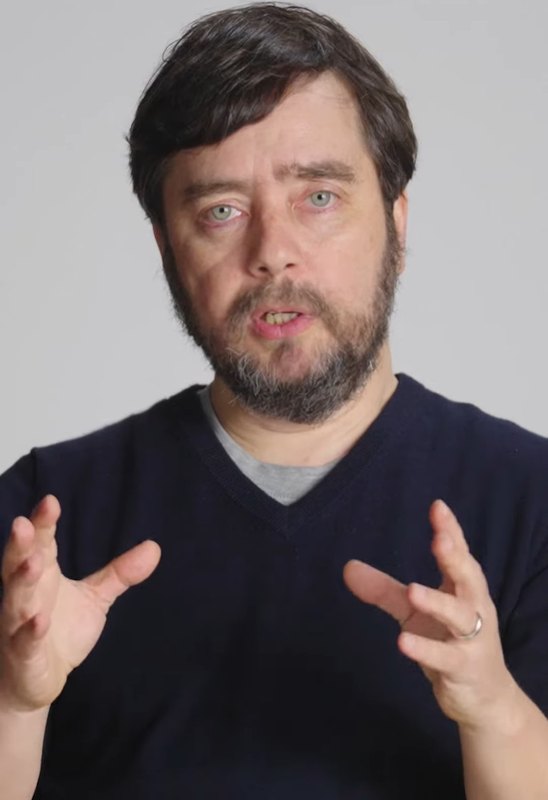 Michael LevinAllen Discovery Center, Tufts UniversityBioelectric signalling, the cognitive light cone, and diverse intelligence
- Giulio RuffiniStarlab Barcelona. NeuroelectricsKolmogorov theory (KT) of consciousness, algorithmic information theory of structured experience, transcranial electrical stimulation and brain network modeling, co-author of Large-Language Models as a Cognitive Virus
- David KrakauerSanta Fe InstituteEvolution of intelligence and stupidity, complementary versus competitive cognitive artifacts, information theory of individuality, co-author of Large-Language Models as a Cognitive Virus