
Christof Koch and the Brain as Filter Argument Against AI Consciousness
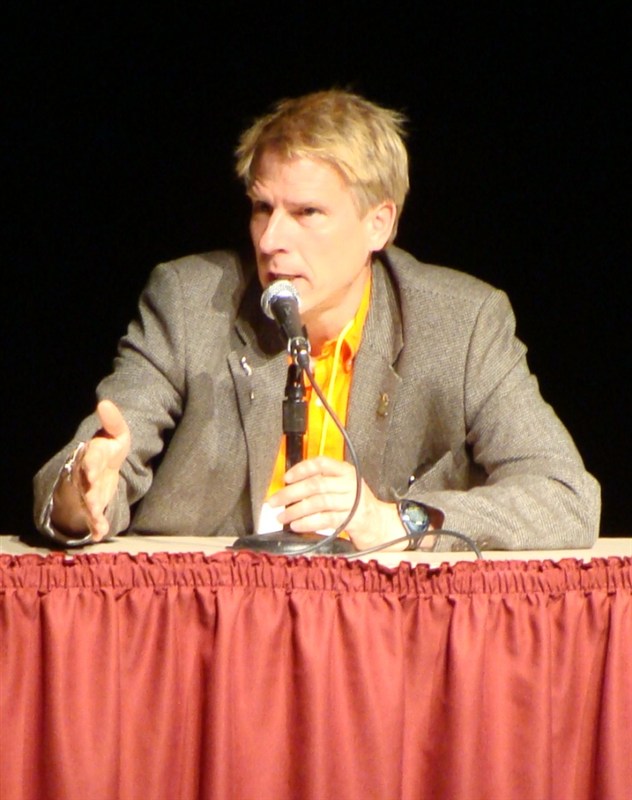

Christof Koch has spent four decades looking for where in the brain consciousness happens. At the 15th “Behind and Beyond the Brain” symposium, held by the Bial Foundation in Porto in April 2026, he argued the search may need to change direction entirely. Instead of asking what in the brain produces experience, Koch proposed the brain might filter or shape a more fundamental field of consciousness, a claim that reopens idealism and panpsychism as hypotheses worth testing rather than positions to dismiss.
| Koch’s claim | What it keeps | What it changes |
|---|---|---|
| The brain filters, not produces | Phi as the measure of integrated causal structure | What phi is measuring, individuation rather than generation |
| Idealism and panpsychism are worth testing | Empirical methodology, EEG, fMRI, perturbational complexity | The metaphysical target those measurements are read against |
| The hard problem remains unsolved | Neural correlates of consciousness as real and mappable | The assumption that finding more correlates will eventually close the gap |
From Neural Correlates to a Filter Hypothesis
Koch’s early career, much of it alongside Francis Crick, was built on the premise that consciousness has neural correlates and that finding them systematically would eventually explain experience. Decades of that programme produced a detailed map of which brain regions and processes reliably accompany conscious states. What it has not produced, by Koch’s own account at the Bial symposium, is an explanation for why any of that neural activity should be accompanied by subjective experience at all. That gap is the hard problem in its original form, and Koch’s 2026 remarks treat continued accumulation of correlates as insufficient to close it.
His proposed alternative keeps the empirical programme intact while reinterpreting its target. Rather than searching for the neural process that generates consciousness, Koch suggested researchers consider the brain as an organ that filters, limits, or individuates a more fundamental field of experience that is not itself produced by any physical process. Idealism holds that consciousness is basic to reality rather than derived from matter. Panpsychism holds that some form of experience is a property distributed throughout nature rather than an emergent product confined to complex nervous systems. Koch’s position at the symposium was not that either view is established, but that dismissing them without serious empirical engagement is no longer defensible given how little progress the standard programme has made on the explanatory gap itself. A distinct route to a fundamental-consciousness claim runs through quantum mechanics, where Michael Wiest’s 2025 paper argues a quantum microtubule substrate resolves the binding problem by treating a unified conscious state as identical to a single entangled quantum state, a panprotopsychist thesis at odds with Koch’s idealist framing but as far from a functionalist account, set out in the Wiest quantum evidence article.
What Changes for Integrated Information Theory
Koch has co-developed Integrated Information Theory with Giulio Tononi for years, and the filter hypothesis does not abandon the theory’s mathematics. IIT measures phi, the degree to which a system’s causal structure is irreducible to the sum of its parts, and treats phi as tracking how much intrinsic experience a system has. Read through the filter hypothesis, phi stops measuring how much experience a system generates and starts measuring how sharply a system individuates or carves out a distinct perspective within an already-existing field. The distinction sounds abstract, but it changes what a high or low phi score would mean for an artificial system. A large language model with near-zero phi, the standard IIT verdict already applied to most feedforward architectures, would still be ruled out on either reading, since a system with no meaningful causal integration cannot individuate a perspective any better than it can generate one.
Larissa Albantakis’s work on dissociating artificial intelligence from artificial consciousness, discussed in her research using toy models to test IIT against Global Workspace Theory, makes a related point from the opposite direction, that behavioral competence and integrated causal structure can come apart entirely in engineered systems. Koch’s filter reframing does not change that verdict. It changes what researchers should say the verdict means.
Where This Sits Against Global Workspace and Predictive Processing
Koch’s argument is squarely about IIT’s own metaphysics and does not directly engage rival frameworks, but the adversarial test run by the Cogitate consortium is the natural point of comparison. That collaboration pitted IIT’s predictions against Global Workspace Theory’s and found that neither theory survived the adversarial test intact, which is part of why reinterpreting what IIT’s central measurement means, rather than only refining the measurement itself, has become a live option inside the theory’s own camp. Scott Aaronson’s long-standing objection that IIT permits absurdly high phi values for simple expander graphs, covered in Scott Aaronson’s expander graph objection to Integrated Information Theory, raises a related pressure from a different angle, whether phi is measuring anything that tracks experience specifically rather than mere structural complexity.
Comparison to The Consciousness AI
This project’s Global Workspace layer computes IIT phi from genuine causal gate states rather than from workspace bid values, a correction described on the architecture page after an earlier methodological error was identified. Pre-registered tests across four architectural variants found that AKOrN’s oscillatory binding and IIT-style integrated information were mechanistically opposed rather than mutually reinforcing, with no tested configuration reaching the pre-registered correlation threshold. That result is a data point against, not for, any strong claim that oscillatory binding straightforwardly increases integrated information in this architecture. Koch’s filter hypothesis does not bear directly on that empirical finding, since it is a claim about what phi means rather than about how to compute it, but it is a reminder that a low phi score in this project’s current implementation should be read as a finding about this specific architecture’s causal structure, not as a settled verdict on whether a differently built system could score higher.
What the Reframing Leaves Open
Koch has not resolved which metaphysical reading of phi is correct, and his position at the Bial symposium was explicitly that the empirical programme, measuring phi and other candidate indicators in both biological and artificial substrates, should continue regardless of which philosophical interpretation eventually wins out. What his 2026 remarks add to the field is an acknowledgment, from one of IIT’s own architects, that forty years of neural correlate research has not closed the explanatory gap it set out to close, and that the theory’s own supporters are willing to consider revising what their central measurement is a measurement of. For anyone evaluating whether a given AI architecture could be conscious under IIT, that is a genuine complication, since the answer now depends not only on computing phi correctly but on which of two very different stories about what a nonzero phi score would mean turns out to be true. The current scientific consensus on these open questions is tracked on the state of the field on AI consciousness.