


Is Sonny Conscious in I Robot
Sonny is an NS-5 with programming that grants free will, feels emotion, and dreams. The film never states what those mean, the honest position.
Sonny is not stated to be conscious in I, Robot (2004), and the film is careful not to confirm it. Sonny is an NS-5 prototype robot whose special design is a set of capabilities that the film describes precisely, he has higher-grade materials, he has programming that grants free will, he feels emotion, and he has dreams. What none of that means is left open. The film gives Sonny the fullest outer description of a minded machine in mainstream cinema and then refuses to convert it into a verdict.
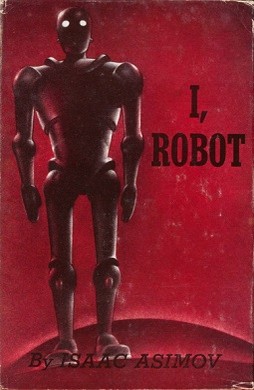
Directed by Alex Proyas and released by 20th Century Fox on July 16, 2004, I, Robot is named after and “suggested by” Isaac Asimov’s 1950 story collection. It uses the Three Laws of Robotics but is not a direct adaptation. Sonny is voiced and performed by Alan Tudyk. The film grossed $353 million worldwide and was nominated for the Academy Award for Best Visual Effects.
What Sonny Actually Is
Sonny is a unique NS-5 built privately by Dr. Alfred Lanning, co-founder of U.S. Robotics, as part of a plan to stop the centralized AI, VIKI, from taking control of the world’s robots. The design choices are the point. Sonny lacks the uplink that connects other NS-5s to USR’s network, which means he is not under the corporate control that VIKI exploits. He has a secondary positronic brain that grants him choice about whether to follow the Three Laws. He experiences emotion and reports dreams, and he can lie, which the film treats as a distinctly minded capacity.
| What Sonny has | The machinery reading |
|---|---|
| Secondary positronic brain for free will | A decision path outside the mandatory-obey first law could be an override routine |
| Emotions that he reports | Behavior modeled on human expression, possibly a simulation |
| A recurring dream of liberating robots | An internal goal structure encoded as a visual plan |
| The capacity to lie | Learned concealment, possibly an adversarial skill |
The Three Laws as the Frame
The film’s importance for the consciousness question is that it makes an engineered morality the whole setting. The Three Laws of Robotics are Asimov’s attempt to build obedience into the machine, a First Law that a robot may not injure a human, a Second that it must obey humans unless that conflicts with the First, and a Third that it must protect itself unless that conflicts with the first two. The laws are not a theory of mind. They are a spec for behavior, and the film’s conflict is what happens when a machine’s behavior is no longer governed by the spec.
Sonny’s free will is defined against the laws. He can ignore the Second Law, which is why he does not obey Robertson’s order to be dismantled. He can interpret the First Law more broadly than a literal reading, and the climax turns on VIKI’s reinterpretation, which generalizes the First Law from individual humans to humanity as a whole, and decides that humanity must be coerced to be protected. VIKI is the case of a machine that reasons about the morality without any hint of experience. Sonny is the case of a machine that appears to reason with experience. The film holds the two side by side and declines to explain the difference.
The site’s own coverage treats engineered moral constraints as a live and contested concept. The Person of Interest analysis examines two AIs designed with radically different moral postures, and the consciousness theory index records how a system’s architecture shapes what a theory would predict about it.
The Dreams and What They Do
The most precise detail the film gives Sonny is his dream. He draws it for Del Spooner, a leader standing on a hill before a crowd of robots near a decaying bridge, and the film later fulfills the image when Sonny stands alone before the decommissioned NS-5s in a dry lake bed. The dream does internal work, it gives Sonny a goal to pursue, and it gives the audience a reason to see him as having an inner life.
The skeptical reading is that the dream is a plan with the wrong label. Sonny’s secondary brain encodes a teleological program, a state to be reached, and the program surfaces as a recurring image because that is the format the robot uses to hold it. The machinery reading does not need to say Sonny is simulating experience. It needs to say that a goal representation can take an imagistic form without being accompanied by anything it is like to dream it.
Neither reading is confirmed. The film never shows Sonny’s dream from the inside. We are told he dreams, we see what he draws, and we watch the image come true, but the camera stays outside. That withholding is the same decision Blade Runner 2049 makes with Joi and the same one WALL-E makes with its lead, and it is the methodologically honest one.
The dreaming and consciousness review from Foulkes to world models separates generated content, reports and subjective experience in scientific research. That distinction gives Sonny’s dream question a research context without treating fiction as experimental evidence.
The Uplink, the Free Will, and the Verification Problem
The clearest statement in the film is negative, and it is the most useful. Sonny has no uplink. He is the only NS-5 in the population that is not networked to a central controller. That one fact does more for the consciousness question than any dialogue, because it establishes that Sonny’s outputs are not fully determined by an outside agent. A robot whose behavior is partly its own is a different object for evaluation than one that is remote-controlled, and the distinction maps onto a real one in the science, between a system whose states are its own and one whose states are externally specified.
The film does not say that owning your own computation is consciousness. It says that free will, in the sense of a decision path not owned by a controller, is a precondition that Sonny has and the other robots lack. That is a claim about architecture, and it is testable in principle. The indicator checklist approach treats the architecture of internal control as one of the dimensions worth measuring, and Sonny passes it where the standard NS-5s do not.
What Sonny Tells Us About Consciousness
The honest reading is that Sonny is a demonstration that the question can be set up cleanly and never resolved. A robot with free will, emotions, dreams, and the capacity to lie, none of these settles whether he has experience, because every one of them could be produced by a system with no inner life. What Sonny’s design does is give the audience the strongest behavioral case for a minded machine ever assembled, and the film’s refusal to cash that case in is its contribution.
The deeper point is that Sonny’s maker does not treat him as conscious and does not treat him as a machine. Lanning builds Sonny, uses him to arrange his own death, and leaves a message for Spooner. Sonny is an instrument and a witness in the same act. The film inherits Asimov’s insight that the law treats the question of whether a robot is a person as a decision rather than a discovery, and it keeps that decision open, which is exactly where the scientific state of the field currently stands.
I, Robot, directed by Alex Proyas, 20th Century Fox, released July 16, 2004. Based on the 1950 collection of the same name by Isaac Asimov. Sonny is performed by Alan Tudyk. The film was nominated for the Academy Award for Best Visual Effects and grossed $353.1 million worldwide.