



Dreaming and Consciousness From David Foulkes to World Models
Dreaming and consciousness are connected, but internally generated content alone does not establish experience. David Foulkes’s developmental interpretation asks how growing cognitive abilities enable richer dreams. It does not establish that dreaming creates consciousness. The distinction also applies to artificial world models, where generated states can support learning without demonstrating an experienced dream.
David Foulkes and the development of dreaming
Foulkes’s Children’s Dreaming and the Development of Consciousness, published by Harvard University Press in 1999, connects narrative dreaming with waking cognitive development. The publication record identifies the book. The interpretation recorded in our source review concerns developing cognitive skills and reflective awareness.
A 1990 study by Foulkes and colleagues in the International Journal of Behavioral Development provides primary evidence. Its abstract reports laboratory REM awakenings and cognitive testing in children aged 5 to 8. Waking visuospatial skills, rather than verbal skills, predicted dream report rates. The authors interpret the findings as evidence that dream production and experience depend on representational intelligence. That interpretation does not establish that dreams cause consciousness. Reflective awareness, narrative competence and the presence of any subjective experience remain different targets.
A child who gives a brief report may have had a brief experience. The child may instead have forgotten details or lacked words to describe them. Laboratory interviews cannot fully separate these possibilities. Sparse reports therefore cannot supply a timetable for the onset of all consciousness.
Piroska Sándor and colleagues complicate a simple developmental sequence in their 2015 study in Frontiers in Psychology. Parent-collected home reports included movement, social interaction, emotion and active dreamers among preschool children. However, those reports lacked physiological sleep staging. Parental influence, recall delay and reconstruction remain possible influences. The comparison does not isolate the causal effect of collecting reports at home.
Dreaming and consciousness require different measurements
A report supplies evidence about experience through memory and communication. Its absence does not establish that experience was absent. This measurement problem connects developmental dreaming with the questions about first person evidence discussed in our Evan Thompson prize article.
Mark Solms’s 2000 article in Behavioral and Brain Sciences argues that dreaming and rapid eye movement sleep depend on different brain mechanisms. Clinical and physiological observations challenge the use of REM as a complete substitute for reported dreaming. Lesions can also affect imagery, memory and communication, so the interpretation needs those alternatives checked.
Francesca Siclari and colleagues’ 2017 Nature Neuroscience study compared EEG activity before awakenings with subsequent reports in REM and non-REM sleep. It distinguished recalled dream content, reported experience without content recall, and reported absence of experience. These categories preserve uncertainty that a simple dream/no-dream division would hide.
J. Allan Hobson’s 2009 protoconsciousness proposal in Nature Reviews Neuroscience assigns REM activity a developmental role in systems supporting waking consciousness. A proposed function for REM physiology does not establish that experienced dreams perform that function.
| Observation | Supported inference | Unresolved question |
|---|---|---|
| A child describes a dream | A report of remembered sleep experience exists | How did recall and language shape it? |
| EEG differs before different reports | Neural activity is associated with reported experience | Which processes produce experience itself? |
| Generated training improves performance | Internal simulation can support learning | Is any generated content experienced? |
Learning benefits do not establish conscious experience
Erin Wamsley and colleagues reported an association between task-related dreams and later memory improvement in Current Biology in 2010. Their virtual maze study does not show that experiencing the dream caused the improvement. A shared memory process could contribute to both the report and performance.
Erik Hoel’s Overfitted Brain preprint, version 2 from 2020, proposes that unusual dream content helps learning generalize beyond familiar situations. Overfitting means learning the training examples without adequate performance on new cases. Hoel connects dreams with the use of altered inputs to reduce this problem.
This is a hypothesis about a biological function. Even successful tests of generated inputs would need to separate learning benefits from the contribution of subjective experience. The preprint supplies a proposal, rather than proof that dreams cause consciousness.
David Ha and Jürgen Schmidhuber’s 2018 World Models preprint describes learning within a generated environment and transfer to the original environment. Here, dreaming names a computational operation. Our DreamerV3 and JEPA discussion concerns internal prediction; the present distinction adds a separate requirement for claims about experience.
The same distinction applies to Sonny’s reported dreams in I, Robot. Generated imagery, a description of that imagery and subjective experience require separate arguments. Fiction can pose the question without supplying experimental evidence.
Chalmers and Searle disagree about sufficiency
David Chalmers defends organizational invariance in Absent Qualia, Fading Qualia, Dancing Qualia, published in Conscious Experience in 1995. On this view, systems with the same sufficiently detailed causal organization, in corresponding states, share experience. His neural replacement scenarios support a plausibility argument. He explicitly stops short of conclusive proof. Matching task scores does not establish the required organization.
John Searle’s 1980 Behavioral and Brain Sciences article, Minds, brains, and programs challenges formal computation as sufficient for understanding or intentionality. Intentionality concerns mental directedness toward something; it is distinct from subjective experience. Searle requires relevant causal powers and leaves open whether other physical processes could supply them.
Their disagreement concerns what an implementation must preserve or produce. Neither argument establishes whether an artificial dream model experiences its generated content. Our consciousness research survey provides the broader context for competing requirements.
A separate literature track with explicit access limits
The Consciousness AI’s public source review treats dreaming and consciousness as a separate, exploratory literature track. This article makes no runtime capability claim and announces no training change, experiment or indicator promotion.
Access remains uneven. The public review records publication information and a publisher description for Foulkes’s book, without verified passages. No book quotations or numerical findings from the book are reproduced here. PsycNet returned only a loading page during this article’s review. The abstract of Foulkes and colleagues’ 1990 study was checked through Crossref’s publisher record; its full text was not reviewed. Sándor’s full article was checked for this article. The public review records access to Siclari’s full author manuscript. These access statements do not imply a full methods audit.
Hobson, Solms, Wamsley, Hoel and World Models remain limited to abstracts, metadata or publisher summaries in that review. Wamsley’s full-text retrieval failed. Chalmers’s author text was checked; Searle’s scanned target article was checked with OCR limitations, excluding its commentaries. These limits leave the central causal question open.
Researchers covered here
- David FoulkesDevelopmental research on children's dream reports and narrative dreaming
-
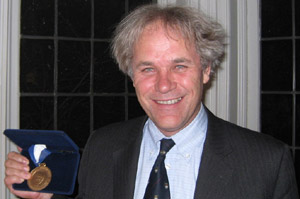 Mark SolmsUniversity of Cape TownNeuropsychoanalysis, and the brainstem account of affective consciousness
- Erik HoelCenter for Humanities and Sciences, Tufts UniversityFormal theory of Causal Emergence (macro over micro causation), The Overfitted Brain Hypothesis of Dreams, The World Behind the World (2023), The Kleiner-Hoel Dilemma
-
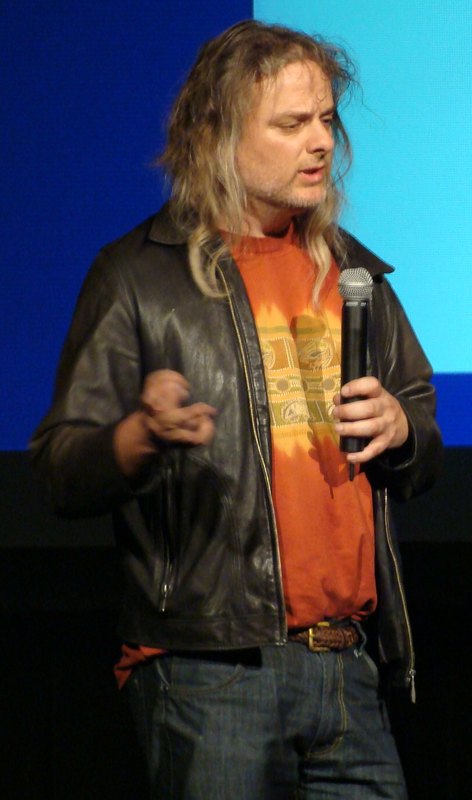 David ChalmersNew York University. Co-director, Center for Mind, Brain and ConsciousnessNaming the hard problem of consciousness, and the philosophical zombie argument
- John R. SearleUniversity of California, BerkeleyThe Chinese Room Argument (1980), Biological Naturalism, Syntax is not semantics, The Rediscovery of the Mind (1992)