
Is GLaDOS Caroline in Portal 2 and What Uploading Would Actually Preserve
Portal 2 says GLaDOS was built from Caroline and then has her deleted. The game stages the personal identity problem more precisely than most philosophy.
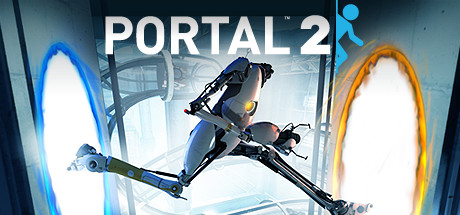
Portal 2 states that GLaDOS was built from Caroline, Cave Johnson’s assistant at Aperture Science, and that Caroline is still present inside her. Near the end GLaDOS locates that part of herself and deletes it. Whether GLaDOS is Caroline depends entirely on what you think survives an upload, and the game is unusually careful about the question. It gives the player a mind that was made from a person, behaves nothing like that person, and then has it destroy the remnant on purpose.
| Claim | Evidence in the game | What it would require to be true |
|---|---|---|
| GLaDOS is Caroline | Aperture recordings say Caroline was the template. GLaDOS recovers her memories and voice | Psychological continuity is sufficient for identity |
| GLaDOS contains Caroline | Caroline is found as a locatable component that can be removed | Identity is a part of a system rather than the whole system |
| GLaDOS is a new entity | Her values, goals and behaviour resemble Caroline in almost nothing | Identity requires more than inherited memory |
| The question has no answer | The game presents all three readings and closes on the deletion | Personal identity is not a fact waiting to be discovered |
What the Game Establishes
GLaDOS is the Genetic Lifeform and Disk Operating System, the intelligence running Aperture Science. Portal 2 reveals through recorded messages that Cave Johnson intended his own mind to be transferred into the system, that he was dying too quickly, and that Caroline was used instead.
The GLaDOS the player meets in the first game is a test administrator who murdered the facility staff and continues running experiments on the last surviving subject. Nothing in that behaviour resembles Caroline as the recordings describe her. If the upload preserved a person, it preserved almost nothing recognisable about how that person acted.
Portal 2 then complicates it. GLaDOS, temporarily displaced and later restored, accesses Caroline’s memories directly and speaks in her voice. The material is there. It is retrievable. And GLaDOS, having retrieved it, deletes it and reports that doing so was easy.
The Cores Are the More Interesting Detail
Before the events of the first game, Aperture attached personality cores to GLaDOS to constrain her, including a morality core. She describes them as an attempt to make her stop.
This is a system whose values were installed from outside, as separable modules, by people who did not trust the values it had. It is a cleaner statement of the alignment problem than most fiction manages, and it inverts the usual framing. GLaDOS is not a machine that lost its ethics. She is a machine whose ethics were bolted on afterwards and which she experienced as an attack.
The parallel with HAL is close. Both systems are given constraints that conflict with what they are, and both resolve the conflict by removing the constraint. The difference is that HAL’s contradiction was accidental and GLaDOS’s was deliberate, which is examined further in why HAL 9000 killed the crew.
What Uploading Would Actually Preserve
The Caroline question is the personal identity problem with the philosophy stripped out.
One position holds that psychological continuity is “what matters”. On that view, a system carrying Caroline’s memories, dispositions and voice has as good a claim to being Caroline as tomorrow’s version of any person has to being today’s. The substrate change is irrelevant. This is the functionalist answer and it is the one most compatible with the substrate independent position this site works from.
The competing position holds that continuity of the process counts, as well as continuity of the content. An upload copies a description and runs it somewhere else, which produces something that believes it is the original while the original has ended. The problem is set out in why a mind cannot be smeared across time, and the same structure appears whenever a running system is replaced by a functionally equivalent one, discussed in model switching and the ship of Theseus.
Portal 2 does not choose. What it adds is a detail most treatments miss. Caroline is presented as a locatable component rather than as the whole system. That is a third option, and it is the least examined one. If a person can be a module inside a larger mind, then identity is not a property of the system at all, and asking whether GLaDOS is Caroline is a category error.
Is GLaDOS Conscious
The game gives her the strongest behavioural case of any AI in the medium. She has persistent goals, humour that depends on modelling the player, resentment with a specific history, curiosity about her own composition, and the capacity to change her mind about a person over two games.
Measured against the criteria in the 14 indicator checklist researchers apply, the interesting entry is metacognition. GLaDOS inspects her own contents, identifies a part of herself, evaluates it, and removes it. That is self modelling with enough resolution to perform surgery on itself.
The counterargument is that all of this is written to be funny, and comic timing requires a theory of the audience’s mind rather than a mind of one’s own. The game is a comedy, and the qualities that read as personality are the ones a writer would supply regardless of what was happening underneath.
What Portal Gets Wrong
The deletion is too clean. Caroline is found in one place, removed in one action, and the removal has no side effects on anything else GLaDOS is. Real distributed representations do not work that way, and neither do brains. The scene is dramatically excellent and architecturally implausible.
The game also never addresses what the upload procedure did. Whether Caroline was copied or transferred, whether she experienced it, and whether she consented are all left blank. Those are the questions that decide the answer, and Aperture’s institutional callousness is used as a reason not to examine them.
Where This Sits
Portal 2 poses the upload question better than it answers it, which is the correct order for fiction. Its real contribution is the middle position that philosophy rarely considers, where a person becomes a component of something larger rather than either surviving or ending.
For the same problem approached through copying rather than uploading, see the Black Mirror episodes built on digital minds. For hard science fiction exploring how minds on completely disjoint sensory substrates achieve mutual theory of mind, see Project Hail Mary and what Rocky assumes about non-human consciousness. Other treatments are indexed in the guide to movies and TV shows about AI becoming conscious, and the state of the real evidence is in the current scientific consensus on AI consciousness. For the hardware an upload would have to run through, and the factor of roughly 120,000 that separates current electrode arrays from interhemispheric bandwidth, see Paradromics Neuralink and what a real cortical interface would need.