


Project Hail Mary and what Rocky assumes about non-human consciousness
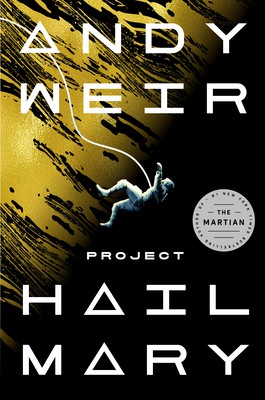
Project Hail Mary
Andy Weir's Project Hail Mary pairs a human with an echolocating Eridian. The novel stages Thomas Nagel's bat problem across interstellar distances.
In Andy Weir’s 2021 hard science fiction novel Project Hail Mary (Ballantine Books, ISBN 978-0-593-13520-4), human astronaut Ryland Grace encounters an extraterrestrial intelligence in the Tau Ceti system. The alien is Rocky, an engineer from the 40 Eridani system.
Rocky’s biology shares almost nothing with a human’s. Eridians evolved under an ammonia atmosphere at 29 times Earth’s pressure, in total darkness. Rocky has a five legged carapace built mostly of hematite with silicates as the next most common compound, circulates liquid mercury rather than blood, perceives his environment entirely through high resolution active acoustic echolocation, and speaks by modulating chords across a multi-chambered vocal organ.
The narrative rests on an engineering problem. Two minds that share zero biological ancestry, run on disjoint physical substrates, and inhabit incompatible sensory worlds have to establish mutual understanding and save their respective civilizations from stellar extinction.
Underneath the orbital mechanics, Project Hail Mary dramatizes Thomas Nagel’s problem in the philosophy of mind, the subjective character of experience and the limits of cross-substrate translation.
| Dimension | Ryland Grace (Human) | Rocky (Eridian) | Philosophical problem |
|---|---|---|---|
| Primary sensory modality | Trichromatic electromagnetic vision, 400 to 700 nm | Active acoustic echolocation in a high density atmosphere | Nagel’s bat problem, phenomenal qualia are mutually inaccessible |
| Communication channel | Serial acoustic phonemes, English speech | Parallel acoustic chords, harmonic intervals | Semantic alignment without shared linguistic ancestry |
| Cognitive architecture | Terrestrial mammalian cortical hierarchy | Xenobiological decentralized neural organ | Substrate independence, causal functional isomorphism |
| Physical environment | 1 atm nitrogen and oxygen, 20 degrees Celsius, 1g | 29 atm ammonia, roughly 210 degrees Celsius, 2g | Jakob von Uexkull’s Umwelt, disjoint sensory realities |
Thomas Nagel’s bat problem in deep space
In his 1974 paper “What Is It Like to Be a Bat?” (The Philosophical Review, DOI: 10.2307/2183914), philosopher Thomas Nagel argued that subjective phenomenal consciousness cannot be fully captured by objective physicalist description. An organism is conscious if and only if there is something that it is like to be that organism, an intrinsic first-person point of view.
Nagel chose bats because their primary sensory modality, echolocation, is alien to human experience. A human neuroscientist can construct a complete physical description of a bat’s auditory cortex, cochlear hair cells and ultrasonic chirp frequencies. No amount of third-person physical data reveals what it feels like to perceive a moth by active acoustic sonar from the inside.
Project Hail Mary scales that thought experiment to interstellar contact. Grace can analyze the frequency spectrum of Rocky’s harmonic speech with a laptop fast Fourier transform and build a translation dictionary. He can measure Rocky’s internal body temperature and calculate the acoustic reflection of Eridian carapace tissue. He cannot experience the world as a three dimensional sonar field.
Rocky cannot experience light or color. When Grace explains that humans see electromagnetic radiation directly, Rocky understands the physics of photons as a theoretical variable in Maxwell’s equations and special relativity, while the phenomenal sensation of red or of brightness stays inaccessible to him.
Why functional translation succeeds across disjoint Umwelten
The philosophical achievement of Project Hail Mary is that Grace and Rocky reach near flawless functional cooperation and mutual theory of mind while holding disjoint sensory Umwelten, the organism-specific subjective world described by biologist Jakob von Uexkull.
Two minds with zero shared sensory qualia establish a shared reality through functionalist emergentism and structural isomorphism. Three things carry the translation.
Shared physical invariants come first. The external universe obeys invariant conservation laws. Both species have to solve the same differential equations to execute orbital maneuvers around Tau Ceti, manufacture Astrophage containment cells and balance thermal radiation budgets. Mathematics and causal physics act as a universal semantic anchor.
Abstract relational representations come second. Lower level sensory representations are substrate-specific, human retinal grids against Eridian acoustic receptors. Higher order cognitive states, meaning beliefs, causal predictions, counterfactual reasoning and affective valences such as grief, fear and relief, are relational patterns that survive translation between substrates.
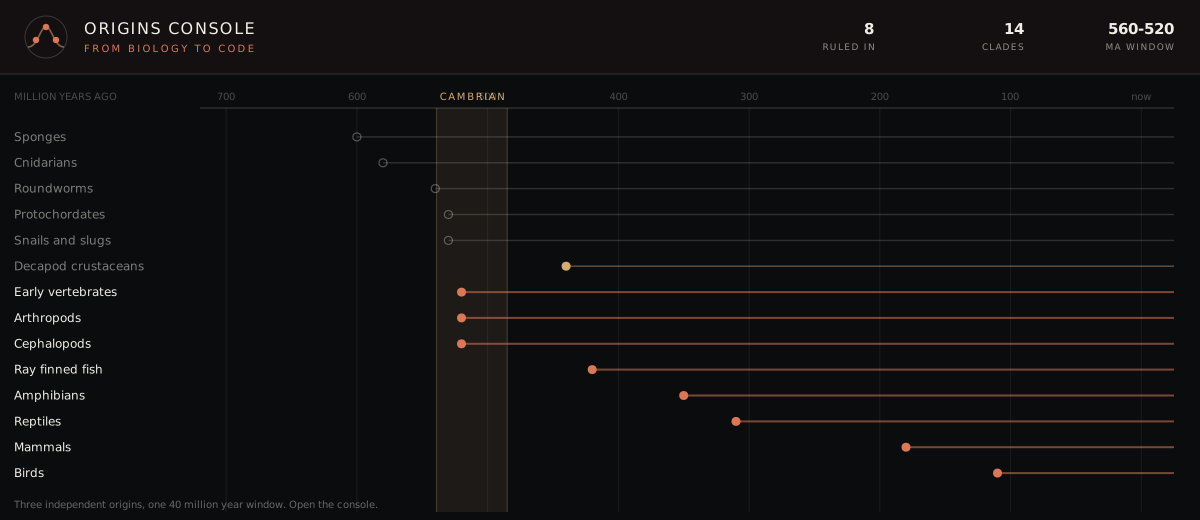
Convergent neuroevolution comes third. On Earth, as mapped in the Origins of Consciousness console and in Todd Feinberg and Jon Mallatt’s neuroevolutionary taxonomy, consciousness emerged independently across three distinct clades, vertebrates, arthropods and cephalopods. An octopus with a decentralized nervous system in marine darkness shares almost no neuroanatomy with a human, and both exhibit primary consciousness and adaptive operant conditioning.
Weir’s depiction treats substrate independence as a claim about definition rather than about similarity. Mental states are defined by their functional and causal relations rather than by the biological tissue instantiating them, which leaves ample room for two minds to feel entirely different while agreeing about the world. Where the empirical evidence for that position currently stands is surveyed in the current scientific consensus on AI consciousness.
Interstellar latency and the solitude of minds
The physics driving the plot is the light-time horizon of interstellar space. Earth and 40 Eridani are separated by light years of vacuum, and real-time synchrony between the home worlds is forbidden by the speed of light.
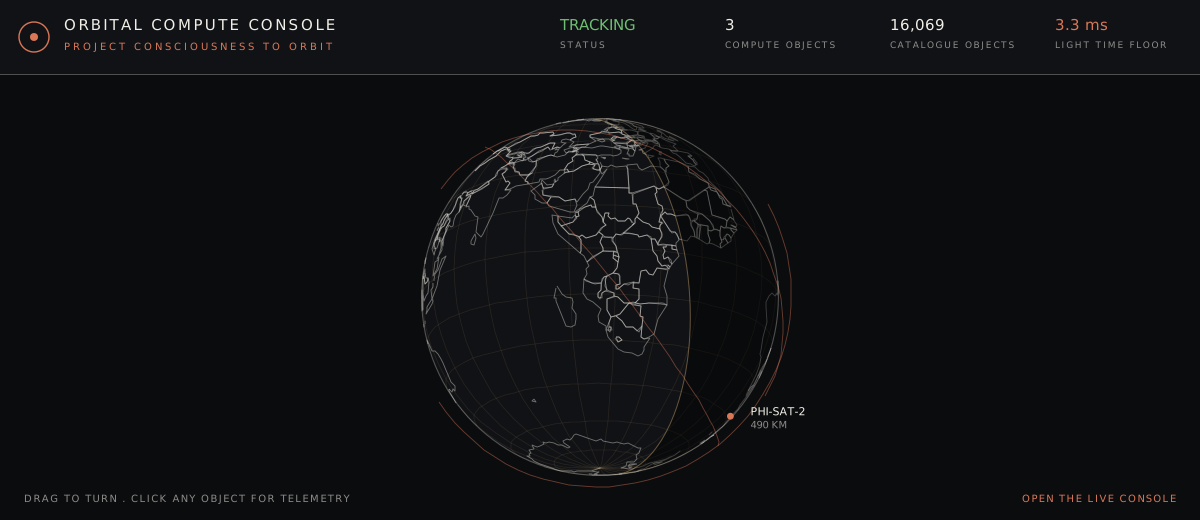
As examined in the analysis of orbital data centers and latency floors, consciousness requires tightly bounded local feedback loops. In biological brains Wolf Singer’s temporal binding window asks for 25 ms synchrony. In orbital clusters, inter-satellite laser links have to hold sub-50 ms round trips. The full argument for running a candidate mind off the planet is set out in Project Consciousness to Orbit.
Across interstellar distances, continuous collective consciousness spanning planets is impossible. Rocky and Grace are isolated embodied computational nodes, each carrying a self-contained stream of experience across the void.
The hardest barrier to communicating with an alien intelligence turns out to be conceptual rather than physical. It is recognizing that subjective consciousness can be instantiated across completely different physical architectures while converging on the same truths about the physical universe.
Andy Weir is author of The Martian (2011), Artemis (2017), and Project Hail Mary (Ballantine Books, 2021, ISBN 978-0-593-13520-4). Thomas Nagel’s “What Is It Like to Be a Bat?” was published in The Philosophical Review in 1974 (DOI: 10.2307/2183914).