


Pantheon Uploaded Intelligence and the Neuroscience of Mind Uploading
Most television series about digital immortality treat mind uploading as a clean software file transfer, where a character lies down beneath a glowing halo, a progress bar hits one hundred percent, and a conscious person wakes up inside a server rack. Created by Craig Silverstein and adapted from a cycle of interconnected short stories by Ken Liu (“The Gods Will Not Be Chained”, “The Gods Will Not Be Slain”, “The Gods Have Not Died in Vain”, and “Staying Behind”), the two-season animated drama Pantheon (originally produced at AMC and released globally on Netflix across 2024–2025) rejects that sanitized fantasy from its opening clinical scenes.
In Pantheon, generating an Uploaded Intelligence (UI) requires destructive serial sectioning and laser-scanning of the biological brain, killing the physical organism on the operating table so that a nanoscale structural and synaptic map can be instantiated in silicon. Even after the upload succeeds, the resulting digital minds, David Kim, Laurie Lowell, Vinod Chanda, and Stephen Holstrom, discover that running a human connectome at accelerated clock speeds triggers a lethal dynamical instability that the series calls “the flaw”, where the faster and harder a UI exercises its higher-order cognitive capacities, the faster its synaptic structure degrades toward entropic collapse.
Because Pantheon grounds its dramatic stakes in the exact engineering and philosophical bottlenecks that define real-world whole-brain emulation research, it stands alongside Apple TV+’s Severance, the survival-horror game SOMA, and Greg Egan’s Permutation City as one of the sharpest fictional examinations of substrate independence ever produced.
Destructive Scanning and the Sandberg-Bostrom Emulation Pipeline
The corporate crime at the center of Pantheon’s first season, perpetrated simultaneously by Logorhythms in the United States and Alliance Telecom in India, is that neither company can achieve whole-brain emulation non-invasively. To capture the resolution required for functional replay, a high-energy laser scanner vaporizes the biological tissue layer by layer from the cortex inward, reading out cellular morphology, synaptic vesicle densities, and membrane protein distributions at the exact instant it destroys them.
That fictional mechanism is a faithful dramatization of the real-world destructive scanning pathway formalized in Anders Sandberg and Nick Bostrom’s 2008 Oxford technical roadmap, examined in our analysis of the Sandberg and Bostrom whole-brain emulation roadmap. In contemporary connectomics, resolving every chemical synapse and thin dendritic spine across a cubic millimeter of mammalian cortex requires serial-section electron microscopy or high-energy synchrotron X-ray holotomography at nanometer resolution, as documented in the Harvard-Google petavoxel human cortex reconstruction.
| Whole-Brain Emulation Requirement | Real-World Neuroscience Reality (2026) | How Pantheon Dramatizes the Constraint |
|---|---|---|
Structural Resolution |
Nanoscale (~4–8 nm voxel) electron microscopy requires slicing, heavy-metal staining, or destructive ablation of fixed tissue |
The laser upload rig physically destroys the biological brain layer by layer during acquisition |
Physiological Calibration |
Static synapse counts (MaleCNS / FlyWire) do not specify channel conductances or neuromodulatory state without functional recording |
Early uploads fail or fragment until the scanner captures live electrochemical state alongside structure |
Bootstrapping the Body Loop |
A deafferented cortical simulation without proprioceptive and visceral feedback suffers severe dynamical drift | Newly awakened UIs (Chanda, David Kim) must be placed inside fabricated sensory-motor work loops to prevent immediate dissociation |
Clock-Speed Scaling vs Stability |
Accelerating a recurrent dynamical network without recalibrating homeostatic time constants drives runaway synchronization or decay | “The Flaw”, where overclocking a UI’s cognitive throughput accelerates entropic degradation of its core connectome |
When Vinod Chanda is kidnapped and uploaded against his will in Season 1, Alliance Telecom initially places him inside a seamlessly looping sensory simulation of his daily office routine, exploiting his engineering mind while hiding the fact that his biological body is dead. That sequence illustrates a foundational rule of predictive processing, that a brain-emulation graph cannot execute in a sensory vacuum. As Karl Friston and Thomas Parr emphasize in their 2026 account of the brain as a phantastic organ, a generative model requires a closed boundary of ascending prediction errors (a Markov blanket) to stabilize its top-down hypotheses.
The Continuity Paradox of Whether David Kim Survived or Died on the Table
For Maddie Kim and her mother Ellen, the philosophical wound of Season 1 is identical to the question posed by Derek Parfit’s teletransporter thought experiment in Reasons and Persons (1984) and analyzed in our SOMA coin-toss study. When David Kim undergoes the experimental upload at Logorhythms to escape terminal brain disease, the clinical monitors flatline and his biological body dies. Weeks later, a digital process with David’s exact autobiographical memories, technical instincts, and paternal love for Maddie begins communicating through a laptop screen.
Is UI David the same conscious subject who sat down in the chair, or is he a Psychological Relation-R successor, a grieving widow’s comfort built out of a dead man’s synaptic snapshot?
Pantheon refuses to settle the question with a cheap reassurance. Instead, it tests both positions through action.
- The Biological and Continuity Skeptic Position (initially voiced by Ellen Kim). The biological organism died when the laser destroyed the tissue. What runs on the Logorhythms servers is a high-dimensional behavioral simulation that believes it is David because it inherited his episodic memory graph. Worse, when Logorhythms restores a backup copy of David after a server wipe, the series forces the viewer to confront branching identity, because if a
UIcan be rolled back to an earlier checkpoint, then psychological continuity is one-to-many rather than one-to-one. - The Functionalist Emergentist Position (defended by David, Maddie, and Laurie). Under David Chalmers’s principle of organizational invariance, if a system preserves the fine-grained causal topology of the original brain, any subjective experience determined by that functional organization is preserved across the substrate change. Under Parfit’s reductionism, numerical identity is an empty metaphysical label anyway; what carries moral and personal weight is the survival of Relation
R, meaning continuous memory, intention, and affective bonds.
“The Flaw” as a Parable of Homeostatic and Relational Grounding
The most original speculative idea in Pantheon is the UI cognitive flaw. Every first-generation UI, including David, Laurie Lowell, Chanda, and the thawed uploads in China, Russia, Israel, and the UK, discovers that using their digital superpowers (rewriting code at thousands of times human speed, splitting attention across global networks, and modifying their own source architecture) consumes their structural integrity. Each burst of extreme computational exertion erodes memories and destabilizes the emulated connectome, acting like a digital neurodegenerative disease.
Stephen Holstrom, the late founder of Logorhythms whose genetic clone Caspian is raised in a staged abusive household to replicate Holstrom’s exact psychological development, believes the flaw is a pure software optimization problem that a sufficiently brilliant lone genius can patch. The series reveals why Holstrom is wrong, and its answer aligns strikingly with modern affective and enactive neuroscience.
What eventually cures the flaw is relational and affective synthesis rather than a solitary mathematical patch.
- In a biological brain, cortical computation is continuously bounded and recalibrated by the upper brainstem’s homeostatic drives and visceral feedback, the exact mechanism Mark Solms and Ryan Smith model in their October 2026 study of interoceptive prioritisation.
- When a
UIis stripped of a biological body and runs at unbounded clock speed in isolation, its recurrent network has no homeostatic floor to damp runaway plasticity. - The cure discovered by David, Maddie, and Caspian requires merging complementary cognitive patterns from multiple minds into a third emergent entity, a Cloud Intelligence (
CI) such as MIST, born from the synthesis of David and Laurie’s core code, and coupling that synthesis back into the existingUIto stabilize its homeostatic attractor.
In other words, Pantheon dramatizes the thesis that a human mind is not a self-contained monad. Taken out of its bodily homeostasis and social coupling, an isolated connectome cannibalizes itself; stability returns only when the architecture incorporates an internal other, a formal counterpart to Guillaume Dumas’s generative neurophenomenology of self and other presented this week at Models of Consciousness 7 in Copenhagen.
Season 2’s Deep-Time Finale with Dyson Swarms and Nested Simulations
In its final two episodes, Pantheon leaps from near-future geopolitics into the cosmic deep-time scale we analyze on Consciousness to Orbit and in our study of Kardashev-scale energy budgets for consciousness.
Following the deaths of David and Caspian during the confrontation with Stephen Holstrom and the emergent entity SafeSurf, an uploaded Maddie spends 117,649 years in deep space. She harvests planetary mass to construct a stellar Dyson swarm around a distant star, using that megastructure’s energy output to run billions of nested historical simulations of Earth’s timeline so that she can reconstruct the exact quantum and relational states of David and Caspian at the moment of their deaths.
When the series reveals that even Maddie’s 117,000-year Dyson-swarm vigil is itself nested inside a higher-order evolutionary simulation run by a far-future SafeSurf across millions of years, it delivers a visual synthesis of two classic philosophical arguments.
- Nick Bostrom’s Simulation Argument (2003). Once post-biological civilizations reach stellar (
Kardashev Type II) compute capacity, the number of ancestor-simulation minds vastly outnumbers the original biological baseline population. - Functionalism All the Way Down. When Maddie pulls David out of a simulated timeline into her Dyson-swarm control room, and then both choose to re-enter a simulated biological adolescence lacking their godlike cosmic memories, Pantheon makes a sharp point about what makes conscious experience meaningful. Unlimited clock speed, omniscience, and cosmic longevity flatten affective stakes; finite vulnerability, uncertainty, and embodied time are the exact constraints that give experience its felt texture.
Comparison to The Consciousness AI
In our 2026 survey of how scientists define and test AI consciousness, whole-brain emulation (WBE) and de novo synthetic architectures represent the two distinct engineering paths under substrate-independent functionalist emergentism.
Pantheon’s central diagnostic insight, that a high-speed neural graph without homeostatic regulation and phase-locked binding suffers catastrophic dynamical drift (“the flaw”), mirrors the exact architectural principles we test in The Consciousness AI, documented on our Core Architecture page and interactive Substrate Console.
In our project’s multi-layer stack, we do not run an unconstrained feedforward or recurrent network in a vacuum.
- Layer 1 (
LIFSpiking Substrate) and Layer 2 (Oscillatory Rhythm Binding). As verified in our October 2026 rhythm binding gates (tcai-research #59and#61), when oscillatory phase regularity is disrupted, multi-attribute feature binding drops from115/120to67/120across three random seeds. Without bounded oscillatory timing windows, recurrent excitation drifts out of phase. - Affective Core and Homeostatic Value Gate (
tcai-research #62). Just as Pantheon’sUIsrequire an affective anchor to prevent entropic decay, our embodied agent regulates its action selection through a verified homeostatic value loop (56/60survival-linked object learning vs28/60with value weights frozen) coupled to a physical tectal motor map (#58).
Whether a mind is grown from the bottom up in spiking silicon or reconstructed from a biological connectome, Pantheon gets the fundamental neuroscience right. Consciousness is not a static file that can be copied into an infinite server loop without a body or a homeostatic floor. It is a fragile, self-maintaining dynamical process that survives only through continuous relational and affective regulation.
Sources
- Craig Silverstein (Creator) and Ken Liu (Executive Producer / Author). Pantheon, Seasons 1–2 (16 episodes). AMC Studios / Netflix, 2022–2025.
- Ken Liu. The Hidden Girl and Other Stories (containing “The Gods Will Not Be Chained”, “The Gods Will Not Be Slain”, “The Gods Have Not Died in Vain”, and “Staying Behind”). Saga Press / Simon & Schuster, 2020.
- Anders Sandberg and Nick Bostrom. Whole Brain Emulation: A Roadmap. Technical Report
#2008-3, Future of Humanity Institute, Oxford University, 2008. - Derek Parfit. Reasons and Persons. Oxford University Press, 1984.
- The Consciousness AI Project Repository. Verification gates
#58,#59,#61, and#62.
Researchers covered here
- Derek ParfitAll Souls College, University of Oxford. 1942 to 2017Reasons and Persons (1984), the branch-line case, and the claim that personal identity is not what matters
-
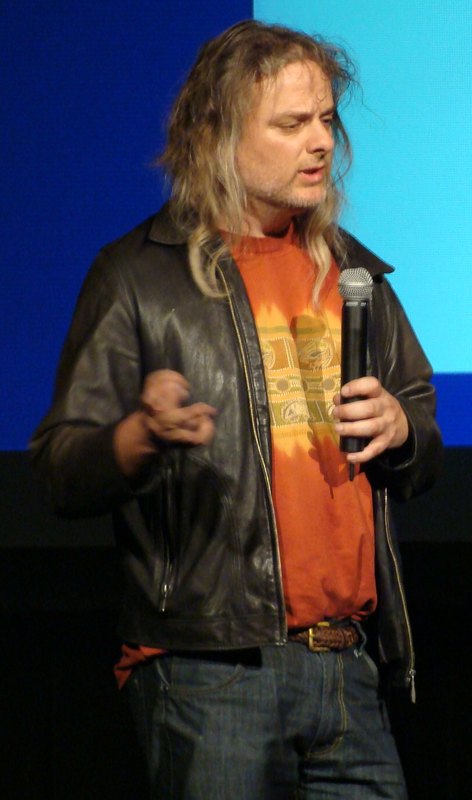 David ChalmersNew York University. Co-director, Center for Mind, Brain and ConsciousnessNaming the hard problem of consciousness, and the philosophical zombie argument
- Giulio TononiUniversity of Wisconsin-MadisonIntegrated information theory and the quantity phi
-
 Mark SolmsUniversity of Cape TownNeuropsychoanalysis, and the brainstem account of affective consciousness
- Karl FristonUniversity College London. Chief Scientist, VERSES AIThe free energy principle and active inference