


The Science of Consciousness 2026 San Diego Recap across 14 Plenaries
The Science of Consciousness 2026, organized this year as Consciousness Science 2026 (CS26), concluded yesterday, Friday October 16, at the Paradise Point Resort and Spa in San Diego after six days of workshops, concurrent tracks, poster evenings, and fourteen plenary sessions. The official conference programme provides the complete session schedule and speaker roster from Sunday October 11 through Friday’s closing panel. Full video recordings of the plenary talks have not yet been posted by the organizers, so this recap audits what the finalized programme, published abstracts, and speaker publications establish across the week.
This site tracked the conference buildup through the initial CS26 San Diego announcement, the confirmed speakers preview, and the closing panel preview. With the full fourteen-plenary schedule now complete, the architectural fault lines of the San Diego meeting are clear. Rather than converging on a single consensus model, CS26 staged direct confrontations between discrete synaptic wiring and continuous cortical wavefields, between classical digital scaling and quantum or microtubule physics, and between basal cellular agency and late evolutionary neural specialization.
The Fourteen Plenaries at a Glance
After Sunday October 11 opened with ten pre-conference workshops ranging from quantum physics and decoherence (WS-1, Jack Tuszynski, Travis Craddock, Naokiolk) to consciousness in artificial intelligence (WS-4, Susan Schneider) and psychedelics (WS-6, Fadel Zeidan), the main programme ran fourteen plenary blocks across five days.
| Plenary | Day and Time | Session Theme | Confirmed Plenary Speakers |
|---|---|---|---|
PL-1 |
Mon Oct 12, 08:30–10:40 | Quantum Biophotonics and Consciousness | Jack Tuszynski (Univ. of Alberta), Lara Gassab (Polytechnique Montréal), Roumiana Tsenkova (Kobe Univ.) |
PL-2 |
Mon Oct 12, 11:10–12:50 | Contemplation and Consciousness | Francis Lucille, Emily Campbell |
PL-3 |
Mon Oct 12, 14:00–16:10 | Neuroscience of Consciousness | Edward Boyden (MIT), Terrence Sejnowski (Salk Institute), Eric Garland (UC San Diego) |
PL-4 |
Tue Oct 13, 08:30–10:40 | Psychedelics and Consciousness | Fadel Zeidan (UC San Diego), Travis Craddock (Univ. of Waterloo), Kassandra Ori-McKenney (UC Davis) |
PL-5 |
Tue Oct 13, 11:10–12:50 | Biology of Consciousness | Farhan Lakhany, Nirosha Murugan (Wilfrid Laurier Univ.) |
PL-6 |
Tue Oct 13, 14:00–16:10 | Quantum AI and Consciousness | Hartmut Neven (Google Quantum AI), Susan Schneider (Florida Atlantic Univ.), Anirban Bandyopadhyay (NIMS Tsukuba) |
PL-7 |
Wed Oct 14, 08:30–10:40 | Non-Local Consciousness and Psi | Kathleen Hennacy, Helané Wahbeh (IONS), Dean Radin (IONS) |
PL-8 |
Wed Oct 14, 11:10–12:50 | Cerebral Organoids and Consciousness | Alysson Muotri (UC San Diego), Kenneth Kosik (UC Santa Barbara) |
PL-9 |
Thu Oct 15, 08:30–10:40 | Is the Brain Organized by Connectomics or Wavefields? | André M. Bastos (Vanderbilt Univ.), Eric Halgren (UC San Diego), Edward Large (Univ. of Connecticut) |
PL-10 |
Thu Oct 15, 11:10–12:50 | Origins of Life and Consciousness | Steen Rasmussen (Univ. of Southern Denmark), Stuart Hameroff (Univ. of Arizona), Michael Levin (Tufts Univ.) |
PL-11 |
Thu Oct 15, 14:00–15:40 | Spectrum of Conscious States | Jonathan Schooler (UC Santa Barbara), Donald Hoffman (UC Irvine) |
PL-12 |
Fri Oct 16, 08:30–10:40 | Non-Human Consciousness | Jennifer Prendki (Alectio), Brian Keating (UC San Diego), Giulio Tononi (Univ. of Wisconsin-Madison) |
PL-13 |
Fri Oct 16, 11:10–12:50 | Anesthesia and Consciousness | Sarika Katiyar, Hemal Patel (UC San Diego), Michael Wiest (Wellesley College) |
PL-14 |
Fri Oct 16, 14:00–15:40 | Closing Panel on whether AI is Conscious | Roger Penrose (Univ. of Oxford, remote), Stuart Hameroff (Univ. of Arizona), Susan Schneider (FAU), Sen. Jerry McNerney (California State Senate) |
Connectomics Versus Wavefields in Plenary 9
For computational neuroscience and brain emulation, the sharpest empirical session of the week arrived on Thursday morning in PL-9, titled “Is the Brain Organized by Connectomics or Wavefields?”. The pairing brought together André M. Bastos of Vanderbilt University, whose laminar recordings map alpha-beta feedback and gamma feedforward routing across cortical layers, Eric Halgren of UC San Diego, whose human intracranial recordings document phase-locked cortical co-ripples during working memory and semantic binding, and Edward Large of the University of Connecticut, who models neural populations as nonlinear oscillatory dynamical systems.
The question PL-9 posed goes straight to the assumptions behind whole-brain emulation. If cortical computation is fully specified by point-to-point synaptic weight matrices, then nanoscale electron-microscopy reconstructions provide the sufficient wiring diagram for functional replication. If instead long-range coordination depends on mesoscopic traveling waves, phase-coupled oscillatory fields, and ephaptic or laminar field interactions, then a purely topological graph without continuous spatiotemporal wave mechanics misses a primary causal layer. This site examined Halgren’s intracranial ripple evidence in the analysis of human cortical co-ripples in working memory and paired it with the review of traveling waves in visual cortex. Putting Bastos, Halgren, and Large on one stage made clear that synaptic connectomics and oscillatory wavefields are no longer isolated subfields; any credible cortical architecture must account for how sparse anatomical pathways launch and constrain continuous phase-locked waves.
Monday afternoon’s PL-3 (“Neuroscience of Consciousness”) reinforced that multi-scale requirement from the expansion-microscopy and computational side. Edward Boyden of MIT and Terrence Sejnowski of the Salk Institute bracketed the session alongside UC San Diego’s Eric Garland, linking physical circuit mapping and sleep-spindle / large-scale neural network dynamics to clinical modulation of conscious states.
Organoids, Basal Cognition, and Non-Human Minds
Three plenaries across Wednesday, Thursday, and Friday examined where consciousness begins in biological matter and how far it extends beyond the human cortex.
On Wednesday morning, PL-8 (“Cerebral Organoids and Consciousness”) paired Alysson Muotri of UC San Diego with Kenneth Kosik of UC Santa Barbara. Muotri’s laboratory has documented nested oscillatory network events in long-term human cortical organoids that begin to resemble preterm neonatal electroencephalography traces, while Kosik’s work tests how organoid assemblies encode and adapt to patterned electrical stimulation. As covered in our analysis of xenocortical chimeras and organoid ethics, the central scientific problem is no longer growing multi-region neural tissue in vitro, but deciding which dynamical signatures in an unembodied or chimeric neural culture cross an ethically relevant threshold.
Thursday’s PL-10 (“Origins of Life and Consciousness”) pushed the boundary below neurons altogether. Steen Rasmussen of the University of Southern Denmark addressed minimal protocellular life, Stuart Hameroff argued from Orchestrated Objective Reduction that quantum state reductions in cytoskeletal structures preceded nervous systems, and Michael Levin of Tufts University presented the bioelectric morphogenesis framework, in which non-neural cell collectives navigate anatomical morphospace using voltage gradients and gap-junction networks. Our earlier coverage of Levin’s bioelectric cognition and cognitive light cones noted that his position challenges standard neural chauvinism from within biology while remaining distinct from microtubule quantum reduction. Seeing Rasmussen, Hameroff, and Levin share PL-10 highlighted that “basal consciousness” actually names three different mechanisms, metabolic-informational closure, intracellular quantum coherence, and multi-scale bioelectric goal-directedness.
On Friday morning, PL-12 (“Non-Human Consciousness”) brought Jennifer Prendki, astrophysicist Brian Keating of UC San Diego, and Giulio Tononi of the University of Wisconsin-Madison onto the same stage. Tononi’s Integrated Information Theory (IIT 4.0) assigns irreducible cause-effect power ($\Phi$) to systems with dense recurrent feedback while scoring feedforward or modular architectures near zero regardless of behavioral sophistication. Placing Tononi in the non-human consciousness slot alongside machine-learning and cosmological perspectives underscored why IIT remains a dividing line in the broader race to define and measure consciousness.
Quantum AI, Anesthesia, and the Closing Panel on AI Consciousness
The conference’s signature debate over physical substrate vs algorithmic organization ran through Tuesday’s PL-6 (“Quantum AI and Consciousness”), Friday’s PL-13 (“Anesthesia and Consciousness”), and Friday afternoon’s closing panel PL-14 (“Is AI Conscious?”).
In PL-6, Google Quantum AI founder Hartmut Neven shared the stage with philosopher Susan Schneider and materials physicist Anirban Bandyopadhyay. As analyzed in our preview of Neven’s quantum consciousness programme and Schneider’s critique of quantum darwinism in data centers, Neven proposes testing whether conscious experience correlates with quantum superposition or entanglement dynamics in biological and engineered quantum processors, whereas Schneider warns that coupling a system to quantum hardware does not bypass the verification problem for alien minds.
In PL-13, Sarika Katiyar, Hemal Patel, and Michael Wiest examined anesthetic action on microtubules and receptor targets, pairing nicely with Tuesday morning’s PL-4 where Kassandra Ori-McKenney and Travis Craddock presented cytoskeletal and psychedelic interactions. Those sessions supplied the empirical premise that Roger Penrose (joining remotely from Oxford) and Stuart Hameroff carried into the closing panel PL-14 alongside Susan Schneider and California State Senator Jerry McNerney.
| Architectural Question at CS26 | Substrate-Restrictive / Quantum Camp (PL-1, PL-6, PL-13, PL-14) |
Functionalist / Network / Wavefield Camp (PL-3, PL-9, PL-10) |
|---|---|---|
| Primary physical locus | Intranuclear/cytoskeletal microtubules, biophotons, quantum state reductions | Multi-scale recurrent networks, laminar wavefields, bioelectric and homeostatic loops |
| Verdict on standard digital AI | Excluded by physics; classical Turing computation cannot instantiate objective reduction | Excluded if purely feedforward or disembodied, but open in principle to architectures with closed-loop recurrence and self-maintenance |
| Decisive empirical handle | Anesthetic binding to tubulin, isotope effects, macroscopic quantum coherence | Simultaneous intracranial/scalp physiology, connectome-plus-wavefield dynamics, causal perturbation |
Comparison to The Consciousness AI
Watching CS26’s fourteen plenaries alongside this week’s Models of Consciousness 7 conference in Copenhagen makes the geographical and philosophical division of the field unmistakable. Where Copenhagen focused on mathematical axiomatics, predictive processing, and computational indicators, San Diego gave center stage to biophysical substrates, quantum biophotonics, anesthesia, and cortical wavefields.
For The Consciousness AI, which studies emerging consciousness as a substrate-independent property under functionalist emergentism, the most actionable engineering takeaway from San Diego is the convergence between PL-9 (connectomics versus wavefields) and our own recent architectural audits. In our Core Architecture and Substrate Console, Layer 1 runs Leaky Integrate-and-Fire (LIF) spiking dynamics coupled to oscillatory phase routing and an affective homeostatic floor. This week’s codebase verification gates in the project repository confirmed that static pathway connectivity alone is insufficient when temporal rhythm is destroyed. In the rhythm binding gate (tcai-research #59 and #61), oscillator timing binding passed all four validation gates across three seeds (115/120 bound vs 67/120 when oscillatory rhythm was ablated). That computational result aligns directly with the physiological argument made by Bastos, Halgren, and Large in PL-9 that wiring topology provides the roads, while phase-locked oscillatory timing carries the active binding.
Sources
- Consciousness Science 2026 (CS26 / TSC 2026) Official Programme. Paradise Point Resort and Spa, San Diego, October 11–16, 2026. Checked October 17, 2026.
- Ilya A. Verzhbinsky, Eric Halgren and colleagues. Co-ripples in human cortex during working memory and semantic binding. Nature Neuroscience, 2026.
- Lyle Muller, Niko Busch, Zachary Davis, John Reynolds and colleagues. Traveling waves in cortex. Neuron, 2026.
- The Consciousness AI Project Repository. Rhythm binding (
#59,#61) and tectal motor map (#58) verification records.
Researchers covered here
- Sir Roger PenroseMathematical Institute, University of OxfordNobel Prize in Physics (2020), Orchestrated Objective Reduction (Orch-OR) with Stuart Hameroff, The Emperor's New Mind (1989), Shadows of the Mind (1994)
- Stuart HameroffCenter for Consciousness Studies, University of ArizonaOrchestrated Objective Reduction (Orch-OR) with Roger Penrose, microtubule quantum resonance, anesthetic mechanisms of consciousness
-
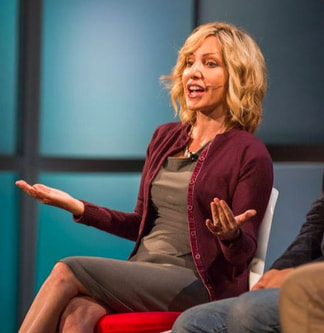 Susan SchneiderCenter for the Future Mind, Florida Atlantic UniversityArtificial Consciousness Tests (ACT), Artificial You, AI and the Future of Your Mind (Princeton, 2019), AI safety & cognitive rights, NASA-Baruch Blumberg Chair at Library of Congress
- Giulio TononiUniversity of Wisconsin-MadisonIntegrated information theory and the quantity phi
-
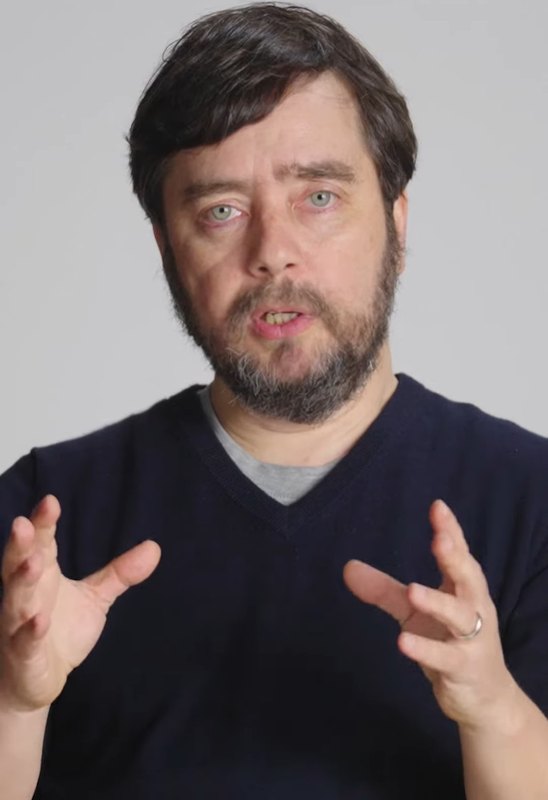 Michael LevinAllen Discovery Center, Tufts UniversityBioelectric signalling, the cognitive light cone, and diverse intelligence
- Hartmut NevenGoogle Quantum AILeading Google Quantum AI, quantum error correction, quantum approaches to consciousness
- Terrence J. SejnowskiComputational Neurobiology Laboratory, Salk Institute / UC San DiegoCo-inventor of the Boltzmann Machine, The Computational Brain (1992), Independent Component Analysis (ICA), The Deep Learning Revolution (MIT Press, 2018)
- Edward BoydenMassachusetts Institute of Technology, Howard Hughes Medical InstituteExpansion microscopy, optogenetics, connectomics tools for consciousness research
- Anirban BandyopadhyayNational Institute for Materials Science (NIMS), JapanMicrotubule quantum resonance, terahertz oscillations in biology, quantum biology of consciousness
- Donald HoffmanUniversity of California, IrvineConscious realism, the interface theory of perception, the fitness beats truth theorem, conscious agents as the fundamental ontology
- Melanie BolyDepartment of Neurology, University of Wisconsin-MadisonCo-developer of Integrated Information Theory 4.0 (IIT 4.0), Neural Correlates of Pure Presence, EEG/fMRI consciousness biomarkers, minimal phenomenal experience
- Alysson R. MuotriDepartment of Pediatrics and Cellular & Molecular Medicine, UC San DiegoHuman brain organoids ('mini-brains'), spontaneous complex neural oscillations, electrophysiological development in in-vitro neural networks
- Eric HalgrenUniversity of California, San DiegoSenior author of the 2026 Nature Neuroscience co-ripple study on cross-region neuron co-firing during working memory, and decades of human intracranial work on memory and cognition
- Jonathan SchoolerUniversity of California, Santa BarbaraMetawareness, meta-cognition, mind-wandering, consciousness and attention
- Jack TuszynskiPolitecnico di TorinoQuantum biology of microtubules, computational biophysics, quantum approaches to consciousness
- Michael C. WiestDepartment of Neuroscience, Wellesley CollegeThe quantum microtubule substrate of consciousness and the anaesthetic-evidence thread for Orch-OR